


8 Questions to Ask Before Buying a House With Solar Panels
By Kierra Todd · April 16, 2026
Key Takeaways
Buying a house with solar panels can offer long-term savings and added property value when properly evaluated.
Always confirm whether the solar panels are owned or leased before making an offer.
Review system documentation, including installation date, warranty details, and utility savings.
Understand how solar agreements may affect financing and insurance requirements.
Ask if the system can be upgraded in the future to fit your long-term energy needs.
With solar panels now on roughly 7% of homes in the U.S., it's becoming more common for buyers to encounter homes already equipped with this energy-saving upgrade. While solar panels can be a huge perk, they also come with a few things you should look into before making an offer.
Question 01
What are solar panels and how do they work?
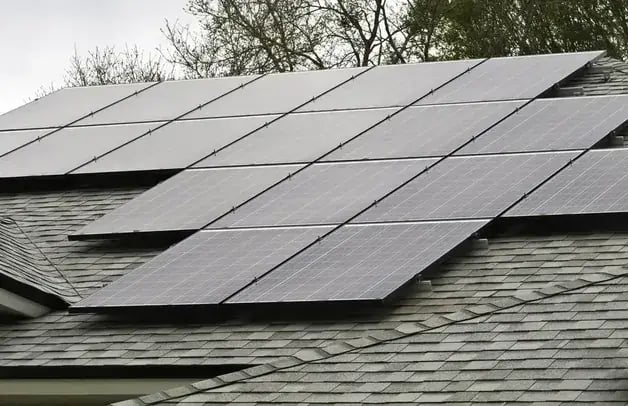
Solar panels are devices designed to capture sunlight and convert it into usable electricity for your home. They're made up of photovoltaic (PV) cells that absorb energy from the sun and turn it into power your home can use.
Most solar systems are mounted on the roof, where they get the most sun exposure. The number of panels depends on the home's energy needs, and some setups include a battery to store extra power for nighttime use or outages. For homebuyers, solar panels can mean lower utility bills and a reduced carbon footprint.
Question 02
Why should you consider buying a home with solar panels?
Buying a house with solar panels already installed can be a great move, especially if you are looking to lower utility costs or reduce your environmental footprint. Solar panels offer clean energy and may increase the overall value of the home. They can also provide long-term savings by cutting down on monthly electricity bills, and for many buyers, it feels like getting a head start on energy efficiency without having to invest in the installation yourself.
Question 03
Will you own or lease the solar panels?
One of the most important things to ask early in the buying process is whether the solar panels are owned outright or if they are leased. This detail can significantly impact your decision. If the homeowner owns the panels, you will typically not have to worry about additional monthly payments or transferring a lease. However, leased systems can be more complex and may come with added responsibilities for the buyer.
"When buying a house, a leased solar panel system is not an asset. It's an obligation. Do your research before assuming any loan or lease tied to the system."
Jason Sumlanski, Principal Solar Designer, Florida Solar Design Group
If the panels are leased, you may be required to take over the lease agreement. This could affect your financing or debt-to-income ratio. Make sure to review the lease terms and find out if the provider allows for a smooth transfer. You will also want to confirm how much longer the lease lasts and what maintenance responsibilities fall on you as the new owner.
Question 04
What's the condition of the panels and roof?
Solar panels are built to last, often with warranties ranging from 20 to 25 years. Still, it is important to inspect the system's current condition. During the home inspection, request that the inspector look closely at the roof and the solar equipment, and ask the seller for documentation showing the installation date, manufacturer details, and maintenance history.
Check the System Performance
"Most systems include a monitoring app that lets you track energy production, which is a good indicator of whether everything is working properly. It's also important to know if the original installer is still in business, as they're often the best resource for service and warranty support."
Rick Irizarry, Director of Sales, New York State Solar Farm
"Make sure the system is operating as expected, not just that panels are installed. Solar issues are often missed during a standard home inspection, so having a professional evaluate the system can help avoid surprises."
Parker Jensen, Gardner Energy, Utah
Assess the Roof Condition
"Have a licensed roofing professional inspect the roof beneath the solar system. Panels can hide damage or an aging roof, and removing and reinstalling them later for repairs can add thousands to the overall cost."
Jeff Guthrie, Phoenix Roofing & Repair
Watch for Hidden Costs
Even if the panels themselves are in good shape, some components may need to be replaced sooner than expected. Inverters typically last 10 to 15 years (much shorter than the panels), and replacing one can cost $1,000 to $2,000 or more. If the system includes a solar battery, ask about its condition and remaining lifespan as well.
Question 05
How do solar panels affect your financing and insurance?
Some lenders may view solar leases or power purchase agreements as a form of debt, meaning the monthly payment could be counted when calculating your loan eligibility. If the panels are owned, this typically will not be an issue.
You will also want to let your home insurance provider know about the solar system. In many cases, insurance can cover solar panels attached to the home, but it is best to verify this upfront so there are no surprises later.
Question 06
Will you actually save on energy costs?
Not all solar panel setups are created equal. A home's energy savings will depend on panel size, system efficiency, local climate, and your own energy usage. Ask the seller for recent utility bills so you can compare them with similar homes in the area. If the house includes a net metering agreement, you may be able to earn credits for excess energy sent back to the grid.
"Solar can add real value to a home, but only if buyers understand the details. Confirm ownership, review production data, and check the condition of both the system and the roof to avoid unexpected costs."
Brian Pascoe, President, Signature Solar
Question 07
Can you upgrade or expand the system?
If you are planning to add an electric vehicle or want more coverage, ask whether the current setup allows for future expansion. This may include checking if the inverter has capacity for additional panels or if the roof can support more solar equipment. Planning ahead now can save significant cost and headache down the road.
Question 08
What are the pros and cons of buying a house with solar panels?
Before getting too excited, it's smart to weigh the advantages against the potential drawbacks.
|
Pros ✓ Lower monthly electricity bills ✓ Environmentally friendly energy ✓ Possible tax incentives ✓ Higher home resale value ✓ Reduced exposure to rising energy costs |
Cons ✗ Leased panels can be complicated ✗ Ongoing maintenance responsibilities ✗ Possible roof repairs or limitations ✗ Uncertain savings depending on system ✗ HOA restrictions in some communities |
"Improperly installed mounting hardware is one of the biggest concerns, as it can lead to roof damage or leaks over time. Buyers should also consider the age of the roof, since removing and reinstalling panels for replacement can add thousands to the overall cost."
Brock Hayward, Excel Roofing, Denver, CO
FAQs
Frequently Asked Questions
Who installed the solar system, and when?
Ask for the name of the installer and the installation date. Knowing who installed the system can help you verify its quality, and the timeline gives you an idea of how much life is left in the equipment.
Do solar panels transfer to the new owner?
Owned panels typically transfer with the home as part of the sale. Leased systems require the new owner to assume or renegotiate the lease. Always review the full agreement before closing.
Is there a warranty in place, and is it transferable?
Most solar panels come with a manufacturer's warranty that can last 20 years or more. Make sure to ask if the warranty still applies and whether it will transfer to you after the sale.
What are the terms of the lease if the system is not owned?
Review the full contract. Find out how long the agreement lasts, how much the payments are, and whether the lease can be transferred smoothly to a new owner.
How much have the sellers been paying for electricity since installing solar?
Request recent utility bills to understand the actual savings. This can help you see how well the system performs and whether it meets your energy needs.
Is it really worth it to get solar panels for your house?
For many homeowners, yes. Solar panels can lower energy bills, increase home value, and reduce your carbon footprint. However, factors like sunlight, roof condition, and whether you buy or lease panels will impact the overall value. If you plan to stay in the home long-term, they are often a smart investment.
Excel Roofing is proud to be featured in this Redfin article.
Please read more at 8 Questions to Ask Before Buying a House with Solar Panels | Redfin.
