
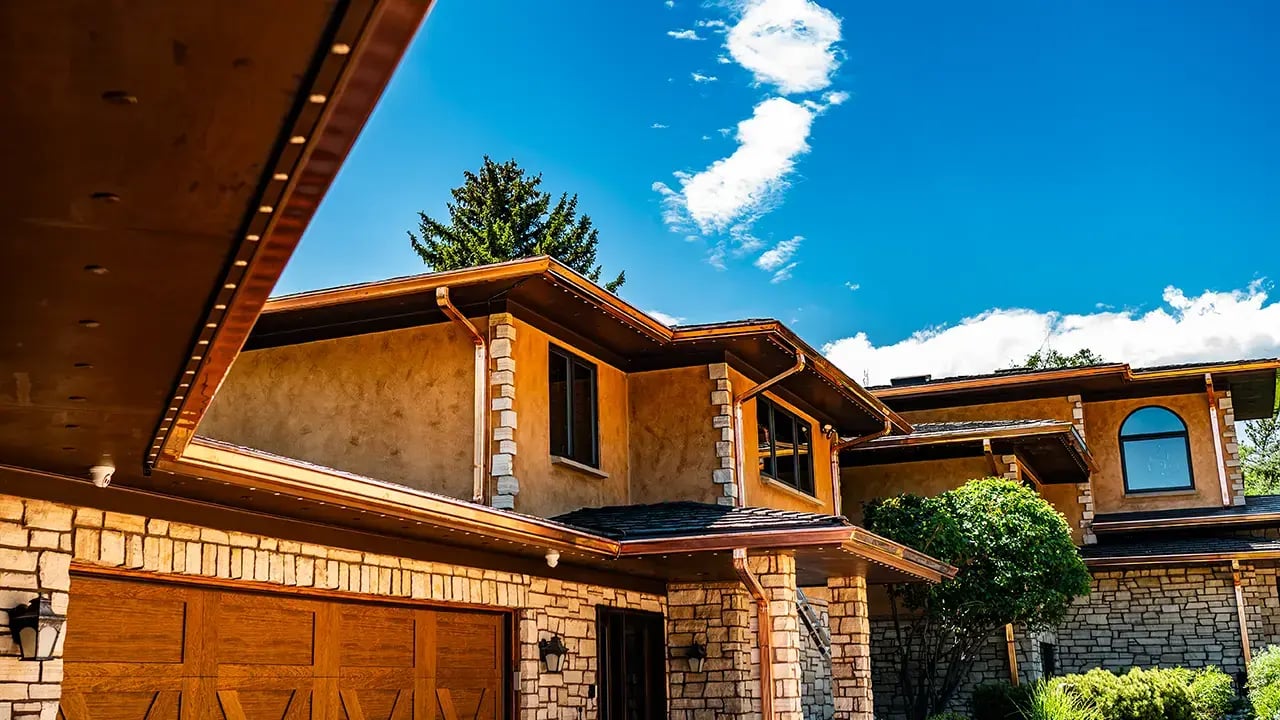
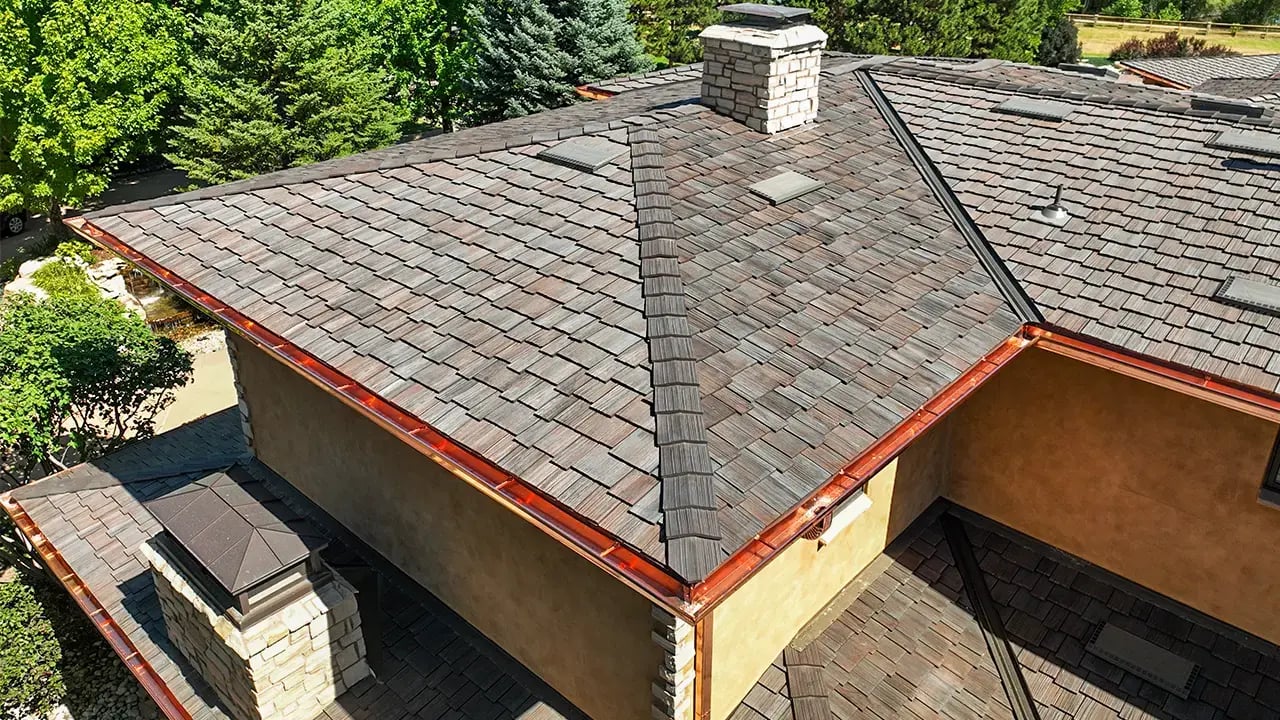
At Excel Roofing, gutters and water drainage are a specialty of our resident expert, Zach McDonald, who has installed gutters since 2015. In that time, he and our crews have completed thousands of aluminum and steel installations along with dozens of copper gutter jobs across the Denver metro area. We recently wrapped a copper gutter installation in Cherry Hills, and it is a perfect example of why copper is a different animal from the aluminum most homes have. If you are weighing copper against aluminum for your home, here is what actually matters, from the metal itself to how it gets installed.
What Is the Difference Between Copper and Aluminum Gutters?
The two biggest differences come down to how the metal behaves. First, copper is a lot heavier than aluminum. Second, copper is a lot stiffer. Those two properties change everything about how the gutter is handled, fastened, and joined. A copper system has to be built with its weight and rigidity in mind, which is one reason copper installs take more skill and time than a standard aluminum run.
Why You Should Never Mix Copper With Other Metals
When you install copper, you cannot mix it with other types of metal like aluminum or bare steel. The reason is galvanic corrosion. Galvanic corrosion happens when two different types of metal meet, and moisture in the climate sets off a reaction that slowly eats away at the lesser metal over time. Along Colorado's Front Range, where we get plenty of moisture from snow and hail seasons, that reaction is not something you want anywhere near a premium gutter system. It means the fasteners, hangers, and every connected component have to be copper-compatible, not just the gutter itself.
Why We Wear Gloves When Handling Copper Gutters
You'll notice our crews wear gloves on every copper job, and it isn't only about safety. The oils from your fingers leave black fingerprints on the copper, and those oils make the metal oxidize much faster than it would if it were simply exposed to the weather. Bare hands on brand new copper can leave marks that show up for years. Keeping the copper clean during installation protects the finish you paid for.
How Long Do Copper Gutters Last Compared to Aluminum?
This is where copper earns its reputation. Aluminum gutters typically last somewhere between 20 and 30 years. Copper gutters can last anywhere from 50 to 100 years. Copper is far more resistant to corrosion and rust than aluminum, which is the main reason it holds up for generations rather than decades. If you plan to stay in your home long term, or you want a system the next owner never has to think about, copper's lifespan is hard to beat.
What Is Copper Patina?
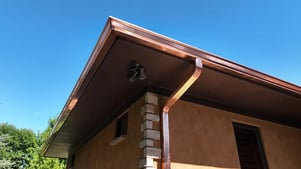
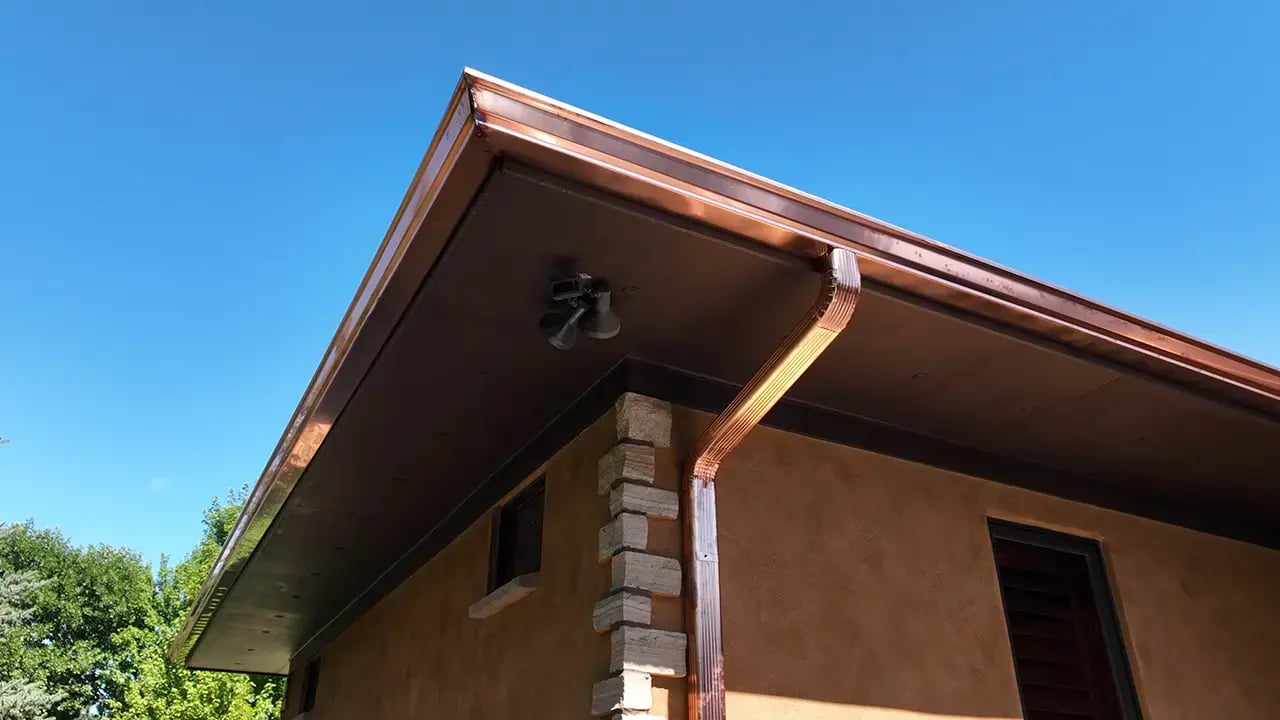
One thing that surprises homeowners is that copper changes color over time, and that change is a feature, not a flaw. Brand new copper has that bright, warm, copper-toned look. As it ages and reacts with the air, it develops a patina, which is a darker, weathered finish. On our Cherry Hills job you could see both side by side: a bright new gutter next to an older downspout that had fully patinated to a deep, darker tone. Patina is a natural protective layer, and many homeowners choose copper specifically because they love how it matures.
Why We Solder Copper Gutters Instead of Sealing Them
On aluminum, seams are joined with gutter sealant or silicone. On copper, we solder the joints instead, and soldering lasts significantly longer than sealant. The reason is the same principle you see in plumbing: sealant and silicone do not adhere properly to copper, and they wear away in a relatively short amount of time. A soldered copper seam becomes a permanent, watertight bond that matches the lifespan of the copper itself. Using sealant on a copper gutter would undercut the whole point of choosing copper.
Why Gutters Have to Be Installed Behind the Drip Edge
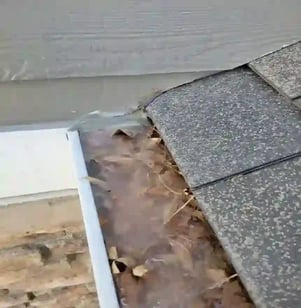
This one applies to every gutter we install, copper or aluminum, and it's one of the most common mistakes we see on work other companies did. Your gutter has to sit behind the drip metal, or drip edge, against the fascia board. If the gutter is installed in front of the drip edge, water coming off the roof runs behind the gutter, gets in between the gutter and the fascia board, and leaks down onto the fascia, the foundation, or whatever is below. Over time that causes rot and water damage that has nothing to do with the gutter failing and everything to do with how it was installed. Tucking the gutter behind the drip metal is a small detail that protects your home.
Are Copper Gutters Worth It for Colorado Homes?
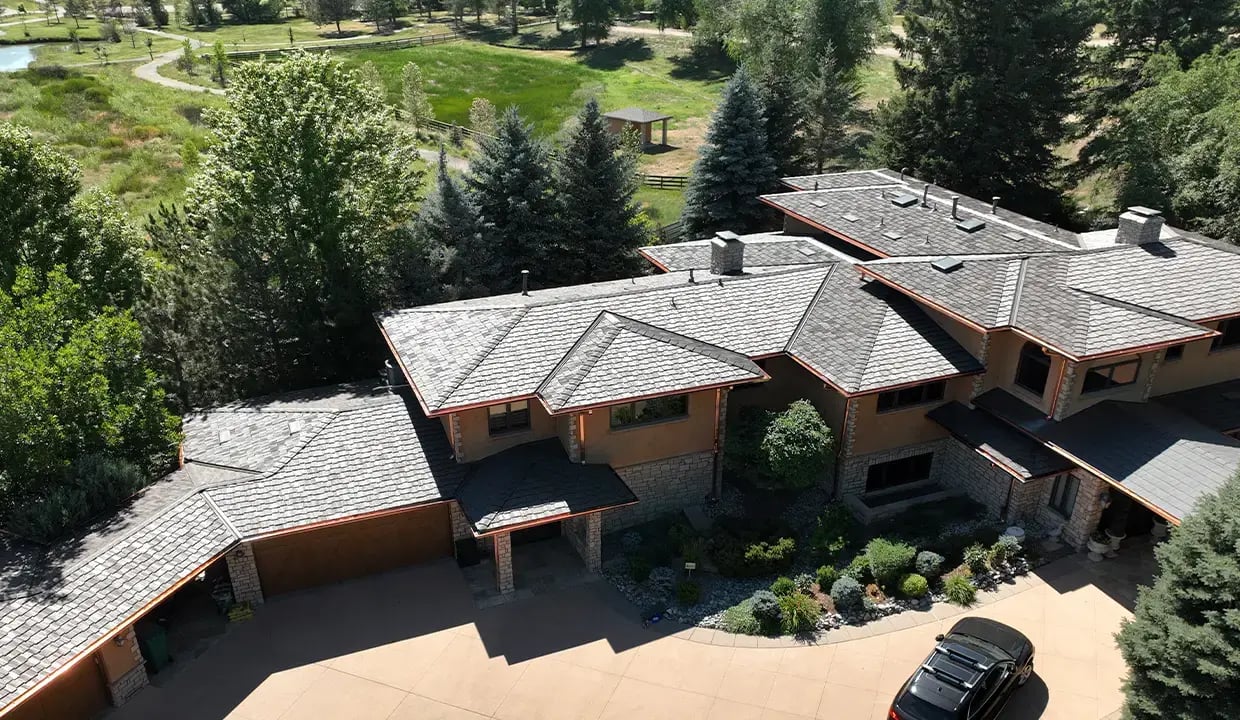
Copper costs more up front than aluminum, and it takes a skilled crew to install it correctly. But you're paying for a system that can last 50 to 100 years, resists corrosion, ages into a beautiful patina, and joins with permanent soldered seams. For the right home, copper is a genuine lifetime investment. For many homes, quality seamless aluminum is still the smart, cost-effective choice. The best answer depends on your home, your budget, and how long you plan to stay, and that's a conversation we're happy to have with you.

Frequently Asked Questions
What is the difference between copper and aluminum gutters?
The two biggest differences are weight and stiffness. Copper is significantly heavier and stiffer than aluminum, which affects how the system is handled, fastened, and joined. Copper also lasts far longer and develops a patina over time, while aluminum keeps its original color.
Do copper gutters last longer than aluminum gutters?
Yes. Aluminum gutters typically last 20 to 30 years, while copper gutters can last anywhere from 50 to 100 years. Copper is much more resistant to corrosion and rust, which is why it holds up for generations.
Why can't you mix copper gutters with aluminum or steel?
Mixing copper with a different metal like aluminum or bare steel causes galvanic corrosion. When two different metals meet in the presence of moisture, a reaction eats away at the weaker metal over time. That is why the fasteners and hangers on a copper system must be copper-compatible.
What is patina on copper gutters?
Patina is the darker, weathered finish copper develops as it ages and reacts with the air. New copper is bright and warm-toned, and over the years it matures into a deeper, protective patina. Many homeowners choose copper specifically for this natural change in appearance.
Why are copper gutters soldered instead of sealed with silicone?
Sealant and silicone do not adhere well to copper and wear away relatively quickly, much like they would in plumbing. Soldering creates a permanent, watertight bond that lasts as long as the copper itself, so we solder copper seams instead of sealing them.
Where should a gutter be installed in relation to the drip edge?
A gutter should always sit behind the drip metal, against the fascia board. If it is installed in front of the drip edge, water can run behind the gutter and leak onto the fascia board and foundation, causing rot and water damage over time.
Are copper gutters worth the cost in Colorado?
Copper costs more up front, but it can last 50 to 100 years, resists corrosion, and develops a beautiful patina. For homeowners planning to stay long term or wanting a lifetime system, copper is often worth it. For many homes, quality seamless aluminum remains a smart, cost-effective option.
Thinking About Copper Gutters? Talk to Excel Roofing First
If you're considering copper gutters, or you just want an honest recommendation on the right gutter system for your home, give Excel Roofing a call first. We've protected homes across Denver and the Front Range since 1993, and we handle gutter installation, repair, and cleaning as part of understanding your home's entire drainage system. Visit our Learning Center for more videos and articles covering the full roofing process, and when you're ready, call us at 303-761-6400 or use our easy online scheduler to pick a date and time that works for you. Remember, at Excel Roofing, You Don't Pay A Cent Until You're Content.
Topics: