
Your Colorado 2026 Pricing Guide from Excel Roofing
Concrete tile roofing is one of the most durable and long-lasting roofing systems available, and it has a deeper history in the Denver area than you might know. If you are considering a tile roof for your home, this guide covers what it costs, what moves that cost up or down, and why Denver's weather makes a strong case for concrete tile.
Concrete Tile Has Been Proven in Denver for Over a Century
Before we get into pricing, it is worth noting that tile roofing is not new to Denver. Several of the city's most recognizable neighborhoods and structures have carried tile roofs through Colorado's harshest weather for generations.
The Capitol Hill and Country Club neighborhoods, developed largely in the 1910s and 1920s, are home to dozens of Mediterranean Revival and Spanish Colonial-style homes featuring original tile roofs. These homes were built during an era when tile was the material of choice for upscale Denver residences because of its durability and distinctive appearance. Many of those roofs are still performing today, a century of Colorado winters, hailstorms, and intense UV exposure later.
The Cathedral Basilica of the Immaculate Conception at Colfax and Logan, completed in 1912 is among Denver's most architecturally significant structures. Mission-style buildings on the Auraria Campus, including the historic St. Cajetan's Church, also feature tile roofing that has persisted through decades of Front Range weather.
These are not modern test cases. They are century-long proof points that tile roofing systems, when properly installed, are more than capable of handling Colorado's weather.
What Does a Concrete Tile Roof Cost in Denver?
Concrete Tile Roofing: Class 4 $1,275 per square | Estimated total: $38,250 – $40,000
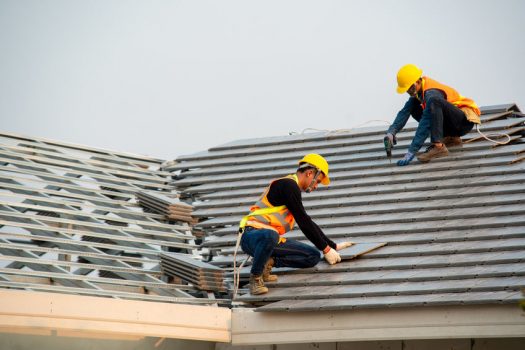
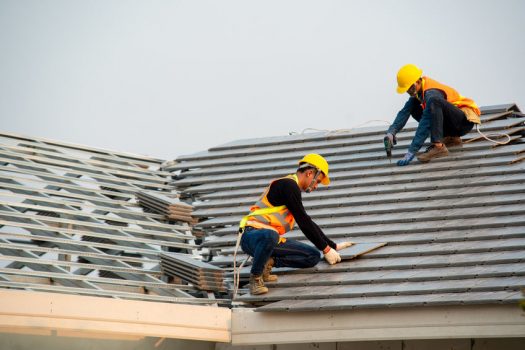
All pricing reflects fully installed costs including material, labor, tear-off of your existing roof, deck inspection, and disposal. Estimates are based on a 30-square roof (3,000 sq ft of roof surface), which represents a typical Denver single-family home. Pricing reflects the Colorado market as of early 2026.
To put that in context, a mid-grade asphalt shingle roof in Colorado runs $650 to $825 per square installed, meaning a concrete tile roof costs roughly 1.5 to 2 times as much upfront. The case for tile is made in the long-term ownership cost section below.
Concrete tile carries a Class 4 impact rating, the highest available, making it one of the strongest performing roofing systems you can have in a hail market like Denver. Many Colorado insurance carriers offer ongoing premium discounts for Class 4 rated systems.
Contact your agent to confirm whether your specific policy includes this benefit, over the life of a tile roof, those annual savings compound into a meaningful savings against the higher upfront cost.

What Drives the Cost of a Tile Roof in Denver
Roof Pitch and Structural Load
Concrete tile is significantly heavier than asphalt shingles, typically 900 to 1,100 pounds per square compared to roughly 350 pounds for asphalt. Before installation, a structural assessment is required to confirm your home's framing can support the added weight. Homes that require reinforcement will see additional cost. Steeper pitches also add labor time and equipment requirements, and any roof pitch below 4:12 requires two layers of underlayment per building code.
Deck Condition
Denver's freeze-thaw cycles and ice dam activity are hard on roof decking. Any soft, damaged, or compromised decking discovered during tear-off must be replaced before tile can be laid. We will communicate this to you clearly before any additional work proceeds.
Roof Complexity
Valleys, dormers, skylights, chimneys, and transitions require custom tile cuts and additional flashing work. More complex rooflines take more time and add to labor costs. Homes with multiple penetrations, swamp coolers, solar tubes, vents, should plan for these line items to be addressed explicitly in any estimate.
Hail Exposure and Insurance Implications
Denver sits in one of the most hail-active corridors in the country. The Front Range sees significant hail events most years, with damaging storms common from April through August. This makes Class 4 impact resistance not just a premium feature but a practical necessity.
When evaluating bids, confirm that the tile product specified carries a documented Class 4 rating, not all tiles are equal, and the rating directly affects your long-term insurance eligibility.
Why Concrete Tile Makes Sense With Denver's Weather?
Denver's combination of intense UV radiation, frequent hail, dramatic freeze-thaw temperature swings, and occasional heavy snow loads creates a roofing environment that punishes lower-grade materials over time. Concrete tile addresses each of these challenges directly.
Hail resistance. Class 4 impact resistance means the tile performs exceptionally well in hail events that regularly damage standard asphalt shingles. The mass and hardness of concrete tile absorbs and distributes impact rather than fracturing under it. Asphalt shingles, even impact-resistant grades, are susceptible to granule loss and bruising that shortens their effective lifespan well before they visibly fail.
UV durability. At Denver's elevation, UV exposure is significantly more intense than at sea level. Asphalt shingles degrade more rapidly under this exposure. Concrete tile is unaffected by UV radiation in the same way, the material does not break down from sun exposure, making it well-suited to Colorado's 300-plus days of sunshine.
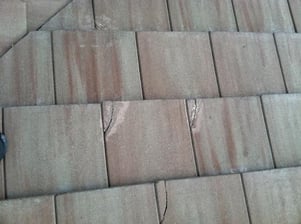
Freeze-thaw performance. Denver's temperature swings, single-digit overnight lows followed by rapid afternoon warming, put constant stress on roofing materials. Tile roofs handle temperature changes well when properly installed. The key is ensuring hairline fractures are caught and addressed before water infiltrates and freezes within the tile body, which is why periodic inspection remains important even on a durable system.
Longevity. Expected service life on a properly installed concrete tile roof is 40 to 50 years or more. Premium asphalt shingles are very lucky if they last 20 to 30 years under Colorado conditions. That difference in lifespan is the foundation of the long-term cost argument for tile.
Long-Term Cost of Roof Ownership
A concrete tile roof costs more upfront than asphalt. It also replaces far less frequently. When you account for the cost of two asphalt replacements over the same 50-year period a single tile roof would serve, the financial gap narrows considerably.
Consider a straightforward comparison. A concrete tile roof installed today in Denver runs approximately $38,250 for a typical 30-square home. A comparable-quality asphalt installation runs approximately $24,000. That is a $14,250 difference upfront.
But if that asphalt roof requires replacement in 10 - 25 years and likely again in 50, the cumulative asphalt cost over the same period is substantially higher, before accounting for inflation or rising material costs.
Add in the insurance premium discount available to Class 4 rated systems in Colorado, compounding annually for the life of the roof, and the total cost of ownership picture becomes even more favorable for tile.
Roofing material costs have also risen significantly in recent years,10 to 20 percent in 2021, 8 to 12 percent in 2022, and approximately 4 to 7 percent annually from 2023 through 2025. Locking in a roofing system with a 50-year lifespan today protects against future cost escalation in a meaningful way.
Maintenance requirements for concrete tile are minimal compared to other systems, but periodic inspection remains important. Cracked individual tiles, flashing movement at penetrations, and ridge cap sealant are the areas most likely to need attention over time. Catching these early is inexpensive. Ignoring them is not. If you have minimal tile cracking and breaking, this is not a catastrophe, tiles are relatively easy to replace. Concrete cracks, it happens and is a law of the universe.
Frequently Asked Questions
Does my home need to be structurally reinforced to support concrete tile?
If you are moving from a lightweight roofing system (aspahlt shingles, lightweight tile, synthetic and wood) to concrete tile, the answer is probably. If you do not want to reinforce the structure of your home, stone-coated steel is comparable in price but is much lighter than concrete tile. It depends on your existing framing. Concrete tile is significantly heavier than asphalt, and some homes require structural reinforcement before tile can be installed. We assess this during inspection before any project begins. We will tell you clearly what your structure needs before you commit to anything.
How does concrete tile perform in Denver's hail storms?
Concrete tile carries a Class 4 impact rating, the highest available. In Denver's active hail environment, that rating matters. Concrete tile consistently outperforms asphalt under hail impact, and because it is a rigid material rather than a layered membrane, hail damage is typically limited to individual tiles that can be replaced without a full roof replacement. Concrete tile is not hail proof, if there is 4"-5" hail, it will obliterate the roof. Needless to say, 3"-5" hail is extremely rare but it does happen.
Does concrete tile qualify for an insurance discount in Colorado?
Class 4 rated systems typically qualify for premium discounts with many Colorado carriers. The discount varies by insurer and policy, but given the length of a tile roof's service life, even a modest annual discount compounds into a significant offset over time. Contact your insurance agent to confirm whether your specific policy includes this benefit.
How long does a concrete tile roof installation take?
Tile installations take longer than asphalt due to the weight handling, structural assessment, cutting, and fastening requirements. Most residential tile projects run three to five days depending on roof size and complexity. We schedule installations to account for Colorado's afternoon weather patterns during spring and summer.
Does Excel Roofing help with insurance claims on tile roofs?
Yes. If hail or wind damage prompted your interest in replacement, we can work alongside you and your adjuster through the claims process. We document damage thoroughly and can help ensure your claim accurately reflects the actual cost of tile replacement, not asphalt shingle pricing, which adjusters sometimes apply incorrectly to premium material roofs.
How does concrete tile compare to other premium roofing options in Denver?
Concrete tile at $1,275 per square is one of the more accessible premium roofing systems. For comparison, standing seam metal runs approximately $1,350 per square, stone-coated steel is $1,275 to $1,375 per square, and natural slate is approximately $2,300 per square. Each has distinct performance characteristics, and the right choice depends on your roof pitch, architectural style, and long-term plans for the property.
Schedule Your Free Estimate
Excel Roofing serves the Denver metro area and surrounding communities from our Englewood location at 4510 S Federal Blvd. As an Owens Corning Platinum Preferred Contractor, we bring manufacturer-certified installation and the strongest warranty coverage available to every project.
Call us at (303) 761-6400, visit excelroofing.com, or contact us online to schedule your free inspection and estimate.
Last Updated: April 2026 | Pricing reflects the Colorado market as of March 2026.
Topics: