


How Much Does a Roof Replacement Cost in Colorado and Wyoming?
Your Good, Better, Best Guide
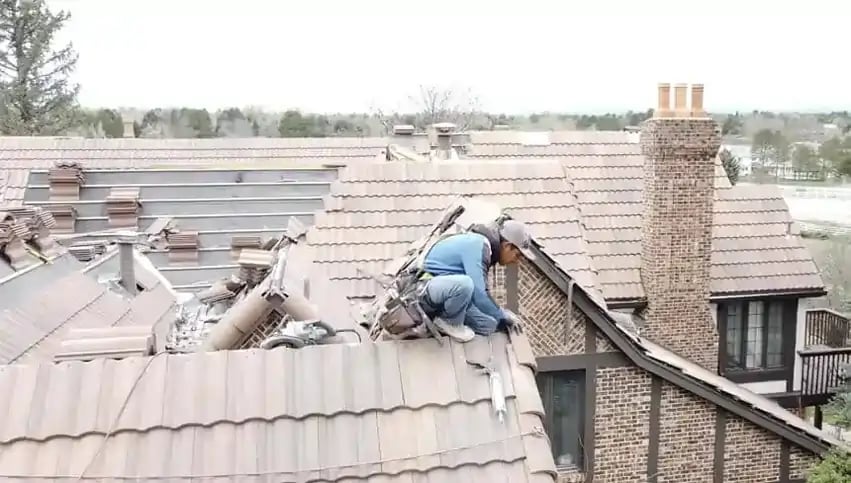
For homeowners in Colorado and Wyoming, roof replacement decisions must account for hail damage, high winds, snow load, insurance cost and deductible amounts, and long‑term durability. These regional factors make roof replacement in Colorado and Wyoming significantly different from roofing projects in low‑impact climates, directly affecting roofing material selection, installation standards, insurance underwriting, and long‑term ownership costs.
One of the most common mistakes homeowners make is starting with financing or focusing on a single price, instead of first understanding how different roofing materials affect both budget and long‑term value.
The smartest approach begins with a Good, Better, Best roofing estimate. This Good, Better, Best roofing model allows homeowners to compare roof replacement pricing, expected lifespan, hail resistance ratings, insurance acceptance, and long‑term cost of ownership across multiple roofing systems.
- Good: Asphalt shingles, including Class 4 impact‑resistant options
- Better: Stone‑coated steel or tile roofing systems
- Best: Synthetic polymer or rubber roofing systems
Once a realistic budget is established using these material tiers, homeowners can move forward quickly using a signature (personal) loan, avoiding delays from appraisals or equity underwriting. After the roof is completed and home value or equity improves, the loan can be converted into a Home Equity Line of Credit (HELOC), reducing long‑term interest costs and creating flexible credit for future improvements.
This strategy provides speed, control, and long‑term financial flexibility.
Step One: Establish a Real Budget with an Excel Good, Better, Best Roofing Estimate
In Colorado and Wyoming, a roof replacement is not a cosmetic upgrade—it is a structural and financial decision driven by severe weather exposure and evolving insurance practices.
Before applying for any roof replacement financing, homeowners must understand what different roofing materials actually cost, how they perform in hail conditions, and how they affect long‑term insurance costs. An Excel Roofing estimate clearly presents three material‑based pricing tiers, allowing homeowners to budget based on performance, durability, insurance impact, and ownership timeline—not assumptions.
 Good: Asphalt Shingles
Asphalt Shingle Roof Replacement Cost Option
The Good tier represents the lowest upfront roof replacement cost and typically includes:
- Asphalt shingles (standard or Class 4 impact‑resistant)
- Proper attic ventilation
- Proper roof drainage and gutter protection
Best for: Budget‑conscious homeowners who still need insurance‑approved protection
This option is commonly selected when short‑term ownership plans, insurance requirements, or immediate budget constraints are the primary concern.
A new asphalt roof will protect your home. A Class 4 asphalt shingle roof offers improved hail resistance and often qualifies for insurance premium discounts in Colorado and Wyoming.
This tier establishes the baseline cost for roof replacement.
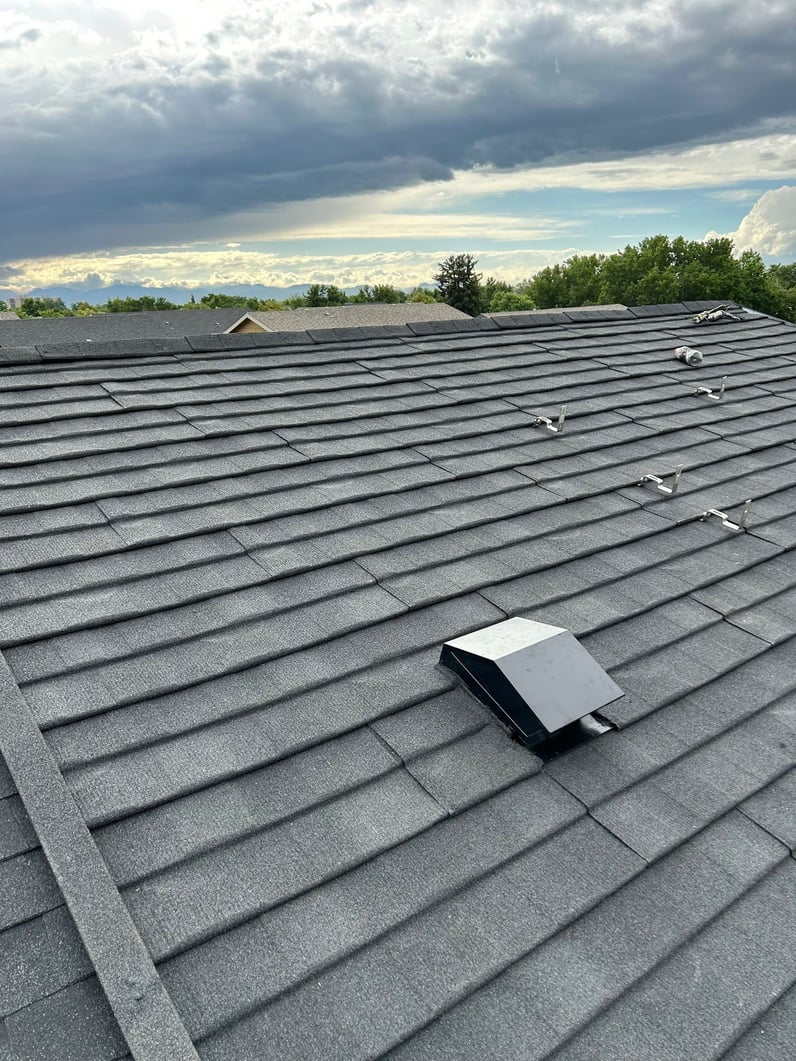 Better: Stone‑Coated Steel or Tile Roofing
Metal and Tile Roofing Systems for Hail‑Resistant Homes
The Better tier upgrades the home into a long‑term roofing system and typically includes:
- Stone‑coated steel roofing or concrete tile
- Enhanced ventilation and insulation
- Proper roof drainage and gutter protection
Best for: Homeowners planning to stay in their home five years or longer, who want to minimize the likelihood of hail‑related roof claims and reduce the risk of insurance coverage converting from Replacement Cost Value (RCV) to Actual Cash Value (ACV) after ten years.
Advantages include:
- Excellent hail and wind resistance
- Lower long‑term insurance costs with more stable coverage
- Significantly longer lifespan and improved resale value
In hail‑prone regions like Colorado and Wyoming, stone‑coated steel and tile roofs are often considered both a roofing upgrade and an insurance strategy. For many homeowners, this tier provides the best balance between upfront cost and long‑term value.
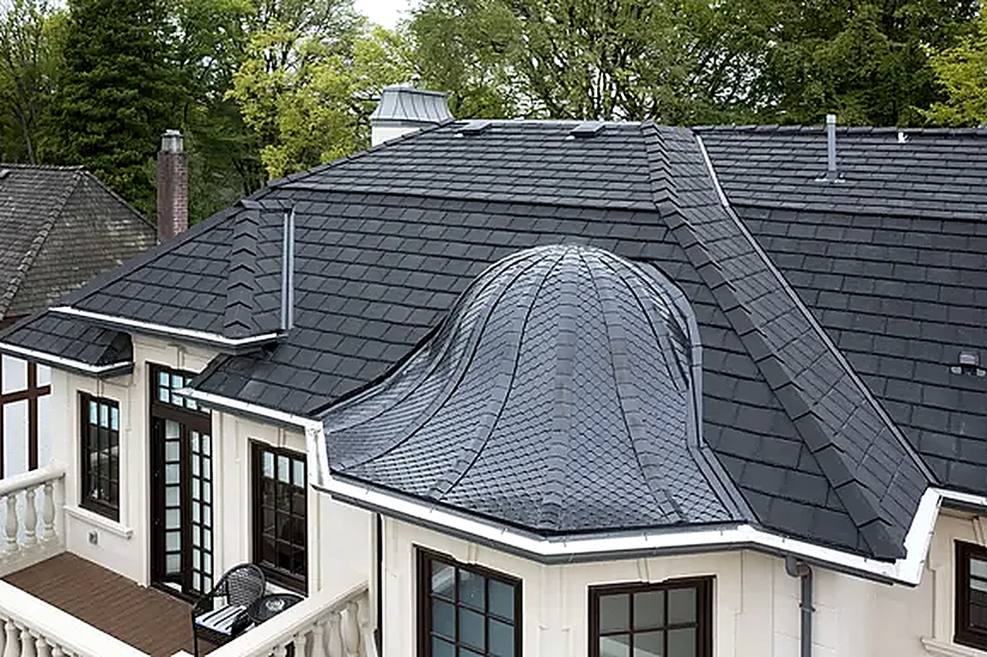 Best: Synthetic Polymer or Rubber Roofing Systems
Impact‑Resistant Synthetic and Rubber Roofing for Severe Weather Zones
The Best tier includes high‑performance roofing materials designed specifically for severe weather environments, such as:
- Synthetic polymer slate or shake profiles
- Rubber‑based composite roofing systems
- Proper attic ventilation and insulation
- Proper roof drainage and gutter protection
Best for: Long‑term homeowners seeking maximum protection, minimal maintenance, and the highest level of insurance stability.
Why this tier stands out:
- Exceptional impact resistance, often considered near hail‑proof
- Lower insurance costs with long‑term RCV coverage
- Longest service life and strongest resale value
These roofing systems are frequently recommended for homeowners who want predictable insurance treatment, reduced claim risk, and the lowest lifetime roof replacement cost, even with a higher initial investment.
Why These Material Tiers Matter for Budgeting
Comparing asphalt shingles vs. stone‑coated steel or tile vs. synthetic or rubber roofing allows homeowners to:
- Understand true roof replacement cost ranges
- Clearly evaluate performance and durability differences
- Set a realistic financing target
- Understand long‑term insurance cost implications
- Make informed decisions about resale value and ownership horizon
This clarity is what makes the financing strategy effective.
Step Two: Use a Signature (Personal) Loan for Fast Roof Replacement Financing
Once the roofing system is selected, timing becomes critical—especially after storms or when contractor availability and material pricing fluctuate.
A signature (personal) loan is often the smartest first financing step. Personal loans for roof replacement are commonly used when speed, flexibility, and price stability are critical factors.
Why signature loans work well initially:
- No home equity required
- Fast approval and funding
- Fixed monthly payments
- No lien placed on the home
This allows homeowners to begin the project immediately, lock in material pricing, and avoid delays caused by appraisals or equity underwriting.
Step Three: Refinance Roof Costs with a HELOC After Project Completion
After the roof is completed:
- Home value often increases
- Equity position may improve
- Insurance standing may strengthen
At that point, homeowners can convert the signature loan into a HELOC if it makes financial sense. This can lower interest costs and provide flexible credit for future home improvements.
This strategy allows homeowners to separate urgent roof replacement needs from long‑term home equity planning.
Final Thoughts: Material First, Budget Second, Financing Third
For homeowners in Colorado and Wyoming, the smartest roof replacement strategy is built on clarity and control:
- Define your roof using Good, Better, Best material tiers
- Establish a budget based on performance, durability, and insurance impact
- Use a signature loan to move quickly
- Convert to a HELOC when conditions are favorable
This approach protects your home, your cash flow, and your long‑term financial flexibility.
Frequently Asked Questions
Should “Good” roofing be a standard or Class 4 asphalt shingle?
If the budget only allows for a standard asphalt shingle, it will qualify for new insurance coverage. However, Class 4 shingles provide stronger impact resistance and homeowners often receive insurance discounts.
Is stone‑coated steel or tile worth the upgrade?
Yes, for many homes. These materials offer longer lifespan, superior hail and wind resistance, lower overall insurance costs, and improved resale value.
Why are synthetic polymer or rubber roofs considered the best option?
They combine exceptional impact resistance, lower insurance costs, lighter weight, long service life, and minimal maintenance—often resulting in the lowest lifetime cost.
Why start with a signature loan instead of a HELOC?
Signature loans fund faster, require no appraisal, and place no lien on the home—making them ideal for roof replacements.
Can a signature loan be converted into a HELOC later?
Yes. Many homeowners refinance after completion when home value or equity improves.
What is the average roof replacement cost in Colorado and Wyoming?
Roof replacement costs vary widely based on roof size, material choice, and complexity. Asphalt shingles typically represent the lowest upfront cost, while metal, tile, and synthetic systems require higher initial investment but often deliver lower lifetime cost due to durability and insurance savings.
About the Author
J. Bretz is the Founder and CEO of Excel Roofing, Inc., with over 3 decades of experience in roofing systems, insurance‑driven construction, and hail‑impact mitigation throughout Colorado and Wyoming.
Topics:
.webp?width=301&height=339&name=Ent%20Wings%20Credit%20Union%20(1).webp)
.webp?width=301&height=425&name=navigating-the-insurance-claims-process-for-hail-damaged-roofs%20(1).webp)

.webp?width=301&height=210&name=tipping-a-contract%20(1).webp)
