

Excel Roofing has served Colorado and Wyoming homeowners since 1993, and in that time we have seen the roofing industry attract its share of screwballs. The good news is that homeowners do not need to be roofing experts to protect themselves. You just need to know what to look for before signing anything. This article covers the four non-negotiables every homeowner should follow when hiring a roofing contractor, along with a few details on warranties and inspections that catch many people off guard.
The Four Non-Negotiables
Before hiring anyone to work on a roof, these are the four things no homeowner should skip:
- Do not pay money up front, or pay as little as possible.
- Do not sign a bad contract.
- Work with a contractor who has a solid track record.
- Make sure they pull a permit and are licensed and insured.
Here is what each one means in practice.
Rule 1: Do Not Pay Up Front
When hiring any home remodeling contractor, this one rule trumps everything else: try not to pay any money at all until the work is completed. There are exceptions. Some special order items must be paid for ahead of time, but when that happens, homeowners should pay only for the materials themselves, not the labor and not the whole job.
Some projects take a while to finish, and progress payments are perfectly acceptable as long as the completed work is done to the homeowner's satisfaction. The principle is simple. The money should follow the work, not lead it.
Rule 2: Do Not Sign a Bad Contract
The first real step in protecting yourself is making sure you do not get locked into a bad contract. Homeowners should never sign a roofing agreement that asks for money up front, charges cancellation fees, or includes stipulations that are heavily one sided in favor of the contractor. Every contract should be read thoroughly before it is signed.
Here is something most homeowners never realize: a contract can be changed. When a contractor presents an agreement, the homeowner is allowed to cross things out and add things in, and those changes become part of the legally binding document. There is no reason to be afraid to mark it up and ask questions until it is fair to both sides.
Insurance Claims: Know What Is Covered
If the project is an insurance claim, homeowners should make sure the work the contractor is proposing is actually covered by the settlement. If part of it is not covered, the contractor needs to know how to work with the insurance company and how to resolve any cost differences.
A contractor who is not familiar with the insurance claim process is not a good candidate for that kind of work. Storm damage claims in Colorado and Wyoming have their own rhythm, and homeowners are best served by a contractor who has handled them many times before.

Check for Manufacturer Certification
Homeowners should check whether the contractor is certified by the manufacturer to install the products being proposed, roofing materials especially. This matters more than people think. If anything ever goes wrong with the roof, the resolution process is far smoother and easier when the installer is a recognized, certified installer for that product.
Understand Your Warranty Coverage
It is always worth asking about warranty coverage, because there are really two separate warranties at play. The first is the installer's guarantee, which usually runs from one to five years and covers the installation work itself. The second is the manufacturer's guarantee, which covers the material.
This is one to watch closely. Many manufacturers advertise a lifetime guarantee, but the real coverage often drops off sharply after the first five to ten years. Plenty of homeowners assume their asphalt shingles are covered for life, and that simply is not true. Reading the fine print is the only way to know exactly what is covered.
The Inspection Process
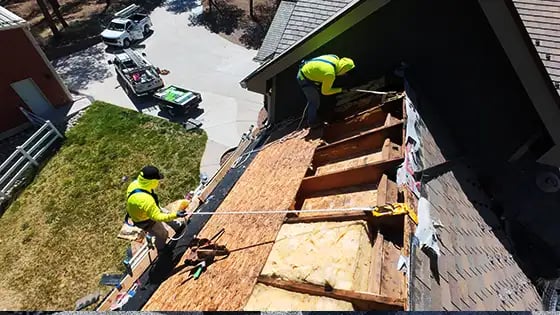
Most homeowners rely on city and county inspectors to confirm the work was done correctly. Those inspectors serve a good purpose, but they are not the absolute experts on every single product on the market.
When there is any doubt that something is not being installed right, hiring an independent inspector provides a valuable third set of eyes. Here is the part that really protects a homeowner: if the work is done incorrectly, that independent inspector's report can be legally binding in court if legal action ever becomes necessary.
Quick Recap
These are the most important things to do when looking for a good, competent contractor:
- Never sign a bad agreement.
- Do not pay any money up front, or only pay for special order items.
- On an insurance claim, choose a contractor who knows the insurance claim process.
- Pick a contractor who is certified by the manufacturer to install the products they use.
- Use the city and county inspector as a good guideline, and when there are technical questions, bring in a third party specialty inspector. That inspector can be one of the best friends a homeowner has.
Frequently Asked Questions
Should I pay a roofing contractor up front?
Try not to pay anything until the work is complete. The only exception is special order materials, and even then payment should cover the materials only, not the labor. Progress payments are fine as long as the finished work meets the homeowner's satisfaction.
Can a roofing contract be changed before signing?
Yes. Most homeowners do not realize they can cross things out and add things to a contract. Those changes become part of the legally binding agreement, so it should be read carefully and made fair before anyone signs.
What should I check on an insurance roof claim?
Make sure the work being proposed is covered by the settlement. If something is not covered, the contractor should know how to work with the insurance company and resolve cost differences. A contractor unfamiliar with insurance claims is not the right fit for that work.
Does a lifetime shingle warranty really last a lifetime?
Often not. There are two warranties to understand: the installer's guarantee on workmanship, usually one to five years, and the manufacturer's guarantee on the material. Many lifetime guarantees drop off sharply after the first five to ten years, so the fine print matters.
Do I need an independent roof inspector?
City and county inspectors are helpful, but they are not experts on every product. If there is any doubt the work is being done right, an independent inspector provides a third set of eyes, and that report can be legally binding in court if it is ever needed.
Ready to Get Started?
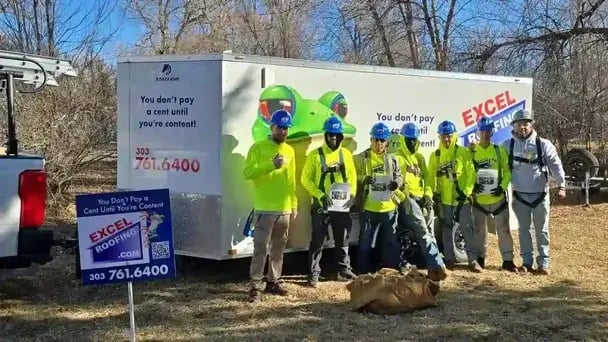
Excel Roofing has been a family owned Colorado and Wyoming roofing contractor since 1993, and the entire business is built around earning a homeowner's trust before earning their dollar. That is why our promise is simple: You Don't Pay A Cent Until You're Content.
For a closer look at your roof, give Excel Roofing a call or use our easy online scheduler to pick a day and time that works for you. We're On Top Of It.

.webp?width=301&height=365&name=The%20Taylors%20with%20Adam%20Omernick%20after%20their%20roof%20had%20been%20fully%20replaced%20(1).webp)