

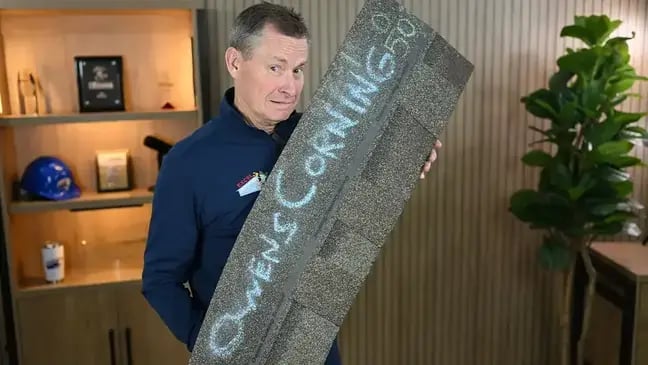
Owens Corning Roofing

Research and pricing reviewed July 31, 2026
Owens Corning offers several fiberglass-asphalt shingle lines, along with underlayments, ice-and-water barriers, starter shingles, ridge caps, and attic ventilation products. This review concentrates on its residential asphalt shingles and how they perform in Colorado and Wyoming.
Quick conclusion
Owens Corning architectural shingles are a practical mid-priced roofing choice for most homes in the region. Duration FLEX and Duration STORM are the strongest candidates for hail-prone areas because they carry Class 4 impact classifications. Standard Duration is a reasonable lower-cost choice, but its Class 3 impact rating offers less hail protection.
For mountain homes, exposed plains locations, and homes in wildfire-prone areas, the shingles must be paired with suitable underlayment, flashing, ventilation, fastening, and roof-deck preparation. The shingle alone does not create a complete weather-resistant roof.
Overall regional rating: 8/10 for Duration FLEX or STORM; 7/10 for standard Duration; 6/10 for Oakridge.
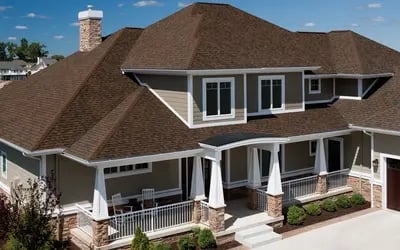
1. Product overview
Owens Corning shingles are made with a fiberglass mat coated in asphalt and mineral filler, then surfaced with colored mineral granules. The fiberglass supplies reinforcement, asphalt provides water resistance, and the granules protect the asphalt from sunlight while creating the color and texture. Some premium shingles laminate multiple layers together for a thicker appearance. Owens Corning explains the basic construction here.
The principal residential offerings include:
- Supreme: Traditional three-tab shingles and generally the least expensive option.
- Oakridge: Entry-level laminated architectural shingles.
- Duration: Architectural shingles with Owens Corning’s reinforced SureNail fastening strip.
- Duration Designer: Duration construction with more distinctive color blends.
- Duration MAX and Duration Premium: Heavier, more dimensional regional products.
- Duration FLEX: SBS polymer-modified shingles with a Class 4 impact classification.
- Duration STORM: Class 4 impact-resistant shingles incorporating WeatherGuard technology.
- Duration COOL and COOL Plus: Reflective versions intended to reduce solar heat absorption.
- Berkshire: Premium shingles designed to resemble slate.
- Woodcrest and Woodmoor: Thick, premium shingles designed to resemble wood shakes.
Availability differs by region. Owens Corning currently lists as many as 21 regional colors for standard Duration, 11 for Duration Designer, nine for FLEX, and seven for STORM. All Duration versions listed by the company carry a nominal 130-mph wind-resistance warranty when installed as required. See the current Duration comparison.
A complete Owens Corning system can also include WeatherLock ice-and-water barrier, synthetic or felt underlayment, starter strips, hip-and-ridge shingles, flashing-related components, and VentSure ventilation products.
Common uses include steep-slope houses, townhomes, apartments, small commercial buildings, offices, and retail buildings. Asphalt shingles are not intended as the exposed covering on flat or very-low-slope roofs.
2. Advantages
Owens Corning shingles offer several practical benefits:
- They cost substantially less initially than standing-seam metal, slate, or tile.
- Roofing contractors throughout Colorado and Wyoming are familiar with architectural asphalt shingles.
- Duration’s wide nailing zone can help installers place fasteners accurately.
- Numerous colors and profiles suit ordinary homes as well as higher-end designs.
- Damaged shingles can usually be replaced individually.
- FLEX and STORM offer the company’s highest hail-impact classification.
- The roofing system can achieve a Class A external fire rating when installed as a listed assembly.
- Shingles will not rot, rust, or attract insects.
- The roof is quieter during rain and hail than many exposed metal assemblies.
- Owens Corning offers several levels of system and workmanship warranty coverage.
This product is particularly attractive for a homeowner who wants familiar appearance, broad contractor availability, reasonable cost, and better hail resistance without paying for premium metal roofing.
3. Disadvantages
Asphalt shingles have important limitations:
- Their actual life in a high-UV, hail-prone climate may be much shorter than the “limited lifetime” warranty language suggests.
- Severe hail can bruise or fracture even a Class 4 shingle. Class 4 is a laboratory impact classification, not a guarantee against damage or leakage.
- Wind resistance depends heavily on nail location, nail count, starter-strip installation, deck condition, and whether the adhesive seals properly.
Avoid conventional asphalt shingles on roofs below the manufacturer’s permitted slope, buildings where a 50-plus-year covering is the priority, unusually exposed high-wind sites without a project-specific fastening design, or roofs that regularly retain drifting snow and ice because of poor design.
4. Colorado and Wyoming climate performance
Temperature changes and freeze-thaw cycles
The fiberglass base is dimensionally stable, but the asphalt becomes softer in heat and stiffer in cold. Repeated temperature swings accelerate aging and can expose weaknesses around nails, penetrations, flashing, and poorly supported decking. SBS-modified Duration FLEX should remain more flexible in cold conditions than conventional oxidized-asphalt shingles, although Owens Corning does not publish a dependable Colorado- or Wyoming-specific service-life advantage.
Freeze-thaw cycles usually damage the roof indirectly. Water enters a vulnerable joint, freezes, expands, and enlarges the opening. Correct flashing and ice-and-water membrane are therefore as important as the shingle.
Snow, ice, and snow loads
Shingles shed snow adequately on properly pitched roofs, but they do not carry the snow load. Rafters, trusses, decking, and connections do that. Mountain snow loads can differ dramatically from plains loads, so structural capacity must be determined under the locally adopted code.
Ice-and-water membrane should be installed where local rules require it and is prudent at eaves, valleys, penetrations, and other vulnerable locations. Some mountain jurisdictions are much stricter; for example, Mt. Crested Butte requires self-adhering ice barrier over the entire roof under its local amendment. Requirements must be checked for the actual property rather than assumed statewide. Mt. Crested Butte code amendment.
Good attic air sealing, insulation, and ventilation reduce the uneven roof temperatures that contribute to ice dams.
Hail
Hail is the decisive issue for many regional buyers. Owens Corning identifies standard Duration as Class 3 and Duration FLEX and STORM as UL 2218/FM 4473 Class 4. Class 4 is the highest classification under the referenced laboratory test, but it does not mean “hail-proof.” Owens Corning impact-product explanation.
Because real hail differs in hardness, size, shape, speed, and wind direction, homeowners should also review independent performance information and ask the insurer whether the exact product—not merely “Class 4”—qualifies for favorable treatment. IBHS uses a separate test protocol intended to evaluate damage from two-inch hail. IBHS natural-weathering and impact testing.
Strong winds
Owens Corning lists a 130-mph wind-resistance warranty for Duration products when installed according to its requirements. That number is not a prediction that every roof will survive a 130-mph storm without damage.
Poorly placed nails, high nails, insufficient nails, missing starter shingles, unsealed tabs, deteriorated decking, and exposed roof geometry can cause early failure. FEMA recommends ASTM D3161 Class F or ASTM D7158 Class H shingles, six-nail installation, proper starter strips, and a sealed roof deck for improved high-wind resilience. FEMA wind-resilience guidance.
High-altitude UV and dry air
Intense solar radiation accelerates fading, oxidation, and granule loss. Dry air reduces moss pressure but does not stop asphalt aging. Lighter colors and COOL products may reduce surface temperature, although product availability is regional and energy savings depend on attic construction, insulation, roof orientation, and HVAC efficiency.
Wildfire and embers
Fiberglass asphalt shingles can be part of a Class A roof assembly, but asphalt itself is combustible. Class A is a tested assembly rating, not a declaration that every component is noncombustible.
Colorado’s 2025 Wildfire Resiliency Code calls for a Class A covering or assembly in covered wildland-urban-interface construction and includes measures addressing ember entry and roof valleys. Applicability depends on location and project type. Colorado Wildfire Resiliency Code.
A wildfire-resistant roof also needs clean gutters, ember-resistant vents, properly protected edges and valleys, maintained flashing, and removal of leaves and pine needles. Metal can offer an additional noncombustible-material advantage, but the complete assembly still matters.
Moisture and condensation
Shingles are water-shedding, not waterproof. Underlayment, ice barrier, flashings, roof slope, gutters, and drainage provide the backup defense. Indoor air leaking into a cold attic can create condensation beneath the deck even when the shingles are intact. Balanced ventilation and attic air sealing should be evaluated together.
Regional summary
- Front Range and eastern plains: Strong candidate, preferably FLEX or STORM because of hail and wind.
- Wyoming plains and exposed ridges: Suitable with enhanced fastening, sealed deck, good edge detailing, and verification of local design wind speed.
- Mountain communities: Suitable on a correctly designed steep roof, but full or expanded ice membrane, snow retention strategy, ventilation, and structural snow-load review may be necessary.
- High desert: Suitable, although UV aging and wind exposure favor higher-quality shingles and careful installation.
- Wildland-urban interface: Acceptable as a listed Class A assembly, but metal may be preferable when maximum ember and fire resilience is the priority.
5. Durability and lifespan
A reasonable planning range is approximately:
- Supreme three-tab: 15–20 years
- Oakridge and standard Duration: 20–30 years
- FLEX, STORM, and heavier premium lines: roughly 25–35 years
These are planning estimates, not manufacturer promises. A severe hailstorm can cause replacement much sooner, while a sheltered, well-ventilated roof may last longer.
The shingles resist rot, insects, and corrosion, but they can fade, crack, curl, blister, lose granules, tear around fasteners, or lift in wind. Warning signs include:
- Exposed fiberglass or smooth dark areas
- Large quantities of granules in gutters
- Cracked, missing, curled, or displaced shingles
- Loose ridge caps
- Rusted or separated flashing
- Water stains in the attic
- Soft or delaminated decking
- Repeated leaks around walls, chimneys, skylights, or vents
Poor ventilation, overheated roof decks, chronic ice dams, foot traffic, overdriven nails, wrong nail placement, inadequate flashing, multiple roof layers, tree debris, and repeated hail all shorten service life.
6. Cost
As of May–July 2026, national consumer pricing sources place shingle materials at approximately $1.50–$6.00 per square foot and complete asphalt-shingle installations at approximately $4–$12 per square foot. Angi reports a typical whole-project range of $7,500–$24,000, while HomeAdvisor reports approximately $4–$12 per square foot installed. These are broad national ranges, not Owens Corning quotes. Angi’s May 30, 2026 pricing and HomeAdvisor’s 2026 pricing.
For preliminary Colorado and Wyoming budgeting:
- Basic Oakridge or similar architectural system: about $5–$9 per square foot installed
- Standard Duration system: about $6–$11 per square foot
- FLEX, STORM, or premium designer system: about $7–$14 or more per square foot
- Complex mountain roofs, steep slopes, remote delivery, extensive ice membrane, structural work, or major deck replacement: potentially higher
Labor commonly includes tear-off, disposal, deck inspection, underlayment, flashing, shingles, ridge caps, ventilation work, cleanup, and permit coordination. Confirm whether each item is actually included.
Minor repairs may cost several hundred dollars; flashing, leak diagnosis, steep access, or widespread hail damage can cost much more. Asphalt generally provides good initial value, but repeated hail replacements can weaken its long-term advantage.
Actual pricing varies by location, supplier, roof size, pitch, access, waste factor, product line, tear-off layers, deck condition, flashing, ventilation, permits, warranty level, and installation conditions. Obtain at least three itemized local proposals.
7. Installation
A typical replacement includes:
- Protecting the site and removing the old covering.
- Inspecting and repairing the deck.
- Installing drip edge and ice-and-water protection.
- Installing field underlayment.
- Replacing valley, wall, chimney, and penetration flashing as necessary.
- Installing starter shingles.
- Laying field shingles with the required exposure and nail pattern.
- Installing ridge ventilation where appropriate.
- Adding matching hip-and-ridge shingles.
- Cleaning the site and performing final inspection.
Tools include tear-off equipment, roofing nailers, compressors, knives, chalk lines, sheet-metal tools, ladders, roof jacks, magnetic cleanup equipment, and OSHA-compliant fall protection.
An uncomplicated house may take two to four working days. Steep, large, complex, high-elevation, or deck-damaged roofs can take a week or longer.
Frequent mistakes include nailing outside the designated zone, overdriving or underdriving nails, reusing defective flashing, omitting starter shingles, leaving exposed fasteners, poor valley construction, inadequate ice barrier, blocked ventilation, installing over weak decking, and ignoring cold-weather sealing requirements.
Professional installation is strongly recommended. Roof work has serious fall hazards, and installation errors can create leaks or reduce warranty coverage.
8. Maintenance and repairs
Inspect the roof from the ground and, where safely accessible, from the attic:
- Every spring and fall
- After significant hail or wind
- After unusually heavy snow or ice
- Before and after wildfire season in wooded areas
Keep gutters and valleys clear. Remove branches and pine needles without pressure washing or aggressively scrubbing the shingles. Trim limbs that rub the roof. Check flashing, sealant, vents, ridge caps, and pipe boots.
Typical repairs involve replacing wind-damaged shingles, ridge caps, pipe boots, flashing, or small sections of underlayment and decking. Materials are generally available, but matching an aged or discontinued color can be difficult. Keeping one unopened bundle from the original installation can help, subject to proper storage.
Repairs are straightforward for an experienced roofer but difficult and unsafe for most homeowners, especially on steep, icy, or high roofs.
9. Energy and comfort
Asphalt shingles have very little meaningful insulation value. Attic-floor or roof-deck insulation creates the thermal barrier.
A complete, well-installed roof can improve comfort by controlling water and outdoor air, while correct attic air sealing and ventilation help control condensation. Reflective Duration COOL products may reduce solar heat gain, especially on sun-exposed roofs, but heating-and-cooling savings cannot be predicted without examining the entire building.
Shingles generally produce less noticeable rain and hail noise than exposed metal panels. The roof replacement itself will not substantially reduce heating expenses unless insulation, air sealing, ventilation, or reflective performance is improved at the same time.
10. Safety, codes, and insurance
Confirm the exact product’s current technical sheet, not merely the brand name. Relevant classifications may include:
- ASTM E108 or UL 790 external-fire classification
- UL 2218 or FM 4473 impact classification
- ASTM D3161 or ASTM D7158 wind classification
- Local ice-barrier and underlayment rules
- Minimum roof slope
- Deck thickness and condition
- Fastener number, type, length, and placement
- Structural design snow and wind loads
- Wildland-urban-interface requirements
Roof replacement commonly requires a local permit and inspection. Structural engineering may be needed when changing to a much heavier product, repairing a deficient structure, adding rooftop equipment, or addressing large mountain snow loads. Woodmoor weighs about 465 pounds per roofing square on average, and Owens Corning specifically instructs installers to confirm structural capacity. Woodcrest/Woodmoor installation information.
Some insurers offer discounts or better underwriting treatment for approved impact-resistant shingles; others impose cosmetic-damage exclusions, roof-age schedules, or higher wind-and-hail deductibles. A laboratory Class 4 label does not automatically guarantee a discount.
Verify all requirements and benefits with the local building department and your insurer before ordering materials.
11. Warranty

Current Owens Corning lifetime-shingle warranty options include:
- Standard Product Limited Lifetime Warranty: Ten-year non-prorated TRU PROtection period, followed by prorated materials-only coverage.
- System Protection: Extended product coverage when qualifying Owens Corning components and an eligible certified contractor are used.
- Preferred Protection: Includes qualifying workmanship coverage for the first ten years.
- Platinum Protection: Available through Platinum contractors and includes broader workmanship coverage, reduced after 25 years.
The company currently lists 15 years of blow-off coverage and, on qualifying products and systems, 25 years of algae-resistance coverage. Extended coverage depends on using specified Owens Corning components and properly credentialed contractors. Current warranty comparison.
The standard manufacturer warranty principally addresses manufacturing defects—not ordinary aging, hail, installation errors, poor ventilation, building movement, improper maintenance, or unrelated flashing and deck problems. Exact exclusions must be read in the warranty document in effect on the purchase date.
Transfer is generally possible to a second owner, but Owens Corning says the new owner must contact the company within 60 days of the real-estate transfer and may owe a transfer fee. Contractor labor warranties are separate and vary widely.
12. Environmental considerations
Asphalt shingles use petroleum-based asphalt, mineral aggregate, fiberglass, and energy-intensive manufacturing. They are lighter than tile or slate, which may reduce transportation and structural impacts, but their shorter life can create more replacement waste.
Owens Corning says torn-off shingles can be recycled into new shingles or asphalt pavement and has announced a goal of diverting two million tons annually. Actual recycling depends on local facilities and contractor participation. Owens Corning recycling program.
The company’s products have historically contained varying amounts of pre-consumer recycled material depending on product and manufacturing plant. Dependable current recycled-content percentages for every 2026 shingle line were not found, so buyers seeking a verified figure should request a current environmental product declaration or plant-specific letter.
The main environmental tradeoff is low initial cost and modest weight versus petroleum use, limited service life, and frequent landfilling where recycling is unavailable.
13. Availability
Owens Corning is a nationally distributed brand, and standard Duration and Oakridge products should generally be easier to source in Colorado and Wyoming than specialty roofing. The company describes standard Duration and Duration Designer as nationally available, while FLEX, STORM, COOL, MAX, and some premium products are regional. Current product-availability table.
Common colors may be available from regional distributors within days. Specialty colors, Class 4 products, Berkshire, Woodcrest, Woodmoor, or matching repair shingles may require special orders. Remote Wyoming and mountain sites can face longer delivery times and higher freight costs.
Confirm stock, manufacturing lot, delivery date, matching accessories, and the availability of extra repair bundles before signing the contract.
14. Best and worst applications
Best applications
- Ordinary steep-slope houses seeking good value
- Front Range and plains homes using FLEX or STORM for improved hail resistance
- Replacements where conventional appearance is desired
- Projects needing a wide color selection
- Homes where local contractors regularly install the complete Owens Corning system
- Wildfire-zone homes where the specified assembly meets Class A requirements
Poor applications
- Flat or inadequately sloped roofs
- Buildings intended to retain the same roof for 50–75 years
- Extremely remote properties where future matching material may be difficult to obtain
- Roofs with unresolved ventilation, condensation, drainage, or structural problems
At higher elevations, installation detailing and UV resistance become more important. On exposed plains sites, fastening and edge resistance deserve special attention. On commercial buildings with broad, low-slope roofs, a membrane system is usually more appropriate.
15. Alternatives
| Material | Initial cost | Typical lifespan | Maintenance | Regional climate performance | Appearance | Installation | Long-term value |
|---|---|---|---|---|---|---|---|
| Owens Corning architectural asphalt | Low to moderate | 20–35 years | Low to moderate | Good; Class 4 options improve hail performance | Broad, familiar selection | Widely understood | Good unless repeated hail causes early replacement |
| Standing-seam metal | High | 40–70+ years | Low | Excellent snow shedding, wind, UV, and wildfire characteristics; hail may cause cosmetic dents | Clean, modern or agricultural | Specialized | Often excellent for long ownership |
| Concrete or clay tile | High | 40–75+ years | Moderate | Strong UV and fire performance; individual tiles can crack from impact or freeze-thaw; heavy snow-load design matters | Distinctive, premium | Heavy and specialized | Good where structure and detailing support it |
| Synthetic composite shingles | Moderate to high | Commonly claimed at 30–50+ years; verify product | Low | Potentially strong hail, moisture, and freeze-thaw performance; product history varies | Can imitate slate or shake | Specialized but usually lighter than tile | Potentially good, depending on proven local performance |
| Cedar shakes | High | About 20–40 years with favorable maintenance | High | Attractive but vulnerable to drying, splitting, embers, and maintenance problems | Natural and premium | Specialized | Usually poor-to-moderate for fire-prone, dry regional sites |
Metal is the strongest overall alternative for longevity, snow shedding, and wildfire resilience. Composite roofing can be attractive when impact resistance and a slate or shake appearance matter. Tile provides long life but imposes substantially greater structural weight. Cedar offers authentic appearance but is difficult to recommend in dry, wildfire-prone areas.
16. Final recommendation
Who should choose Owens Corning roofing?
Choose it if you want a conventional-looking, readily serviceable roof with reasonable initial cost and strong contractor familiarity. In most hail-prone Colorado and Wyoming locations, Duration FLEX or Duration STORM is the most sensible Owens Corning choice, provided the insurer recognizes the exact product and the price premium is reasonable.
Standard Duration is suitable for lower-hail-risk sites or tighter budgets. Oakridge is acceptable as an economical architectural shingle, but its lower position in the range makes it less compelling for highly exposed properties. Premium appearance products are primarily aesthetic upgrades and should be evaluated for weight, availability, and replacement matching.
Regional rating
- Duration FLEX or STORM: 8/10
- Standard Duration: 7/10
- Oakridge: 6/10
Questions to ask before purchasing
- What is the exact product name, color, impact classification, wind classification, and fire-rated assembly?
- Is this exact shingle currently stocked locally?
- Does my insurer recognize its product or approval number, and will my deductible or coverage change?
- How many nails will be used per shingle, and where will they be placed?
- What ice-and-water membrane will be installed, and over how much of the roof?
- Are valleys, wall flashings, chimney flashings, and pipe boots being replaced?
- Will the old roof be removed down to the deck?
- How are damaged decking and unexpected repairs priced?
- Has the attic’s insulation, air sealing, intake ventilation, and exhaust ventilation been evaluated?
- What local snow-load, wind, wildfire, and ice-barrier rules apply?
- Which manufacturer warranty and separate labor warranty are included?
- Is the installer Owens Corning Preferred or Platinum certified, and is that credential required for the quoted warranty?
- Are tear-off, disposal, permits, inspections, delivery, and cleanup included?
- Will the contractor leave a matching unopened bundle for future repairs?
- Can the removed shingles be recycled locally?
The final decision should be based on the complete roof assembly and the installer’s workmanship—not the shingle brand alone.
