

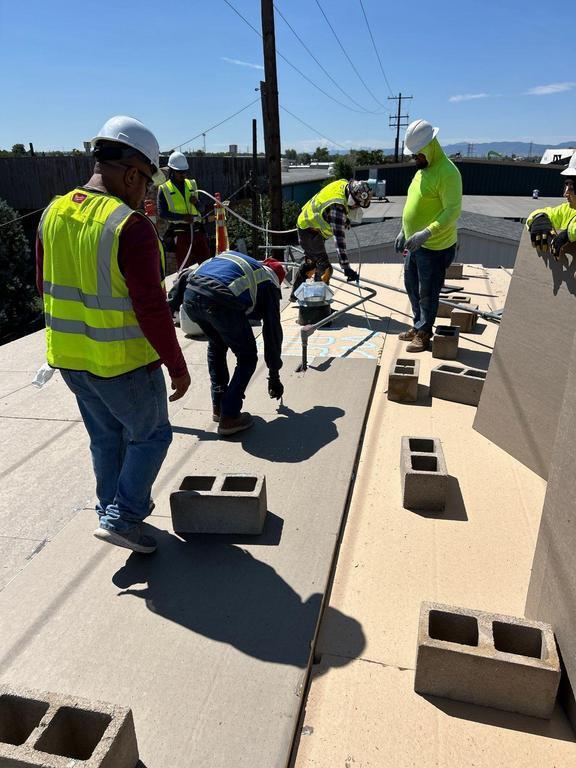
The three dominant commercial flat roofing systems in Colorado are TPO, EPDM, and PVC.
All three have been installed on commercial buildings for decades. All three have advantages. All three have drawbacks. And all three are often heavily pushed by contractors who only install one type of system.
The reality is that there is no universally “best” commercial flat roof system.
The right choice depends on:
- Building type
- Foot traffic
- Budget
- Chemical exposure
- Energy efficiency goals
- Ownership timeline
- Maintenance expectations
- Colorado weather exposure
At Excel Roofing, we install TPO, EPDM, and PVC roofing systems across Colorado on:
- Commercial buildings
- Multifamily properties
- HOAs
- Industrial facilities
- Office buildings
- Retail centers
- Apartment complexes
This guide breaks down the real-world differences between TPO, EPDM, and PVC roofing systems for Colorado property owners.
The Three Main Commercial Flat Roof Systems
TPO Roofing (Thermoplastic Polyolefin)
TPO is currently one of the most commonly installed commercial flat roofing systems in the United States.
It is a white reflective single-ply membrane system that uses heat-welded seams to create a continuous waterproof surface.
TPO Strengths
- Lower installed cost
- Highly reflective and energy efficient
- Heat-welded seams
- Strong UV resistance
- Widely available
- Good overall performance for most commercial buildings
TPO Weaknesses
- Typically shorter lifespan than EPDM
- More vulnerable to punctures from heavy foot traffic
- Installation quality matters significantly
- Poor seam welding can lead to premature failures
EPDM Roofing (Ethylene Propylene Diene Monomer)
EPDM is a synthetic rubber roofing membrane and has one of the longest track records in commercial roofing.
Most EPDM systems are black, though white versions also exist.
EPDM Strengths
- Excellent long-term durability
- Strong cold-weather flexibility
- Excellent puncture resistance
- Handles foot traffic well
- Proven long-term performance history
EPDM Weaknesses
- Black surface absorbs heat
- Seams are adhesive or tape-based rather than heat-welded
- Certain chemicals and oils can damage the membrane
- Less energy efficient than white reflective systems
PVC Roofing (Polyvinyl Chloride)
PVC is generally considered the premium single-ply commercial roofing system.
Like TPO, PVC uses heat-welded seams, but it offers superior chemical resistance.
PVC Strengths
- Excellent chemical resistance
- Strong UV performance
- Heat-welded seams
- Long lifespan
- Excellent performance around restaurant exhaust systems and industrial buildings
PVC Weaknesses
- Highest installed cost
- More expensive repairs
- Material compatibility concerns with some substrates and adjacent materials
Commercial Roofing Performance in Colorado
Colorado creates unique stress on commercial roofing systems because of:
- Hail
- UV exposure
- Snow load
- Freeze-thaw cycles
- High winds
- Rapid temperature swings
The roofing system that works best in another climate may not always be ideal in Colorado.
TPO Roofing in Colorado
TPO performs very well on many Colorado commercial buildings.
The reflective white membrane helps reduce rooftop heat absorption during the summer, which can improve cooling efficiency on conditioned buildings.
TPO is often the most cost-effective option for:
- Retail buildings
- Office buildings
- Warehouses
- Apartment complexes
- General commercial properties
However, installation quality is critical.
Many premature TPO failures are not caused by the membrane itself. They are caused by:
- Poor seam welding
- Weak edge attachment
- Improper flashing details
- Inexperienced installers
EPDM Roofing in Colorado
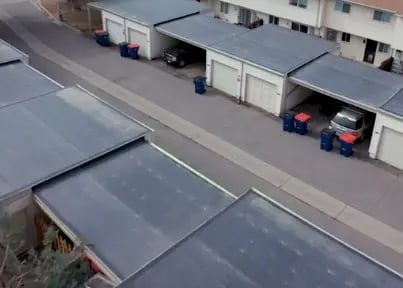
EPDM has one of the strongest long-term performance histories in cold-weather climates.
The flexibility of EPDM during temperature swings is excellent, which makes it very effective during Colorado winters.
EPDM is commonly chosen for:
- Buildings with heavy rooftop traffic
- Industrial facilities
- Buildings with extensive HVAC servicing
- Owners prioritizing long-term durability
The biggest downside is heat absorption. Traditional black EPDM membranes absorb substantial heat during summer months.
PVC Roofing in Colorado
PVC is often selected for buildings where chemical resistance matters.
This includes:
- Restaurants
- Manufacturing facilities
- Industrial properties
- Buildings with grease exposure
- Facilities with rooftop exhaust contamination
PVC is also commonly used on:
- Higher-end commercial projects
- Premium multifamily developments
- Roof deck systems
- Amenity roof spaces
The performance is excellent, but the price premium over TPO is significant.
Cost Comparison: TPO vs EPDM vs PVC
TPO Roofing Cost
Typically:$7 to $11 per square foot installed
EPDM Roofing Cost
Typically:$8 to $13 per square foot installed
PVC Roofing Cost
Typically:$10 to $15+ per square foot installed
Pricing depends heavily on:
- Tear-off requirements
- Insulation thickness
- Roof complexity
- Building access
- Warranty requirements
- Drainage conditions
- Existing roof conditions
Which Commercial Roofing System Lasts the Longest?
TPO Lifespan
Typically: 20 to 25 years
EPDM Lifespan
Typically: 25 to 30+ years
PVC Lifespan
Typically: 25 to 30+ years
Actual lifespan depends heavily on:
- Installation quality
- Maintenance
- Drainage
- Foot traffic
- Hail exposure
- Rooftop equipment servicing
Maintenance matters more than most building owners realize.
Which Roof System Is Best for Your Building?
Choose TPO When:
- Budget matters most
- Energy efficiency is important
- The building has moderate rooftop traffic
- You want strong overall value
Choose EPDM When:
- Long-term durability is the priority
- Rooftop traffic is heavy
- The building experiences frequent servicing
- Cold-weather flexibility matters most
Choose PVC When:
- Chemical exposure exists
- Grease or industrial contaminants are present
- The roof is part of a premium architectural design
- Maximum chemical resistance is needed

What Most Property Owners Get Wrong
Many property owners focus almost entirely on:
- Material brand
- Warranty length
- Lowest price
But the biggest factor in long-term roof performance is usually installation quality.
A perfectly designed roofing system installed poorly will fail.
An average roofing system installed correctly and maintained properly can last decades.
Commercial Roof Maintenance Matters
No roofing system is maintenance free.
Annual or biannual inspections are critical for:
- Drain clearing
- Seam inspections
- Flashing inspections
- Edge metal checks
- Rooftop penetration inspections
- Hail damage assessments
Most major commercial roof failures begin as small maintenance issues that were ignored too long.
Can These Roofing Systems Handle Solar?
Yes.
TPO, EPDM, and PVC systems can all support:
- Ballasted solar
- Attached solar systems
- Rooftop mechanical systems
Proper coordination between the roofing contractor and solar contractor is critical to avoid warranty issues and penetration problems.
Final Thoughts
The best commercial flat roof system depends entirely on the building, ownership goals, budget, and long-term operational needs.
There is no one-size-fits-all answer.
For some Colorado buildings, TPO is the right balance of cost and performance.
For others, EPDM’s durability makes more sense.
And in certain applications, PVC is absolutely worth the additional investment.
The most important thing is working with a commercial roofing contractor that understands:
- The building
- The climate
- The logistics
- The long-term maintenance implications
- The operational goals of the property owner
Because in commercial roofing, system selection matters, but installation quality and long-term management matter even more.
