

What Is the Best Attic Insulation for Colorado Homes?
In Colorado, attic insulation is one of the most important and overlooked parts of a home.
Most homeowners focus heavily on:
- Roofing
- Windows
- HVAC systems
- Exterior appearance
But the reality is that poor attic insulation can dramatically affect:
- Energy bills
- Indoor comfort
- HVAC lifespan
- Roof performance
- Ice dam formation
- Overall home efficiency
At Excel Roofing, we commonly recommend higher insulation values because many older Colorado homes still do not meet modern insulation recommendations.
The more properly installed insulation a home has, the less heat transfer occurs through the attic. That means the HVAC system does not have to work nearly as hard to maintain temperatures year round.
What Is R-Value?
Insulation is measured using something called R-value.
R-value measures how well insulation resists heat transfer.
The higher the R-value:
- The better the insulation performance
- The more efficient the attic system becomes
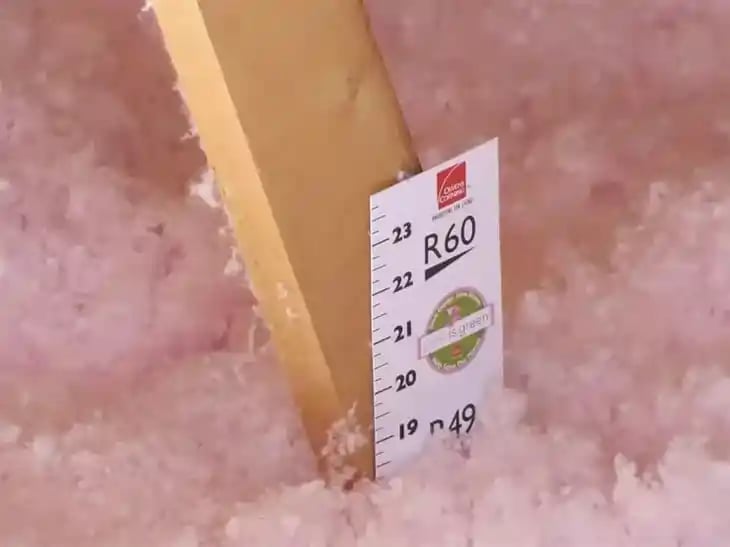
For Colorado homes, modern attic insulation recommendations commonly range around:
R-49 to R-60
Unfortunately, many older homes throughout Denver and the Front Range still have attic insulation levels closer to:
- R-19
- R-30
- Or inconsistent coverage from settling over time
That means many homeowners are losing substantial energy through the attic without realizing it.
Why More Insulation Matters
Higher attic insulation levels can help:
- Lower heating and cooling costs
- Improve indoor comfort
- Reduce hot and cold spots
- Reduce attic heat buildup
- Reduce strain on HVAC systems
- Improve overall home efficiency
Colorado homes deal with:
- Intense summer UV exposure
- Heavy snow
- Freeze thaw cycles
- Large temperature swings
Proper insulation helps stabilize the home year round.
The Best Type of Attic Insulation for Colorado
For most homes in Colorado, blown-in fiberglass insulation remains one of the best overall solutions when properly installed.
It offers:
- Excellent coverage
- Strong thermal performance
- Good cost-to-performance value
- Efficient installation
- Easy upgrades to higher R-values
Our Preferred Brand: Owens Corning
At Excel Roofing, Owens Corning insulation systems are typically our preferred choice.
Owens Corning products have built a strong reputation for:
- Consistent performance
- Reliable R-values
- Quality fiberglass construction
- Good coverage density
- Long term durability
Their attic insulation systems perform very well in Colorado’s climate conditions and integrate well with complete roofing and ventilation systems.
Owens Corning’s blown fiberglass insulation products are commonly used in both:
- Residential attic upgrades
- New construction energy efficiency projects
Other Major Insulation Brands
Johns Manville
Johns Manville is another highly respected insulation manufacturer, especially here in Colorado.
They produce:
- Blown fiberglass insulation
- Batt insulation
- Commercial insulation systems
Their products are widely used throughout residential and commercial construction.
CertainTeed
CertainTeed also manufactures quality fiberglass insulation systems with strong thermal performance and broad contractor use.
Knauf Insulation
Knauf has gained popularity for softer fiberglass products and environmentally focused manufacturing processes.
Typical Insulation Pricing in Colorado
Pricing depends heavily on:
- Attic size
- Accessibility
- Existing insulation conditions
- Desired R-value
- Ventilation modifications
- Air sealing requirements
For many Colorado homes, professional attic insulation upgrades commonly range around:
Blown-In Fiberglass Insulation
- Approximately $3.00 to $6.00+ per square foot on the higher end for quality installation and higher R-values
Spray Foam Insulation
- Approximately $6.00 to $12.00+ per square foot depending on thickness and application type
While spray foam insulation can offer strong thermal performance, it is not always our preferred recommendation for residential attic systems. One concern with spray foam is that if the roof develops a leak or moisture intrusion issue, the foam can encapsulate and hide the problem rather than allowing water to visibly travel or drain. In some situations, homeowners may not realize there is a leak until substantial wood rot or structural damage has already occurred. Because the foam adheres directly to the decking and framing, identifying and repairing hidden moisture issues can also become significantly more difficult and expensive.
For many homeowners, upgrading to a higher R-value fiberglass blown-in system provides one of the best overall returns on investment.
Why Roofing Projects Are the Best Time to Upgrade Insulation
One of the best times to upgrade attic insulation is during a roofing project.
Most homeowners never think about combining the two, but logistically it often makes a huge amount of sense.
Because blown-in fiberglass insulation requires:
- Large hoses
- Insulation blowing machines
- Access to attic spaces
installation can become much more disruptive if crews must enter through the interior of the home.
Unfortunately, many attic accesses are located:
- Inside closets
- Inside hallways
- Inside finished living spaces
That means crews may need to run large hoses through the home.
Why Exterior Access Is Important
During roofing projects, insulation crews can often access attic spaces more easily from the roof while portions of the roofing system are already open.
This helps:
- Reduce interior disruption
- Reduce fiberglass dust inside the home
- Avoid dragging hoses through living spaces
- Improve installation efficiency
And frankly, homeowners usually prefer avoiding the possibility of insulation equipment malfunctioning inside the home.
An insulation machine spraying fiberglass throughout a closet full of clothes is less than ideal.
Ventilation Still Matters
Even with high insulation levels, attic ventilation remains critical.
A properly functioning attic system needs balance between:
- Insulation
- Intake ventilation
- Exhaust ventilation
- Moisture control
Too much insulation without proper airflow can still create:
- Moisture buildup
- Excessive attic heat
- Mold issues
- Reduced roof lifespan
That is why insulation and roofing systems should always be evaluated together.
Final Thoughts
For many Colorado homeowners, attic insulation is one of the best long-term home efficiency upgrades available.
Proper attic insulation can help:
- Improve comfort
- Reduce utility costs
- Reduce HVAC strain
- Improve roof system performance
- Increase overall energy efficiency
At Excel Roofing, we commonly recommend evaluating attic insulation during roofing projects because it is often the most efficient and least disruptive time to improve the entire attic system.