
Replacing a roof across an HOA community is one of the largest capital expenditures a board will ever approve. Done without proper planning, it creates budget shortfalls, special assessments, and frustrated homeowners. Done right, it's a predictable line item that protects property values and keeps reserves healthy for years to come.
This guide walks HOA boards, property managers, and reserve study professionals through everything you need to know about budgeting for a roof replacement, before the project becomes urgent.
What Is a Reserve Study and Why Does It Matter for Roofing?
A reserve study is a long-term financial planning document that estimates the remaining useful life and replacement cost of a community's major components, including roofing systems. Most HOA governing documents require one, and lenders often request them when homebuyers seek financing.
For roofing specifically, a reserve study answers three critical questions:
- How much life is left in the current roofing system?
- What will replacement cost when the time comes?
- Are reserves funded adequately to cover it?
A well-funded reserve study protects homeowners from surprise special assessments and ensures the board can act quickly when replacement becomes necessary, without scrambling for financing.
How Roofing Costs Are Estimated in a Reserve Study
Reserve study professionals typically estimate roofing replacement costs based on current material and labor pricing, then apply an inflation factor over the expected remaining life of the roof.
The challenge: roofing costs fluctuate based on material prices, supply chain conditions, and contractor availability. A reserve study conducted five years ago may significantly underestimate what replacement will cost today.
What to verify when reviewing your reserve study's roofing line items:
- When was the last reserve study update conducted?
- Does the cost estimate reflect current material prices for your region?
- Does the estimate account for all roofing components, including decking, flashing, gutters, ventilation, and disposal?
- Is the inflation assumption still realistic given current construction cost trends?
- Was the estimate based on an actual inspection or a desktop review?
In Colorado, material costs and labor rates have increased significantly over the past several years. If your reserve study is more than two to three years old, the roofing line item may be materially understated.

Key Cost Factors for HOA Roof Replacement in Colorado
Several variables drive the final cost of an HOA roof replacement. Understanding them helps boards evaluate bids accurately and fund reserves appropriately.
Roofing material
Asphalt shingles remain the most common choice for multifamily and HOA communities in Colorado, but impact-resistant (Class 4) shingles carry a premium that can be offset by insurance discounts. Metal roofing, concrete tile, and other materials carry significantly higher upfront costs but longer useful lives, a factor worth modeling in your reserve study.
Community size and building count
Per-square pricing typically decreases as project scope increases, but mobilization costs, staging complexity, and phasing requirements for occupied communities can offset economies of scale.
Roof complexity
Steep pitches, multiple penetrations, skylights, dormers, and complex valleys add labor time and material waste. Communities with architecturally complex rooflines should expect higher per-square costs than those with simple gable designs.
Decking condition
Rotted or damaged roof decking discovered during tear-off is a common source of cost overruns. A qualified roofing contractor should provide a unit price for decking replacement so the board has a realistic contingency built into the budget.
Disposal and debris management
In occupied communities, waste management and debris removal require careful coordination. Dumpster placement, haul-off scheduling, and jobsite cleanliness all carry costs that should be explicitly included in contractor bids.
Permit fees
Most municipalities in Colorado require building permits for roof replacement. Permit fees vary by jurisdiction and should be included in contractor bids or accounted for separately in the project budget.
Phased vs. Full Replacement: Which Makes More Financial Sense?
Not every community needs to replace all roofs in a single year. Phased replacement schedules allow boards to spread capital expenditures across multiple budget years, reducing the strain on reserves and avoiding special assessments.
When phased replacement makes sense:
- Buildings within the community are at different ages or stages of deterioration
- Current reserve funding is insufficient to cover full replacement in a single year
- The board wants to minimize disruption to residents by limiting active construction at any one time
- Cash flow constraints require spreading expenditures across fiscal years
When full replacement is the right call:
- Storm damage affects the entire community simultaneously
- All buildings are of similar age and condition
- Reserves are adequately funded and the board wants to eliminate ongoing maintenance costs
- Insurance proceeds cover a significant portion of the replacement cost
A qualified roofing contractor can help boards evaluate both options and model the financial implications for each approach.
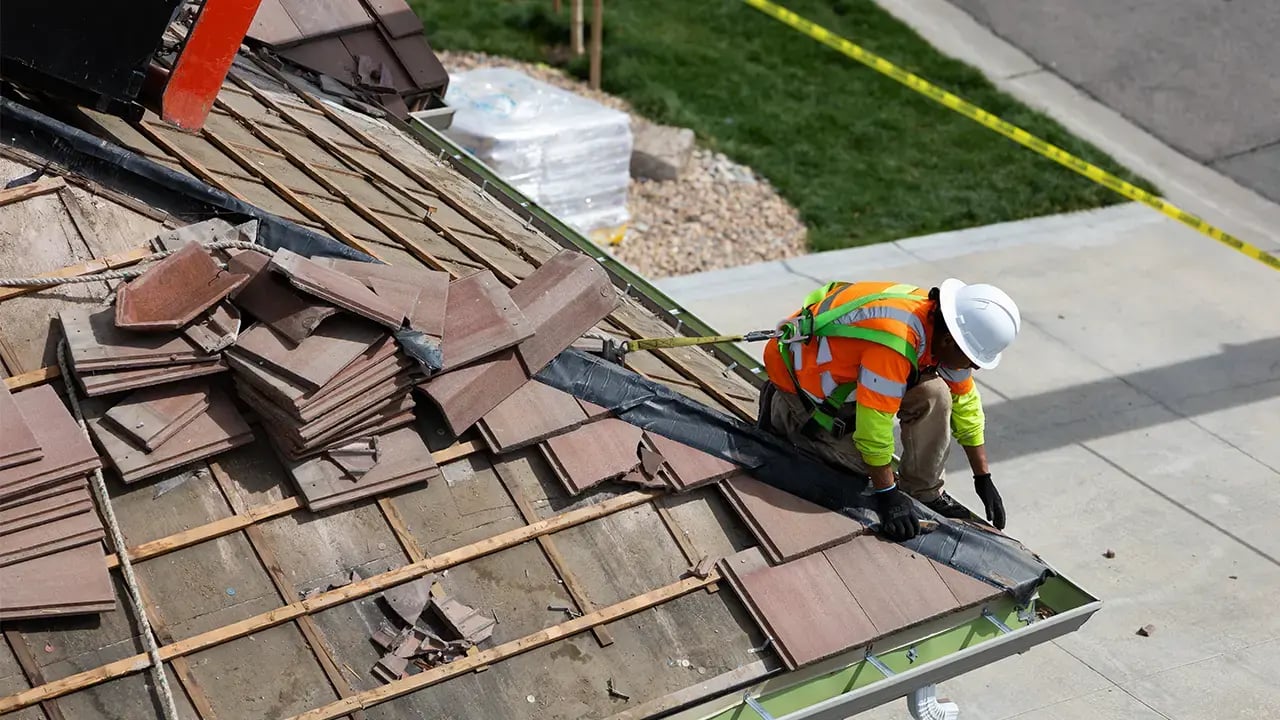
Building a Realistic Roofing Budget: What to Include
When preparing a roofing budget for board presentation or reserve study update, make sure the following cost categories are accounted for:
Direct construction costs
- Tear-off and disposal of existing roofing materials
- New roofing materials (shingles, underlayment, ice and water shield, ridge cap, starter strips)
- Decking replacement contingency (typically 5–10% of material costs)
- Flashing replacement at all penetrations, valleys, and transitions
- Gutter and downspout replacement or repair
- Ventilation upgrades if required
- Permit fees
Soft costs
- Reserve study update or roofing-specific inspection
- Engineering or structural assessment if required
- Project management fees (if managed externally)
- Insurance documentation and claims coordination (if storm-related)
Contingency
Most experienced project managers recommend a 10–15% contingency on HOA roofing projects to account for unforeseen decking conditions, supplemental insurance payments, or scope changes discovered during construction.
How to Use Contractor Bids to Validate Your Reserve Study
Before your board approves a reserve study update, getting a current bid from a qualified roofing contractor provides an independent cost check on the reserve study professional's estimates.
Request bids that are itemized by cost category so you can compare them directly to reserve study line items. A contractor who understands HOA work should be able to provide:
- Per-square pricing for materials and labor
- Unit pricing for decking replacement
- Itemized costs for ancillary work (gutters, flashing, ventilation)
- A phased replacement schedule with annual cost projections if applicable
Sharing this pricing with your reserve study professional allows them to update cost assumptions with real market data rather than regional averages.
Special Assessments: How to Avoid Them
A special assessment is what happens when reserves are inadequate and the board has no other option. They're disruptive, unpopular, and often preventable with proper planning.
The most common causes of roofing-related special assessments:
- Reserve studies that underestimate replacement costs
- Boards that defer recommended funding increases
- Unexpected storm damage that exceeds insurance proceeds
- Deferred maintenance that accelerates the roofing system's decline
The best protection against a special assessment is a reserve study that's updated regularly, funded at the recommended level, and validated against current contractor pricing.
How Excel Roofing Supports HOA Budget Planning
Excel Roofing works with HOA boards, property managers, and reserve study professionals throughout Colorado to provide the cost data and project planning support needed for accurate budgeting.
We offer:
- Free roofing inspections with documented condition reports suitable for reserve study updates
- Itemized project estimates broken down by cost category for board presentation
- Phased replacement planning with multi-year schedules and annual cost projections
- Reserve study validation, we provide current market pricing that reserve study professionals can incorporate into updated studies
If your community's roofing reserve is due for a review, or if you're preparing a board presentation on an upcoming replacement project, our team is ready to help.
Request a Free HOA Roofing Inspection and Estimate →
Excel Roofing has served Colorado HOA communities since 1993. We specialize in multifamily, HOA, and commercial exterior projects throughout the Denver metro area and beyond.
Topics: