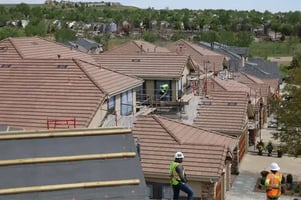

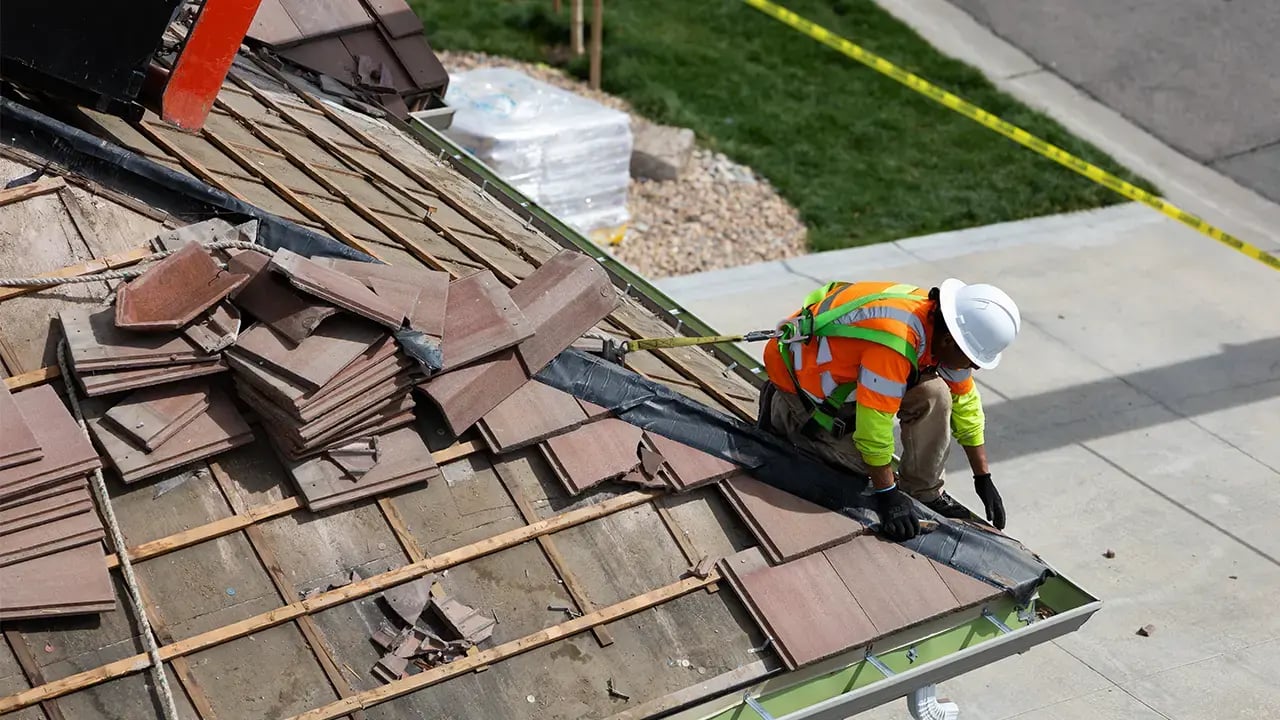
Large HOA communities, those with dozens or hundreds of buildings across a significant footprint, face a roofing challenge that smaller associations don't: the scale of a full replacement is often too large to fund and execute in a single year.
Phased roofing replacement is the solution most large communities eventually land on. Done well, it spreads capital expenditures across multiple budget years, minimizes disruption to residents, and allows roofing systems to be replaced in a sequence that makes logical sense for the property.
Done poorly, phased replacement creates mismatched warranty coverage, roofing systems at different stages of decline, and planning gaps that turn a manageable project into a recurring crisis.
This guide covers how to plan a phased HOA roofing project the right way.
What Is Phased Roofing Replacement?
Phased roofing replacement is the practice of replacing HOA roofing systems in defined stages across multiple construction seasons rather than all at once. Instead of replacing every building in a single year, the community creates a multi-year plan that assigns buildings to specific replacement years based on their condition, priority, and the community's capital budget.
A well-structured phasing plan answers four questions:
1. Which buildings need replacement first?
2. How much roofing can the community afford to replace each year given its reserve funding and budget?
3. How many years will the complete replacement take?
4. What maintenance is required to keep deferred buildings serviceable until their replacement year?
When Phased Replacement Makes Sense
Phased replacement is appropriate for most large HOA communities, but it's the right choice in specific circumstances:
Reserve funding is insufficient for full replacement in a single year. Rather than levying a large special assessment, spreading the cost across multiple years allows the community to fund replacement from ongoing reserve contributions.
Buildings within the community are at different stages of deterioration. A community built in phases, with some buildings ten years older than others, naturally benefits from a phased replacement approach that addresses the oldest buildings first.
The board wants to minimize disruption at any one time. Active roofing construction is disruptive. Limiting the scope of work in any given season reduces the impact on residents and keeps the community experience more consistent.
The community wants to manage cash flow across fiscal years. Many HOA boards operate on calendar-year budget cycles. Phased replacement allows expenditures to align with annual budget approvals rather than requiring multi-year financial commitments in a single vote.
When Full Replacement at Once Is the Better Choice
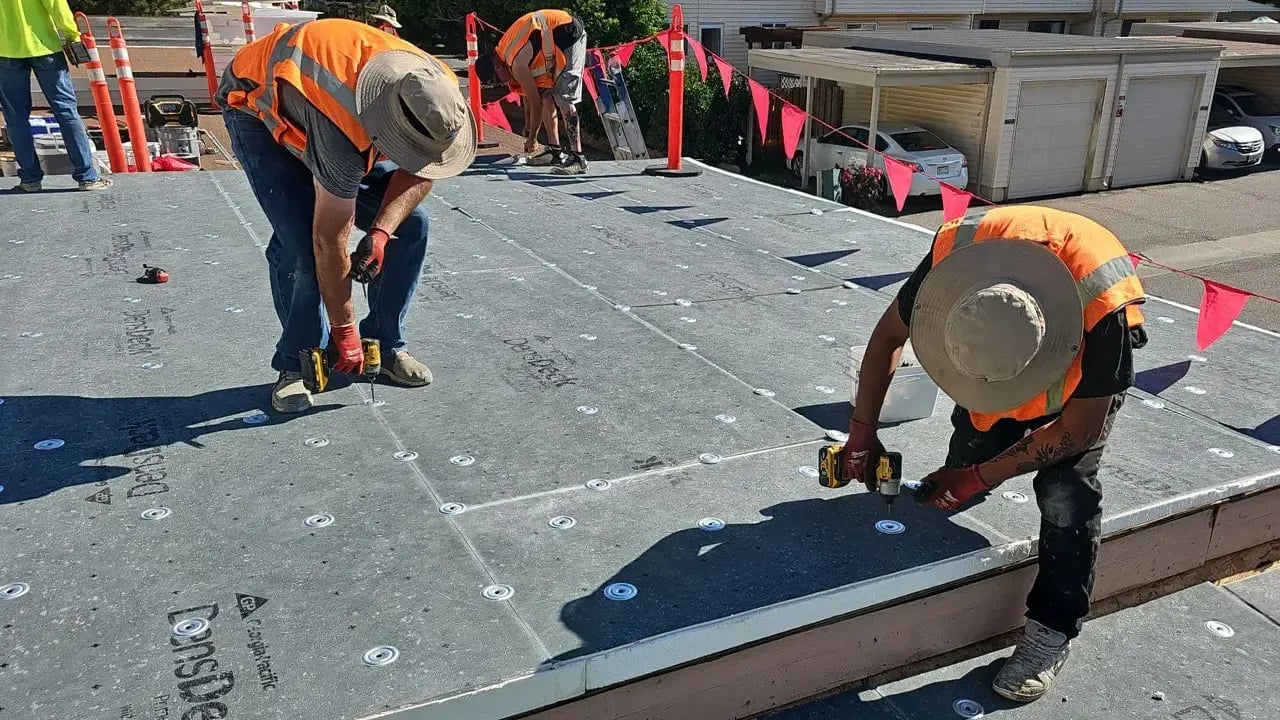
Phased replacement isn't always right. In some circumstances, full replacement in a single project makes more sense:
Storm damage affects all buildings simultaneously. When an insurance claim covers the community's entire roofing system, phasing creates unnecessary complexity with marginal benefit.
All buildings are of the same age and condition. If every building is at the same stage of decline, deferring half of them while replacing the other half means the deferred buildings will need replacement sooner than optimal.
Reserve funding is adequate. If the community has sufficient reserves to fund full replacement without a special assessment, the simplicity of a single project may outweigh the advantages of phasing.
A single contractor mobilization creates significant cost savings. On large projects, contractor mobilization costs are real. In some cases, the per-square price reduction from a larger single-project contract exceeds the carrying cost of funding full replacement at once.

How to Sequence a Phased Replacement Plan
The most common sequencing approaches, and when each works best:
Condition-based sequencing
Replace buildings in order of condition severity, worst first. This approach prioritizes risk mitigation and minimizes the likelihood that deferred buildings will cause water damage claims or resident complaints before their replacement year.
Condition-based sequencing requires a professional inspection of all buildings to produce a ranked condition assessment. This inspection becomes the foundation of the phasing plan and the documentation the board uses to justify its sequencing decisions to homeowners.
Zone-based sequencing
Group buildings geographically and replace zone by zone. This approach simplifies contractor logistics, minimizes the number of areas in active construction simultaneously, and creates a clean visual narrative for residents about when their buildings will be addressed.
Zone-based sequencing works well when building conditions across the community are relatively uniform and the primary driver is logistical efficiency.
Building-type sequencing
In communities with multiple building types, detached garages, carports, and residential units, sequencing by building type allows the contractor to maintain consistent workflows and material specifications within each phase.
Priority-based sequencing
Some communities sequence based on visibility, with buildings along main entrances replaced first to maximize curb appeal during earlier phases. While this approach has marketing value, it should be balanced against the condition-based risk mitigation approach.
For most large communities, the most defensible approach combines condition-based and zone-based sequencing, addressing the most deteriorated buildings first while maintaining geographic efficiency in each annual phase.
Budgeting for a Multi-Year Phased Plan
The most common financial challenge in phased replacement is cost escalation. A roofing project scoped and priced in year one will cost more in years three and four due to material price increases, labor cost changes, and general inflation.
How to account for cost escalation in a phased plan:
- Build an annual escalation factor into the budget for each deferred phase, 3–5% per year is a reasonable starting assumption in the current construction environment, though actual escalation can vary significantly
- Lock in pricing with your contractor for future phases where possible, some contractors will hold pricing for subsequent phases if the community commits to the full phasing agreement upfront
- Update cost estimates before each annual phase begins and reconcile against reserve projections
- Build a contingency into each annual phase budget to absorb unforeseen conditions (decking replacement, additional flashings, etc.)
The Warranty Challenge in Phased Projects
One of the least-discussed complications of phased replacement is warranty management. When buildings are replaced across multiple years, the community ends up with roofing warranties at different stages, some in their first year, others approaching expiration.
Strategies to manage warranty complexity:
Use the same manufacturer and product specification across all phases.
This creates a single warranty relationship rather than multiple manufacturer programs with different terms, coverage, and service contacts.
Use the same contractor across all phases.
Workmanship warranties from a single contractor are far easier to manage than multiple contractor warranties across multiple phases. When a leak occurs, the question of which contractor's warranty applies becomes a real issue when different companies installed different buildings.
Document everything.
Maintain a phasing log that records which contractor replaced which building in which year, what materials were installed, and what warranty terms apply. This documentation becomes essential when warranty claims are filed years later.
Register all warranties promptly.
Many manufacturer warranties require registration within a specific period after installation. Make registration part of the project closeout process for each phase, not an afterthought.
Communicating a Phased Plan to Homeowners
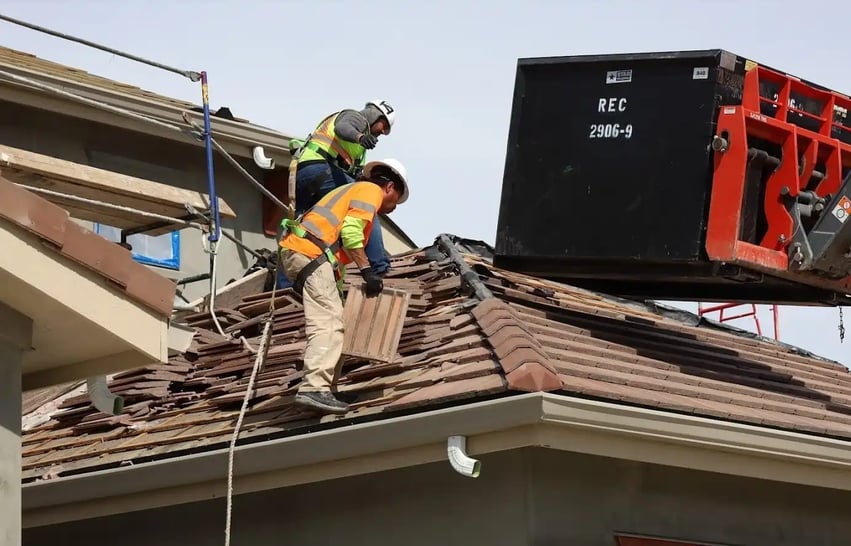
In an HOA community, residents whose buildings are deferred to later phases will have questions. Some will feel their building is being neglected. Others will notice their neighbor's new roof and ask when theirs is coming.
Proactive, transparent communication is the best way to manage these conversations.
What a homeowner communication plan for phased replacement should include:
- A community-wide announcement explaining the phasing plan, the sequencing rationale, and the expected timeline for each phase
- Clear communication to each resident about when their building is scheduled for replacement
- A maintenance plan for deferred buildings, what steps are being taken to keep their roofs serviceable until replacement
- Regular updates on phase completion and upcoming phases
- A contact point for residents with questions or concerns
Boards that communicate the phasing plan proactively get far fewer complaints than those that let homeowners discover the sequence on their own.
What to Look for in a Contractor for Phased HOA Projects
Not every roofing contractor is set up for multi-year phased projects. Look for:
- Demonstrated experience with phased replacement across multiple construction seasons
- Ability to hold pricing or provide reliable escalation estimates for future phases
- A project management structure that maintains continuity across phases, the same project manager and crew leadership year over year
- Comprehensive documentation practices that support warranty management across phases
- References from communities where they've completed multi-year phased projects
A contractor who treats each phase as a standalone job, with no continuity in personnel, documentation, or pricing, is not the right partner for a phased community project.
How Excel Roofing Plans Phased HOA Replacements
Excel Roofing has managed phased roofing replacement projects for large HOA communities throughout Colorado. Our phasing process includes:
- A comprehensive inspection of all buildings to produce a condition-ranked phasing plan
- A multi-year budget projection with escalation assumptions for board and reserve study use
- A consistent project management team across all phases
- A single manufacturer specification maintained throughout the project for unified warranty coverage
- Resident communication templates and support for each phase
- Complete warranty documentation and registration at each phase closeout
If your community is approaching a large-scale replacement project, we'd welcome the opportunity to help you build a phasing plan that works for your residents, your board, and your budget.
Request a Free HOA Phasing Assessment →
Excel Roofing has served Colorado HOA communities since 1993. We specialize in multifamily, HOA, and commercial exterior projects throughout the Denver metro area and beyond.
Topics: