
Before we get started, here are the numbers:
- Average asphalt roof cost: $15,000 to $20,000
- Average stone-coated steel roof cost: $30,000 to $50,000
If you're deciding on a new roof, the choice usually comes down to two options:
The most common one, asphalt shingles, and a highly hail-resistant alternative, stone-coated steel.
Asphalt is the budget go-to. Stone-coated steel is rapidly gaining popularity for its durability, but is the higher upfront cost actually worth it?
This guide walks through the pros and cons of each system and the real lifetime cost, including what most homeowners overlook: the cost of insurance.
Asphalt Shingles: The Budget Standard
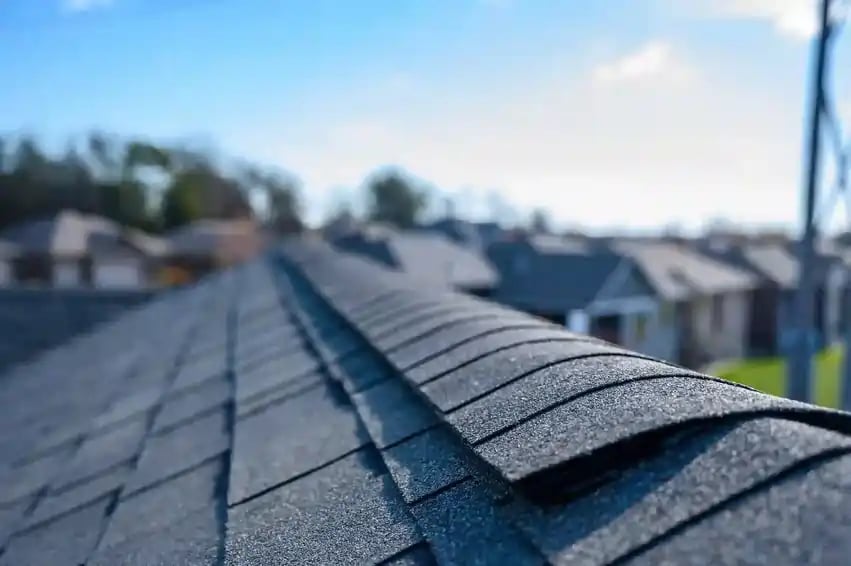
There is a reason asphalt shingles dominate about 80% of the market. They are affordable, fast to install, and available in just about any color and style you could want.

Pros of Asphalt Shingles
Low upfront cost
An average asphalt roof runs between $15,000 and $20,000.
Ease of installation
Asphalt is fast and straightforward to install, which keeps labor costs down and project timelines short.
Style variety
Asphalt shingles come in countless profiles and colors to match almost any home.
Hail-rated options are available
There are two main classes of asphalt shingles: hail-rated (Class 4 impact resistant) and unrated. Hail-rated shingles cost more, but those that pass the Underwriters Laboratories impact resistance test may qualify for a discount on your homeowner’s insurance. Keep in mind, however, that even hail-rated shingles can still sustain hail damage.
Cons of Asphalt Shingles
Short lifespan
Asphalt shingles last 15 to 25 years or until the next hail storm, which in Colorado could be the next year.
Ventilation dependence
Poor attic ventilation makes your house hotter and shortens the life of the shingles. They literally cook from both the bottom and the top. If shingles appear defective and the attic is not properly ventilated, most manufacturers will void the warranty. Always ask your contractor whether your attic is properly ventilated.
Diminished insurance value
Many insurance companies will fully insure an asphalt roof for only the first 10 years. After that, they pay the depreciated value, which can be roughly 50% of the roof’s value after 20 years. In some cases, insurers will not cover an older asphalt roof at all.
Weather damage
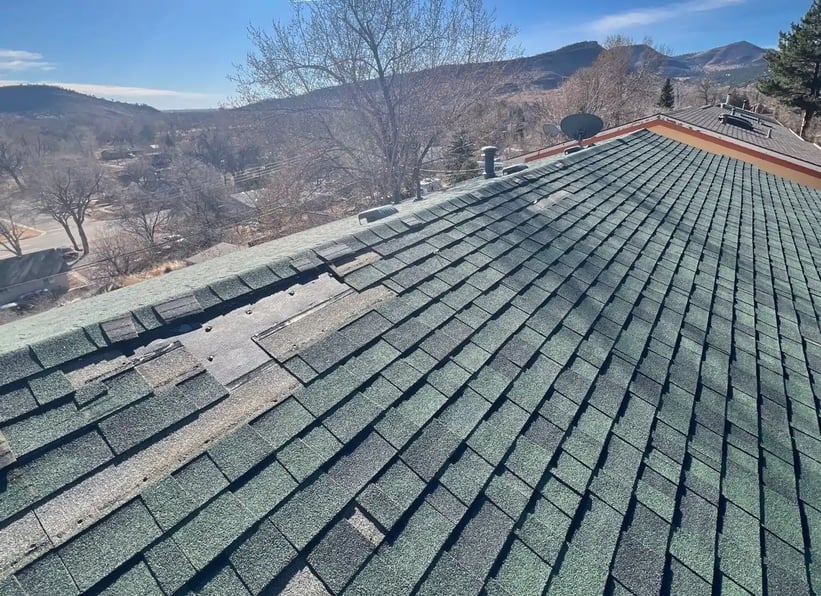
Hail-rated shingles typically hold up to marble-sized hail. Once hail reaches quarter-size or larger, all asphalt shingles tend to sustain damage. Shingles also lose granules from freeze-thaw cycles and intense sun exposure, and high winds can blow them off.
Maintenance
Asphalt roofs usually do not need much upkeep, but once the roof is a few years old, an inspection every couple of years is smart to make sure nothing is quietly failing.
Stone-Coated Steel: A Lifetime Investment
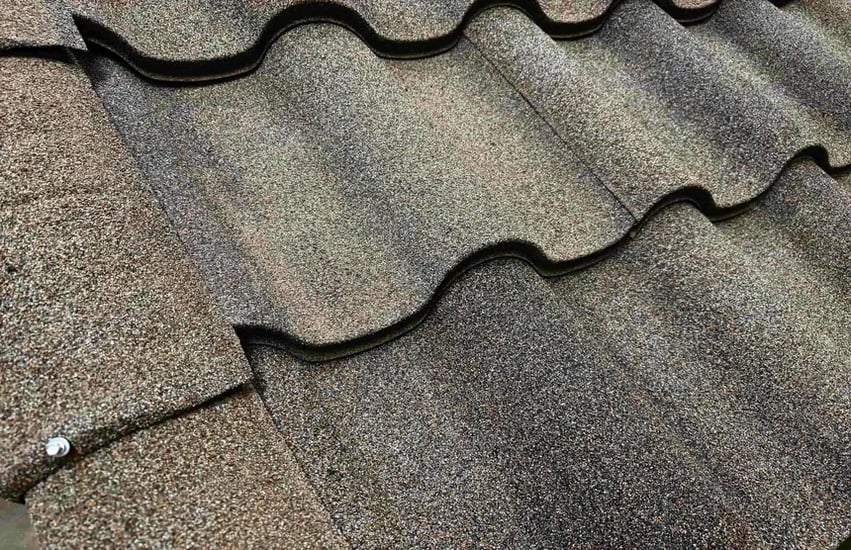
Stone-coated steel is engineered around a 26-gauge steel core, finished to look like traditional shingles, shake, or tile. It is designed to be a one-and-done roofing system.
Pros of Stone-Coated Steel
Longevity
Stone-coated steel is designed to last 50+ years.
Best-in-class hail resistance
It carries a Class 4 impact rating, the highest currently offered. Honestly, if there were a Class 5 or Class 6, stone-coated steel would likely pass those too. It is not just hail resistant like some asphalt shingles, it is nearly hail proof.
Wind resistance
The manufacturer rates stone-coated steel to withstand winds up to 120 mph, and in practice it handles gusts well beyond that. It is the preferred roof in hurricane zones for a reason.
Aesthetics without the weight
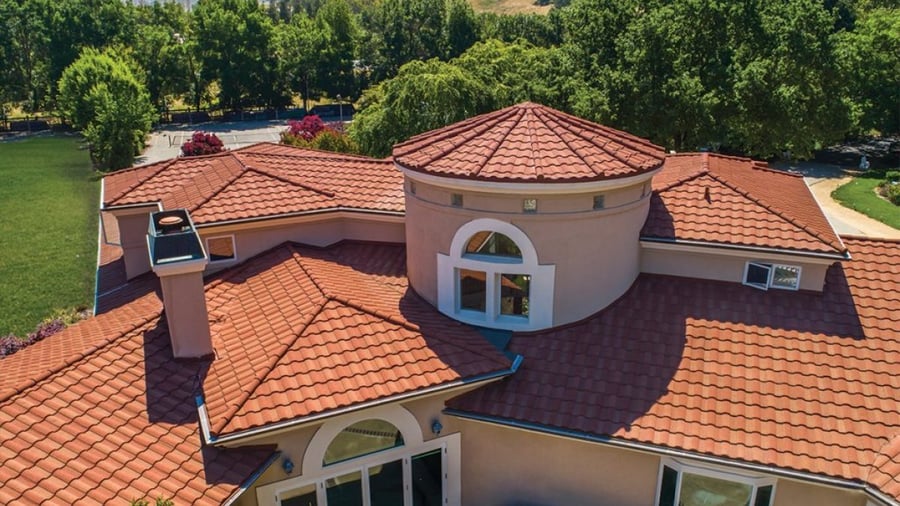
Stone-coated steel comes in a variety of styles that replicate the aesthetic appeal of concrete tile, including barrel tile profiles, at a fraction of the weight. That weight difference matters: unlike a concrete tile barrel system, a stone-coated steel barrel system doesn't require a structural engineer for installation, making the upgrade simpler and more accessible.
Insurance benefits
According to insurance leaders in Denver that Excel Roofing has met with, some insurance providers are now offering premium discounts for metal roofing. In the past, discounts were available for Class 4 asphalt shingles, but because those shingles are still susceptible to hail damage, most providers have moved away from that discount.
Metal roofing has become the preferred candidate for these savings due to its superior hail resistance. Because the likelihood of filing a hail damage claim is significantly lower, homeowners can raise their deductible, which reduces their monthly premiums.
Insurance Trends and History
Until the 1990's, most homes and buildings in the United States had cedar shake shingle roofs. That changed when insurance companies no longer wanted to insure cedar shakes.
The claim was because of their fire rating, but in reality it was because of how easily they were damaged by hail. Over time, it made more sense to insure other types of roofs that were more resistant to hail instead of insuring cedar shake roofs.
We are now seeing a similar trend with asphalt shingles as insurance companies are no longer wanting to insure asphalt shingle roofs with RCV (retail cost value) and are moving many policies to ACV (Actual Cost Value). Many homeowners with older asphalt shingle roofs are seeing their coverage be reduced or worse case scenario, denied because there is a strong likelihood that the roof will be totaled in the next hail-storm or strong wind event.
Snow retention
Just like asphalt shingles, stone-coated steel does not need snow guards to keep snow and ice from sliding off the roof. The ceramic granules create an abrasive, rough surface that holds snow in place through mechanical friction, meaning the rougher the surface, the less movement.
There are two main installation systems, each with different benefits:
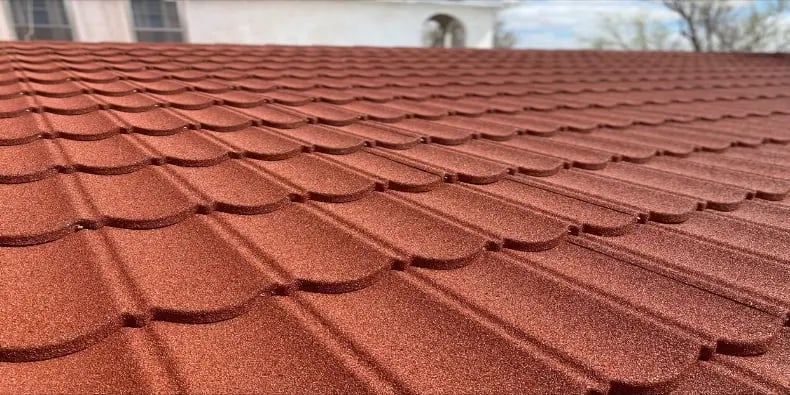
Direct-to-deck stone-coated steel panels
-
Direct-to-deck
panels are thin and attach directly to the roof deck. In most cities, they can be installed directly over existing asphalt shingles, which keeps tear-off waste out of the landfill. This profile looks similar to a tile, asphalt or cedar shake and fits right in within subdivisions with asphalt roofs, which matters for HOA approval. -
Batten-mounted
panels are thicker and sit on a wood batten system. This creates an air space between the panel and the roof deck, which reflects heat away from the home instead of transferring it in. It is the more energy-efficient of the two systems. Because the panels are fastened to the battens, there are less penetrations to the roof deck, so the chance of leaking is even less.
Batten-mounted helps create a cold-roof system
Batten mounted stone-coated steel helps create a system similar to a cold roof, and that matters because ice dams are one of winter's most damaging roof problems.
The space between the decking and the panel creates a dead air pocket that insulates the roof, keeping the snow on top cold and uniform. No warm-roof-meets-cold-edge swing means no melt-and-refreeze cycle, and no ice dam.
Ice dams form when snow melts on a warm upper roof, runs down, and refreezes at the cold eaves. That ridge of ice traps water behind it, and since shingles only shed water flowing downhill, the backup seeps underneath and into your attic, insulation, walls, and ceilings. The result can be rot, mold, stained drywall, and damaged gutters.
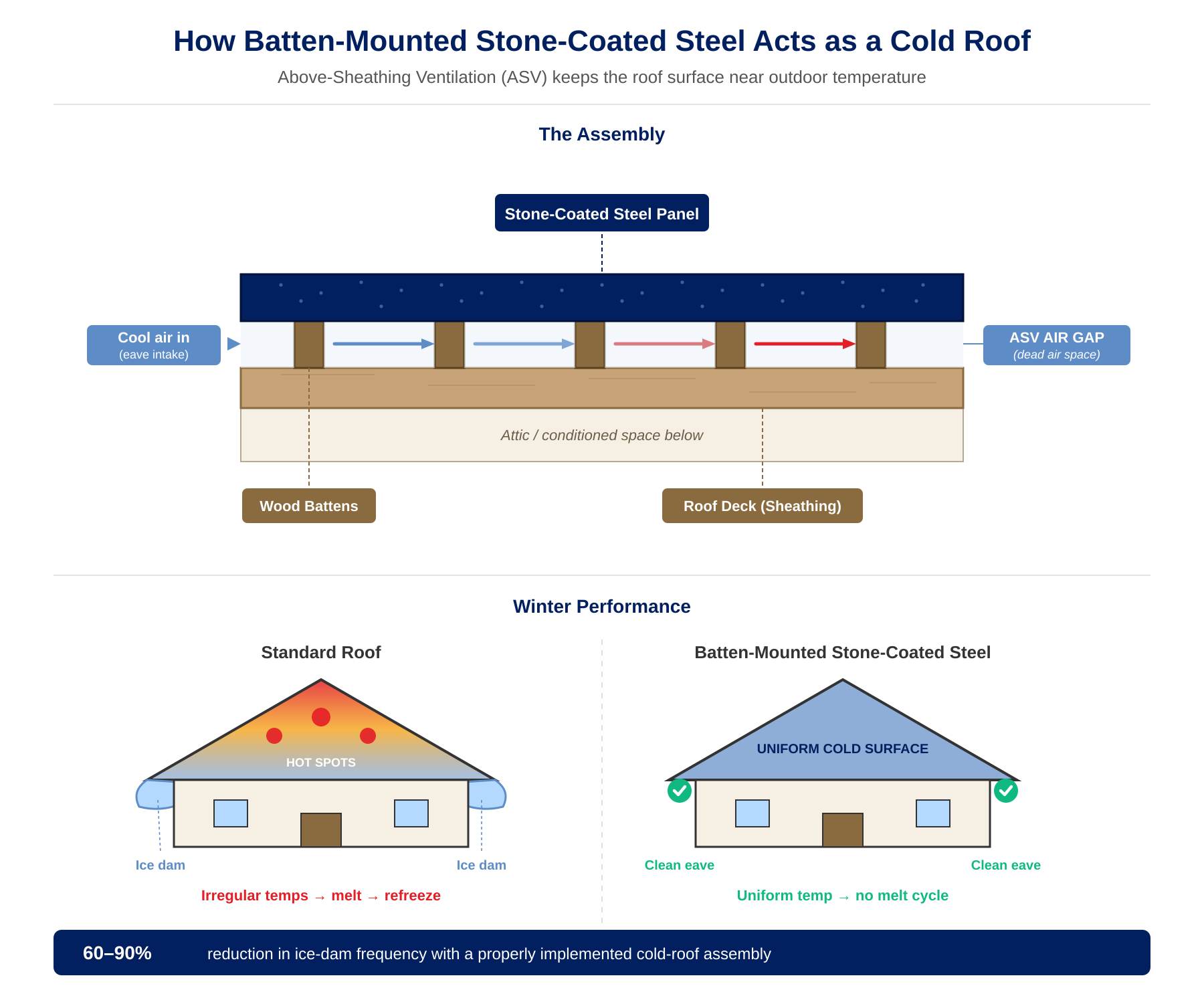
Diagram explaining how a cold roof system prevents ice dams
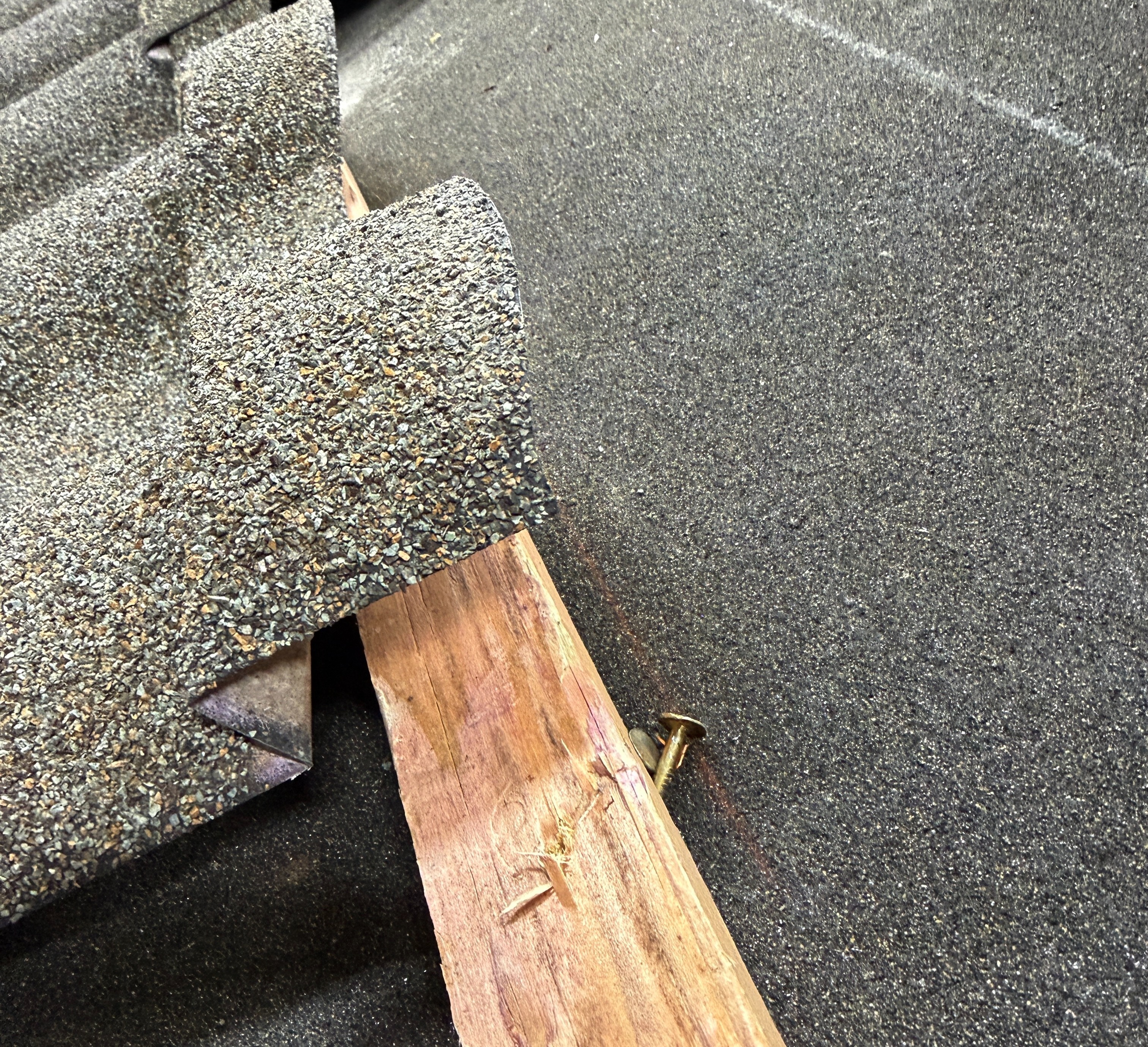
Batten mounted stone-coated steel panel close up
Low maintenance
Unless there is a leak or manufacturer defect, stone-coated steel requires essentially no maintenance.
Cons of Stone-Coated Steel
Upfront cost
Stone-coated steel runs about 2 to 2.5 times the cost of an asphalt roof.
- Average asphalt roof: $15,000 to $20,000
- Average stone-coated steel roof: $30,000 to $50,000
Occasional granule loss
On rare occasions, the epoxy bonding the granules to the panels can fail, usually when golf-ball-sized hail knocks granules loose. This typically does not affect panel performance, but granules may need to be re-glued. It would take baseball-sized hail or larger to actually destroy this type of roof.
Dent potential
Panels can dent if they are walked on incorrectly. When anyone needs to get up on the roof, send someone light who knows how to walk on stone-coated steel.
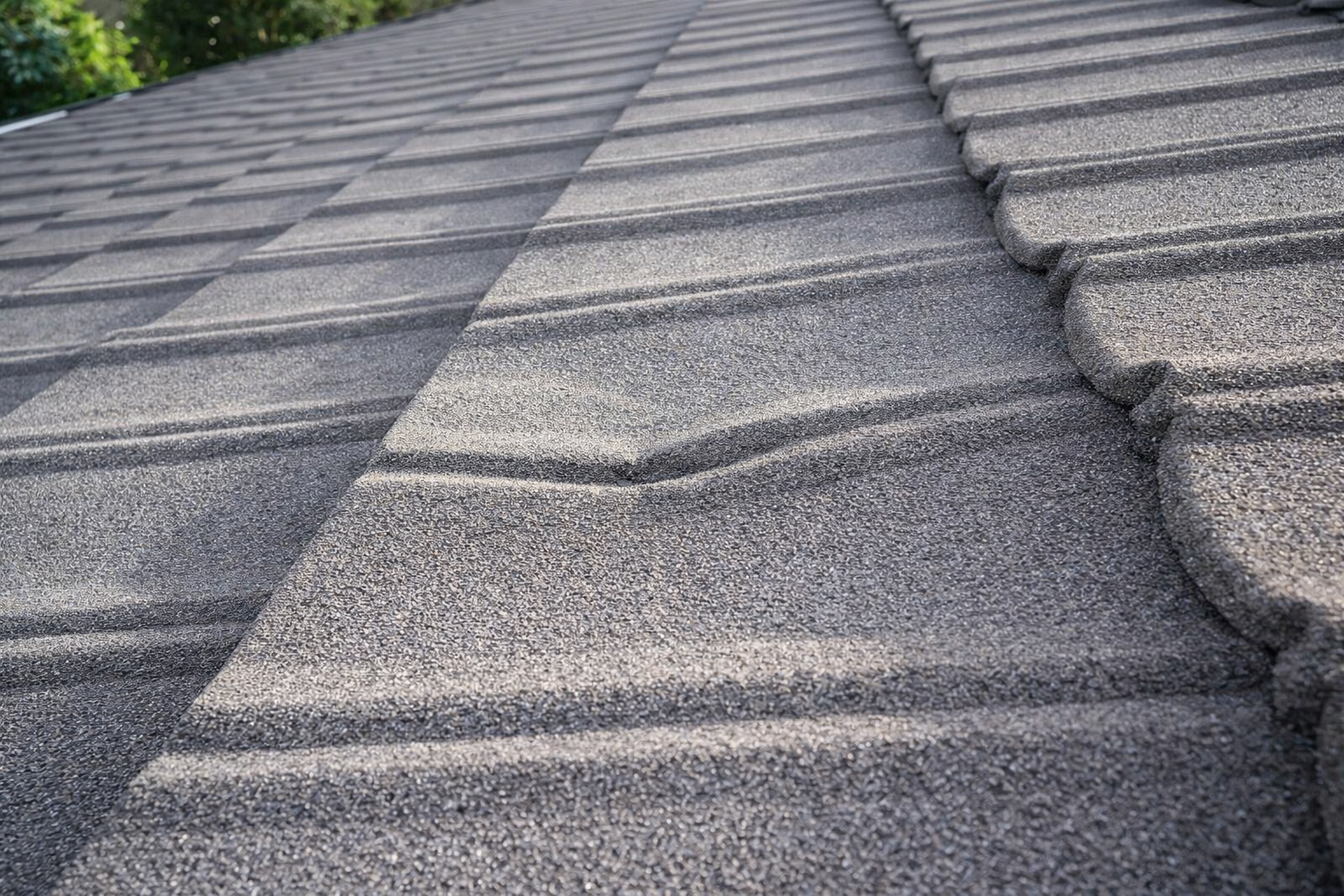
A stone-coated steel panel that has been dented from someone walking on it improperly
Specialized installation
Unlike asphalt shingles, stone-coated steel is much more of a technical installation, requiring specialized tools to precisely cut panels (this tool is called a guillotine) specialized skills/techniques and much more experience to install correctly. If a stone-coated steel roof is improperly installed, the likelihood of leaks is significantly higher than if an asphalt shingle roof was installed wrong.
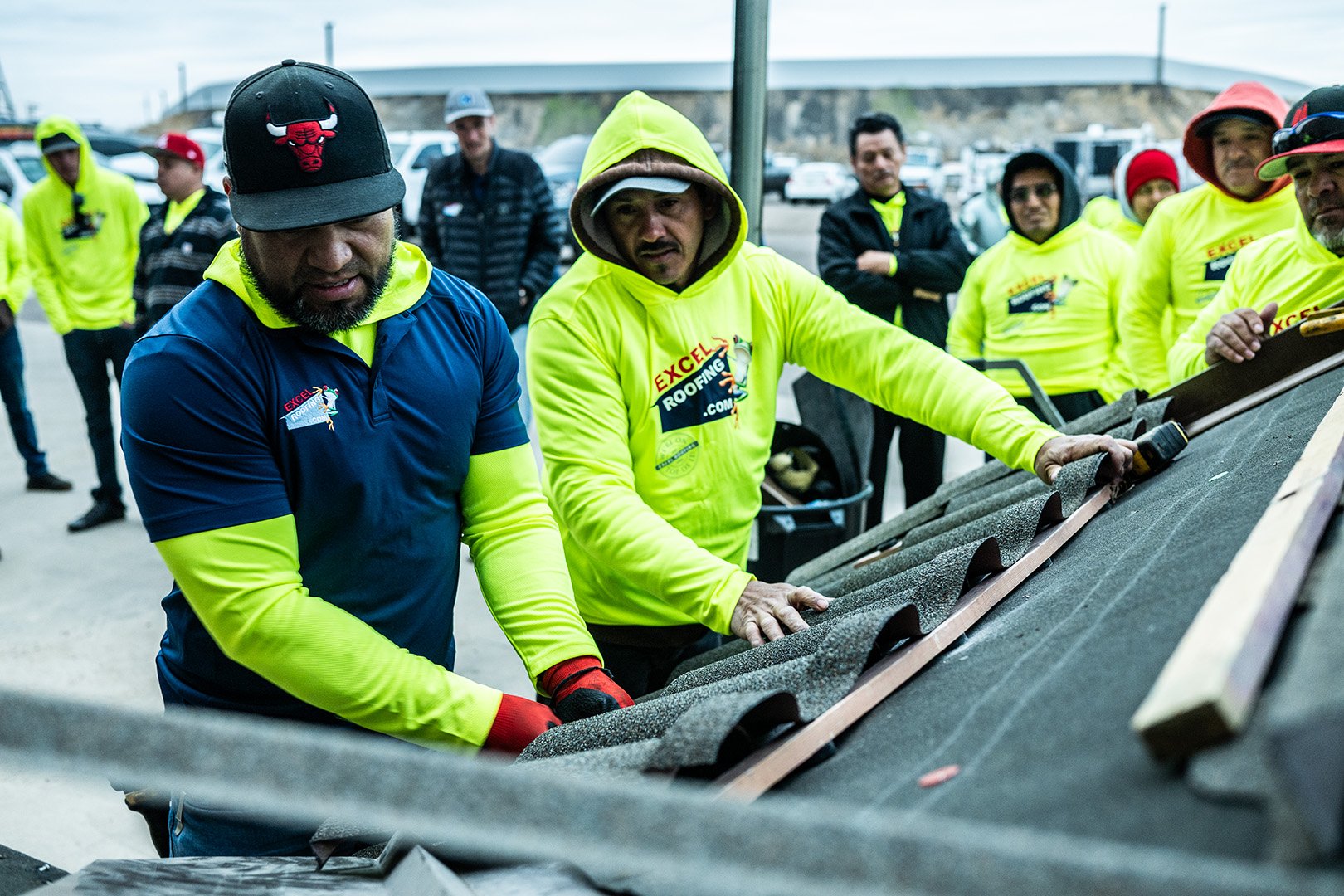
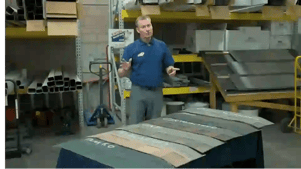
In March, Excel Roofing hosted a stone-coated steel installation training day. Led by our expert service technician, Raul.
This roof requires specialized skills and a contractor with real experience installing it correctly. Excel Roofing has been installing stone-coated steel across the Front Range for years.
The Real Cost: Upfront vs. Lifetime
- Average asphalt roof: $15,000 to $20,000
- Average stone-coated steel roof: $30,000 to $50,000
Here is where the comparison gets interesting. Asphalt is cheaper today, but you will likely replace it three or more times over the next 50 years. Stone-coated steel is basically a one-and-done solution.
Over a 50-year horizon, the steel roof is actually cheaper when you account for repeat replacements, and it adds superior resale value. But the bigger cost most homeowners miss is insurance.
The Insurance Factor
We have put together a 10-year insurance cost comparison for asphalt versus stone-coated steel. We also recommend asking your own insurance agent to build a 10-year cost spreadsheet for your home comparing different roof types.
This graph is based on 10 year averages and trending policies
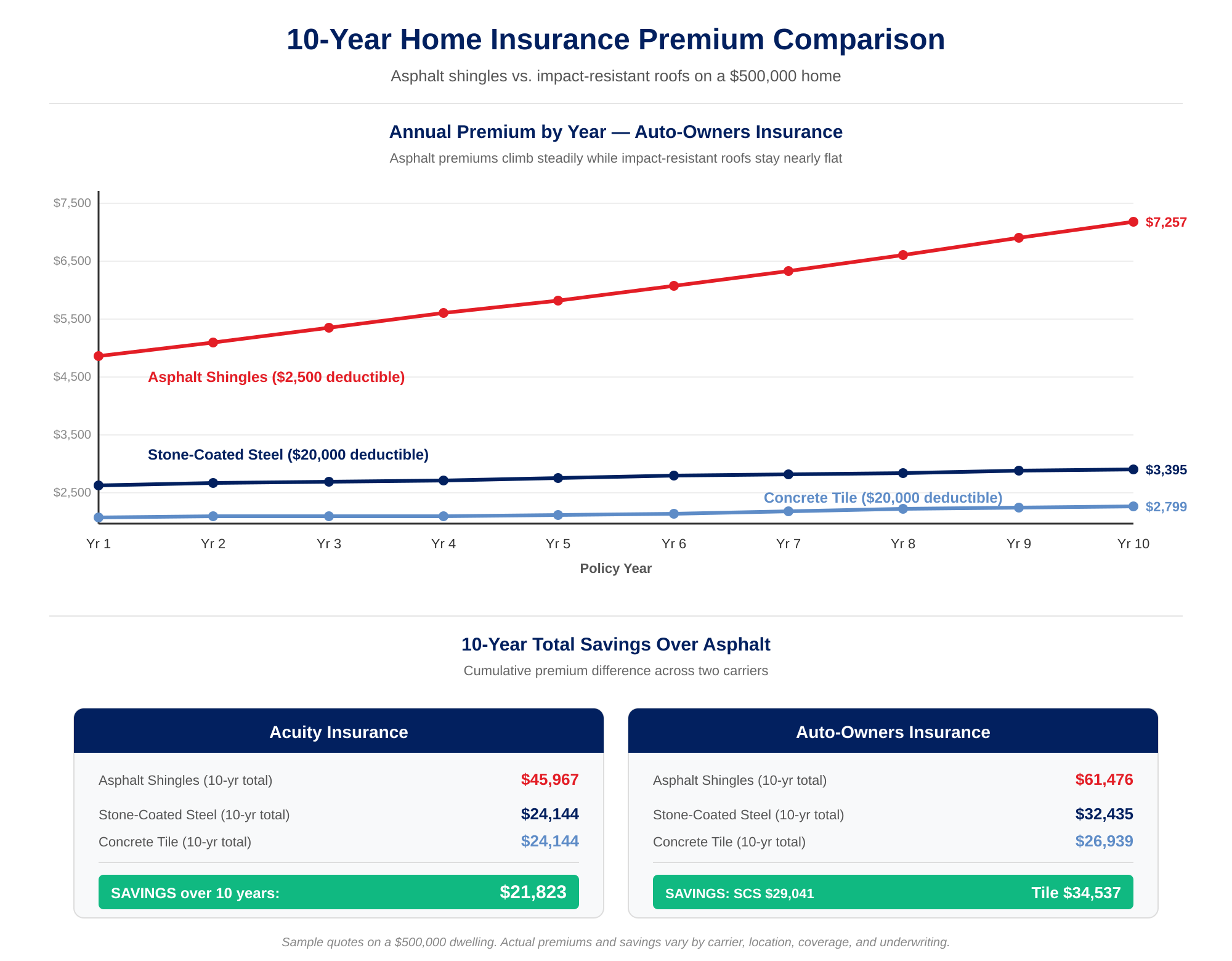
The real savings start around year five, when the cost to insure an asphalt roof climbs to nearly double the cost of insuring stone-coated steel. The reason is simple: an asphalt shingle roof is much more likely to be totaled by hail or wind, so insurers charge more to cover it.
Over 10 years, total insurance costs for an asphalt roof run about double those of stone-coated steel, roughly $46,000 versus $24,000. The money you save on insurance alone largely covers the upfront upgrade to a steel roof. When you add in the fact that stone-coated steel is nearly hail proof, meaning your odds of paying future deductibles on hail-totaled roofs are close to zero, the math makes a strong case for steel.
You will likely see 50-80% of a stone-coated steel upgrade from the sale of a home
Which Roof Is Right for You?
Choose asphalt if you are on a strict budget or planning to move within the next five years.
Choose stone-coated steel if you plan to stay in the home more than five years and you do not want to deal with future roof claims.
Both will do a great job protecting your home. It really comes down to upfront cash versus a long-term investment that reduces the chance of roof claims down the road.
Frequently Asked Questions
How much does an asphalt shingle roof cost in 2026?
An average asphalt shingle roof costs between $15,000 and $20,000.
How much does a stone-coated steel roof cost in 2026?
An average stone-coated steel roof costs between $30,000 and $50,000, roughly 2 to 2.5 times the cost of an asphalt roof.
How long does an asphalt shingle roof last?
Asphalt shingles last 15 to 25 years, though in hail-prone regions like Colorado a roof can be totaled by a single storm much sooner than that.
How long does a stone-coated steel roof last?
Stone-coated steel is designed to last 50 or more years and is built around a 26-gauge steel core, making it a one-and-done roofing system for most homeowners.
Is stone-coated steel hail resistant?
Yes. Stone-coated steel carries a Class 4 impact rating, the highest currently offered. It typically withstands golf-ball-sized hail with only minor granule loss, and would require baseball-sized hail or larger to cause structural damage.
Can a stone-coated steel roof handle high winds?
The manufacturer rates stone-coated steel to withstand winds up to 120 mph, and in practice it handles gusts well beyond that. It is a preferred roofing system in hurricane zones.
Does a metal roof qualify for a homeowners insurance discount?
Some insurance providers now offer premium discounts for metal roofing because of its superior hail resistance. Homeowners can often raise their deductible and reduce their monthly premium since the likelihood of filing a hail damage claim is significantly lower than with asphalt.
Why are insurers moving away from fully covering asphalt shingle roofs?
Many carriers now insure asphalt shingle roofs at Actual Cash Value (ACV) rather than Replacement Cost Value (RCV) after a certain age, and some will not cover older asphalt roofs at all. The reason is simple: asphalt roofs are far more likely to be totaled by hail or wind, making them expensive to insure.
What is the difference between direct-to-deck and batten-mounted stone-coated steel?
Direct-to-deck panels attach directly to the roof deck and can often be installed over existing asphalt shingles, keeping tear-off waste out of the landfill. Batten-mounted panels sit on a wood batten system that creates an insulating air space, improving energy efficiency and helping create a cold-roof system that prevents ice dams.
How does a cold-roof system prevent ice dams?
A cold-roof system keeps the roof surface at a uniform cold temperature so snow does not melt on the upper roof, run down, and refreeze at the eaves. Without that melt-and-refreeze cycle, water cannot back up under shingles or panels and leak into the attic, walls, or ceilings.
Which roof is the better long-term investment?
Over a 50-year horizon, stone-coated steel is often cheaper than asphalt once you factor in three or more asphalt replacements, lower insurance premiums, and stronger resale value. Across 10 years alone, insurance on an asphalt roof can run roughly $46,000 versus about $24,000 for stone-coated steel. Asphalt still makes sense for strict budgets or homeowners planning to move within five years.
Ready to Compare Options for Your Home?
Excel Roofing has installed roofs across the Front Range since 1993. If you want a straight answer on which system makes sense for your home, budget, and insurance situation, schedule a free inspection and we will walk you through a clear Good-Better-Best estimate, no pressure, just the numbers.

.webp?width=301&height=406&name=TDD_EstateGray_beauty_shot%20(1).webp)