
By J Bretz, Founder and CEO, Excel Roofing | Originally published August 7, 2026 | Updated September 30, 2026
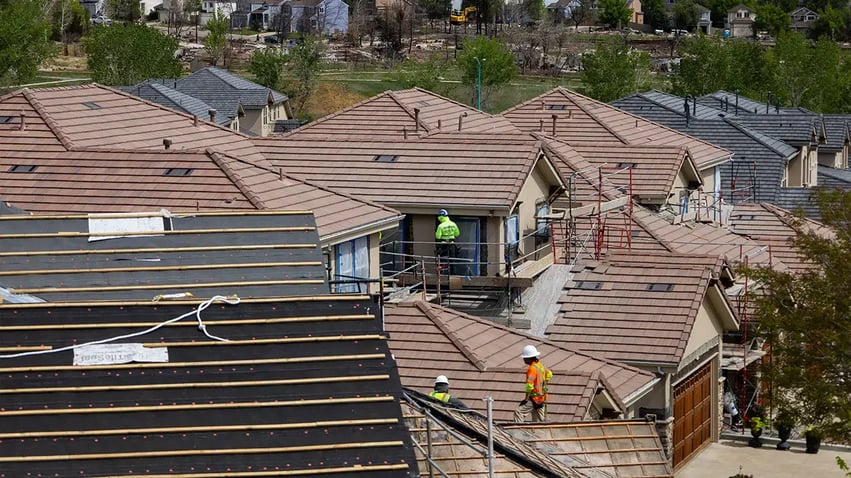
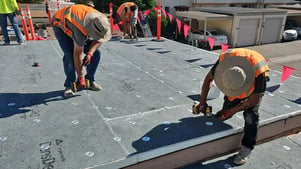
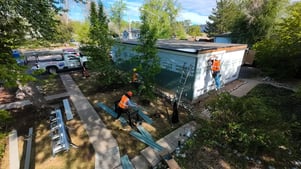
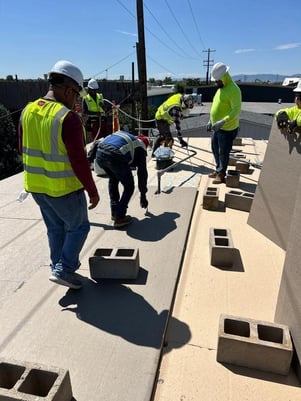
The top roofing services for small commercial properties are documented roof inspections, targeted roof repair, hail and storm damage assessment, low-slope roof replacement, steep-slope roof replacement using residential-grade systems, gutter and drainage correction, attic ventilation and insulation, and a scheduled preventive maintenance program. Because many small commercial buildings in Colorado and Wyoming combine a flat membrane roof with pitched sections covered in shingles, stone-coated steel, or metal, the best provider is one that handles both commercial and residential roofing systems on the same building.
Excel Roofing has been walking small commercial roofs across Colorado and Wyoming since 1993. This guide explains each service, compares repair, replacement, and coating options by budget, damage level, and long-term performance, and then walks through the decision in the order that protects the building: identify what is up there, decide whether to repair or replace, handle storm damage correctly, fix the water path, match the material to this climate, and choose a contractor with the same rigor used to choose a tenant.
The Top Roofing Services for Small Commercial Properties
- Documented roof inspections. A spring and fall inspection with dated photographs and a written condition report is the foundation for every repair, claim, warranty, and budgeting decision. On low-slope roofs, a moisture scan or core sample shows whether the insulation is dry.
- Targeted roof repair. Most active leaks on small commercial buildings start at penetrations such as HVAC curbs, vents, pipe boots, and the transition where a membrane meets a pitched section. Correcting the specific defect is the right call when the roof is otherwise sound.
- Hail and storm damage assessment. A qualified contractor documents hail and wind damage before a claim is filed and meets the adjuster on the roof, which protects the scope of the claim.
- Low-slope roof replacement. TPO, EPDM, and modified bitumen replacement, including tapered insulation to correct ponding and secondary drainage where code requires it.
- Steep-slope roof replacement with residential-grade systems. Class 4 impact-resistant shingles, stone-coated steel, and standing seam metal on the pitched sections of offices, churches, converted homes, and low-rise multifamily buildings.
- Gutter and drainage correction. Properly sized gutters and downspouts on steep-slope sections, and clear drains, scuppers, and overflow on low-slope sections.
- Attic ventilation and insulation. Balanced ventilation and adequate insulation under pitched roofs prevent ice dams, reduce energy costs, and are required by many shingle manufacturer warranties.
- Preventive maintenance. Scheduled drain clearing, sealant and flashing renewal, and post-storm checks. The Roofing Maintenance for Small Commercial Properties guide covers a complete program.
Why Small Commercial Buildings Often Need Residential Roofing Services
A large share of small commercial properties in this region do not have a purely commercial roof. Converted houses used as offices, dental and medical suites designed to blend into a neighborhood, churches, and low-rise multifamily buildings are frequently covered with the same asphalt shingles, stone-coated steel, and standing seam metal installed on homes. Many also have a low-slope membrane section behind a parapet or over an addition.
Those pitched sections need residential roofing skills: steep-slope installation, ice barrier at the eaves, balanced attic ventilation, and correctly sized gutters. What changes on a commercial building is everything around the installation. The owner needs certificates of insurance, commercial insurance claim documentation, scheduling around tenants and customers, and warranty terms written for a commercial property. Manufacturer warranties are often structured differently on commercial buildings. Owens Corning's Platinum-level protection on a commercial property, for example, is built around 20 years of TruPROtection coverage and 20 years of workmanship coverage rather than the lifetime terms homeowners see. Owners should request the commercial warranty terms in writing before signing.
Repair vs. Replacement vs. Coating: Comparing Options by Budget, Damage Level, and Long-Term Performance
Most small commercial owners will hear three options for an aging or damaged roof. The table below compares them on the three factors that matter most.
|
Option |
Budget |
Damage level it fits |
Long-term performance |
Excel Roofing's position |
|
Targeted repair |
Lowest upfront cost |
Isolated damage, dry insulation, roof in the first half of its service life |
Extends the current roof without resetting its service life |
Recommended when the criteria are met |
|
Full replacement |
Highest upfront cost |
Roof at end of life, wet insulation, recurring leaks, or widespread hail damage |
20 to 30 years for single-ply membrane; 40 years or more for metal and stone-coated steel |
Recommended when the criteria are met |
|
Roof coating |
Often quoted at roughly half the cost of replacement |
Marketed for aging roofs, which rarely meet the flawless substrate standard coatings require |
Does not fix leaks; fails when moisture or seam defects are present; warranty typically voided if the substrate was not perfect |
No longer installed |
Excel Roofing used to install coatings and stopped after seeing correctly applied, manufacturer-specified systems fail and leave owners with repair bills larger than a replacement would have cost. The full explanation is in Roof Coatings, Why We Will Never Apply Another. For a small commercial owner, the practical takeaway is simple: if the roof is sound, repair it; if it is not, replace it.

First, Know What Counts as Small Commercial
Small commercial is not an official category, and that causes real confusion when owners start calling for bids. In practice, the term describes buildings under roughly 20,000 square feet of roof area that are owned or managed as income property or as an operating business location. That includes:
- Single-tenant retail, restaurants, and quick service buildings
- Small professional offices, medical and dental suites, and office condos
- Light industrial bays, contractor shops, and small warehouses
- Churches, community centers, and nonprofit facilities
- Low-rise multifamily, townhome buildings, and HOA-owned common structures
- Self-storage rows, car washes, and small mixed-use buildings
The label matters because it determines who is qualified to do the work. A building this size frequently sits in a gap. It is too complex for a crew that only installs residential shingles, and too small to interest a national commercial roofing outfit that wants 200,000 square foot projects. These properties need commercial roofing services from a contractor who works comfortably at this scale and understands both membrane and steep-slope construction.
Step One: Identify the Roof System
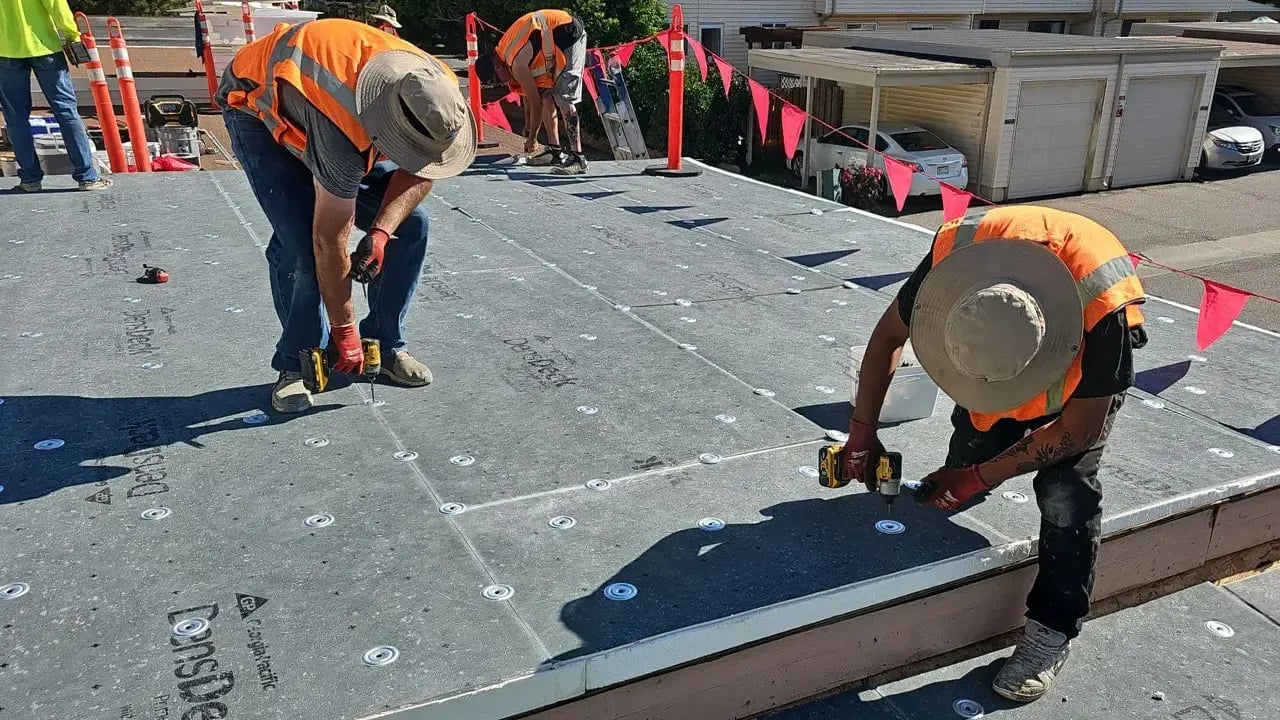
No one can evaluate a bid on a system they cannot name. Before calling anyone, owners should figure out what is up there.
Low-Slope Roofs
Building codes generally define low-slope as anything under 3 inches of rise per 12 inches of run. These roofs are not flat, and they were never meant to be. They are built with a slight pitch that moves water toward drains or scuppers. On small commercial buildings across Colorado and Wyoming, the most common systems are single-ply membrane such as TPO or EPDM, modified bitumen, or an older built-up roof with gravel.
Steep-Slope Roofs
Anything at 3:12 or steeper is steep-slope, and it sheds water rather than routing it. A surprising number of small commercial properties in this region have steep-slope roofs, especially converted residential structures, professional offices designed to blend into a neighborhood, churches, and low-rise multifamily. These use asphalt shingle, stone-coated steel, standing seam metal, or tile.
How to Tell Which System the Building Has
Stand at the property line and look at the roofline. A parapet wall with no visible slope means a low-slope roof. Pitched planes and gutters mean steep-slope. Many small commercial buildings have both, which is completely normal and is exactly the situation where a single-discipline contractor gets into trouble. The transition between the two systems, where a membrane ties into a sloped section, is one of the most common leak points Excel Roofing crews find.
|
Roof System |
Slope Type |
Typical Service Life |
Common Fit on Small Commercial |
|
TPO membrane |
Low-slope |
20 to 30 years |
Strip retail, offices, small warehouses. Reflective white surface helps with summer cooling loads. |
|
EPDM membrane |
Low-slope |
20 to 30 years |
Simple rectangular roofs with few penetrations. Handles temperature swings well. |
|
Modified bitumen |
Low-slope |
15 to 25 years |
Smaller roof areas, decks with regular foot traffic, roofs loaded with HVAC equipment. |
|
Asphalt shingle |
Steep-slope |
15 to 30 years |
Small offices, converted residential structures, mixed-use and low-rise multifamily. |
|
Stone-coated steel |
Steep-slope |
40 to 50 years |
Hail-exposed buildings and owners planning to hold the property long term. |
|
Standing seam metal |
Steep-slope |
40 years and up |
High-wind corridors and buildings that need to shed snow reliably. |
Service life figures above are typical ranges under normal conditions. Hail exposure, ponding water, poor ventilation, and rooftop equipment traffic all shorten them. For a detailed membrane comparison, see TPO vs EPDM vs PVC: Best Flat Roof for Colorado.
Step Two: Decide Between Repair and Replacement
Most owners want a simple rule here, and that instinct is understandable. Roof repair services cost a fraction of replacement, so repair is always tempting. Sometimes it is also correct.
Repair Usually Makes Sense When:
- The roof is in the first half of its expected service life
- Damage is isolated to a specific area, such as a failed pipe boot, a cracked seam, or storm damage to one slope
- The insulation under the membrane is dry, which a contractor can verify with a moisture scan or core sample
- There have been one or two leaks in one location rather than leaks appearing in new places each season
- The existing system was installed correctly and simply needs a defect corrected
Replacement Usually Makes Sense When:
- The roof is at or past its expected service life
- New leaks keep appearing in different locations, which indicates general system failure rather than a point defect
- Core samples show wet insulation, because saturated insulation loses R-value permanently and will keep feeding the deck moisture no matter what is patched above it
- Hail or wind damage is widespread across the field of the roof
- Seams are failing broadly, the membrane has become brittle, or shingles are losing granules across every slope
- Repair costs are stacking up toward a meaningful percentage of replacement cost
The Rule That Catches Owners Off Guard
Many jurisdictions in Colorado and Wyoming have adopted code language stating that if more than 25 percent of a roof area is repaired or replaced within a 12 month period, the entire roof assembly must be brought up to current code. That can trigger requirements for additional insulation, secondary drainage, or ice barrier that were not in place when the building was constructed.
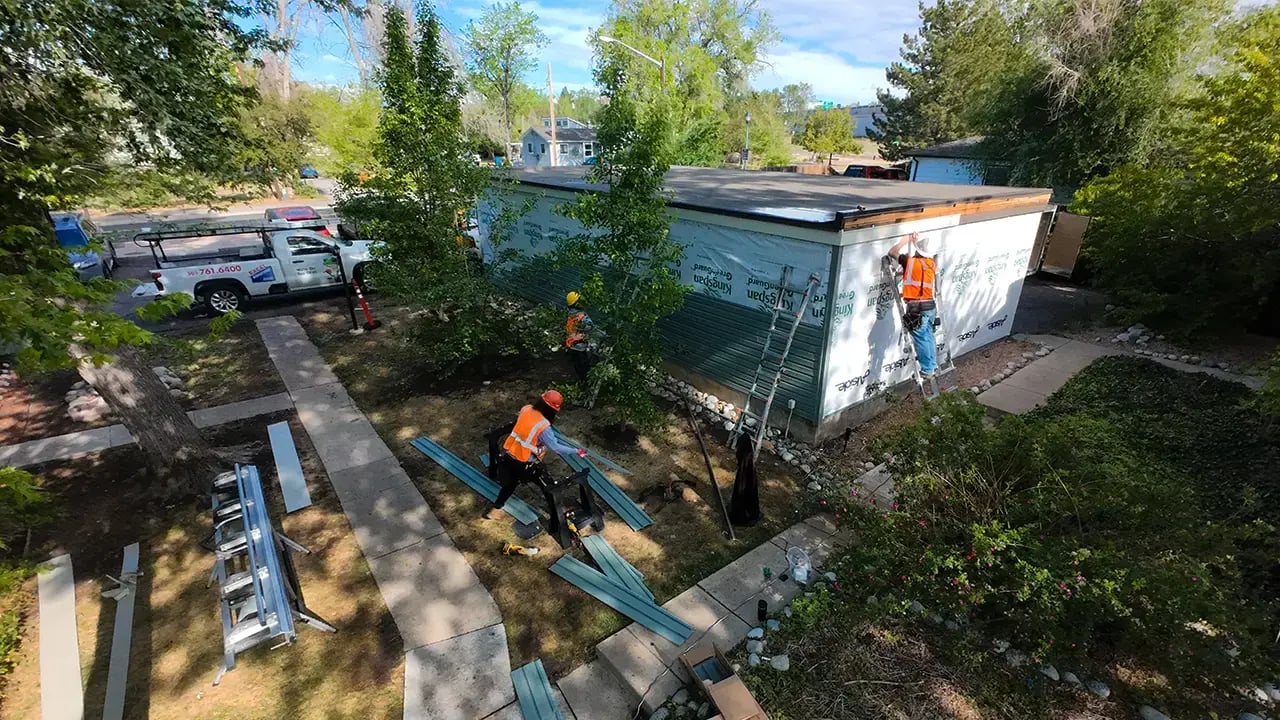
Excel Roofing raises this early because it changes the math. A large repair can quietly obligate an owner to a much bigger scope. Owners should ask any contractor bidding the project how the local code official handles this threshold in that specific jurisdiction and get the answer in writing before work starts.
Step Three: Handle Storm Damage the Right Way
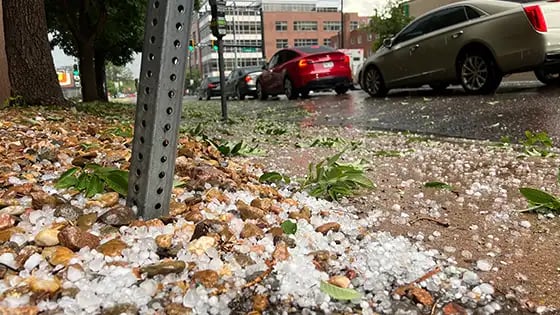
Colorado and Wyoming sit in the most active hail corridor in the country. Owners here should assume storm damage is a matter of when, not if.
What Hail Does to a Commercial Roof
On membrane roofs, hail creates bruises and punctures that often are not visible from the ground and sometimes are not obviously leaking for a year or more. The impact fractures the membrane or crushes the insulation below it, and moisture works in slowly. On shingle roofs, hail knocks granules loose and fractures the mat, which shortens the life of the roof even where daylight is not yet visible.
What Wind Does
Wyoming in particular has some of the highest design wind speeds in the continental United States, and the Front Range foothills produce severe downslope wind events. Wind damage on membrane roofs typically starts at the perimeter and corners, where uplift pressure is highest. If the edge metal or the membrane termination lifts, the rest of the field can peel in a single event.
What to Do After a Storm
- Document immediately. Photograph the building, note the date and time of the storm, and keep any news or weather reports for the area.
- Get a professional inspection before filing. A qualified contractor can say whether damage is likely to meet the claim threshold, which prevents filing a claim that gets denied and still shows on the loss history.
- Understand the policy structure. Replacement cost value policies pay to replace with like kind and quality. Actual cash value policies deduct depreciation, which on an older commercial roof can be substantial. Many commercial policies also carry a separate wind and hail deductible calculated as a percentage of the insured value rather than a flat dollar amount. That endorsement should be read before the storm, not after.
- Have the contractor present for the adjuster meeting. Adjusters are covering a lot of ground after a major event. A contractor who can walk the roof with them and point out test squares, mechanical damage, and code-required upgrades protects the scope.
- Watch the deadlines. Most policies require prompt notice of loss and set an outside limit on when claims can be filed. Letting a season pass while deciding is a costly mistake.
Deductibles, Contractors and The Law
If a contractor offers to cover, absorb, waive, or otherwise make a deductible disappear, walk away. Colorado law expressly prohibits roofing contractors from paying a residential insurance deductible, and offering to do it on any property, residential or commercial, signals a contractor who is comfortable committing insurance fraud. Whatever else that contractor is comfortable doing to the building tends to surface later.
Step Four: Do Not Skip Gutters, Drainage, and Ventilation
Owners regularly spend six figures on a new membrane, leave the drainage untouched, and call two years later about the same leak in the same corner. Water does not care what was spent. It goes where the path takes it.
Low-Slope Drainage
Low-slope roofs move water through internal drains, scuppers through the parapet, or a combination. Three things are worth verifying:
- Positive drainage. Industry standard treats water that remains on the roof more than 48 hours after rainfall as ponding. Ponding voids many manufacturer warranties, accelerates membrane breakdown, and adds significant dead load. If the roof holds water, tapered insulation or added drains should be part of the replacement scope, not an upsell discovered halfway through.
- Secondary drainage. Roofs with parapet walls generally require an emergency overflow, either overflow scuppers or a secondary drain set slightly above the primary. If a primary drain clogs with ice or debris and there is no overflow, the roof holds water until something gives. This is a code requirement in most jurisdictions and it is also the single cheapest catastrophe insurance on the building.
- Drain maintenance. Strainers get crushed by foot traffic and filled with cottonwood fluff every spring. Drain clearing belongs on a scheduled maintenance plan.
Steep-Slope Gutters
On steep-slope commercial roofs, gutters are undersized far more often than they are damaged. Standard 5 inch residential gutter is frequently inadequate for the roof area and rainfall intensity on a commercial building. For most small commercial applications across Excel Roofing's service area, the company specifies 6 inch seamless gutter with oversized downspouts, and more downspouts than a residential layout would use.
Where the water goes once it leaves the downspout matters just as much. Discharge at the foundation is one of the most common causes of moisture problems that owners misdiagnose as roof leaks. Extensions, splash blocks, or tie-ins to site drainage belong in the conversation.
Freeze, Thaw, Ice, and Attic Ventilation
This climate is defined by the freeze-thaw cycle. A sunny January afternoon melts snow on the roof, water runs to a cold eave or a shaded parapet, and it refreezes. On steep-slope roofs that produces ice dams that push water backward under the shingles. On low-slope roofs it plugs drains and loads the structure. Ice barrier at eaves and heat cable in problem areas are legitimate parts of a Colorado and Wyoming roofing scope.
On pitched commercial buildings, the root cause of ice dams is usually in the attic rather than on the roof. Converted homes and older small offices often have too little intake ventilation at the soffits, too little exhaust at the ridge, thin insulation, and warm air leaking up from the occupied space. Correcting ventilation and insulation during a steep-slope replacement reduces ice dams, lowers heating and cooling costs, and keeps the shingle manufacturer's warranty valid, since many warranties require balanced ventilation.
Step Five: Match the Material to This Climate
A roof that performs beautifully in Phoenix or Atlanta can be a poor choice here. Four regional stressors should drive material selection.
Hail Resistance
Two rating systems make any product data sheet readable:
- UL 2218 covers steep-slope products. It rates impact resistance Class 1 through Class 4. Class 4 is the highest, meaning the product withstood a two inch steel ball dropped from twenty feet without cracking. Many insurers in Colorado offer premium credits for Class 4 assemblies.
- FM 4473 covers low-slope products. It rates hail resistance as MH for moderate hail, SH for severe hail, and VSH for very severe hail. VSH is the top tier and it is uncommon. For a building in the hail corridor, it is worth asking specifically whether a product carries it.
Stone-coated steel is worth a serious look for small commercial buildings in this region for exactly this reason. Products in this category can carry both Class 4 impact ratings and, in the case of certain systems, very severe hail ratings, alongside service life in the 40 to 50 year range. On a building held for a decade or more, the higher installed cost frequently pencils out against a second replacement cycle and repeated claims.
Wind Resistance
Owners should ask what design wind speed the assembly is rated for and confirm it meets or exceeds the requirement for the specific address. Wind requirements vary considerably between, for example, a sheltered site in Denver and an exposed corridor outside Cheyenne. Edge metal deserves particular attention, because perimeter detailing is where wind failures start.
Fire Resistance
Colorado has been tightening wildfire construction standards, and Class A fire-rated roof assemblies are increasingly required in wildland-urban interface areas. For properties in or near a designated hazard area, current requirements should be verified with the local building department before materials are selected. This is a fast-moving area of code, and designing for it beats being surprised at inspection.
Altitude and UV
Ultraviolet exposure is significantly more intense at these elevations, and it degrades roofing materials faster than manufacturers' national averages suggest. Membrane thickness matters here. On single-ply work in Colorado and Wyoming, Excel Roofing specifies 60 mil over 45 mil for commercial applications. The incremental cost is small and the durability difference is not.
Step Six: Choose the Contractor Before Choosing the Roof
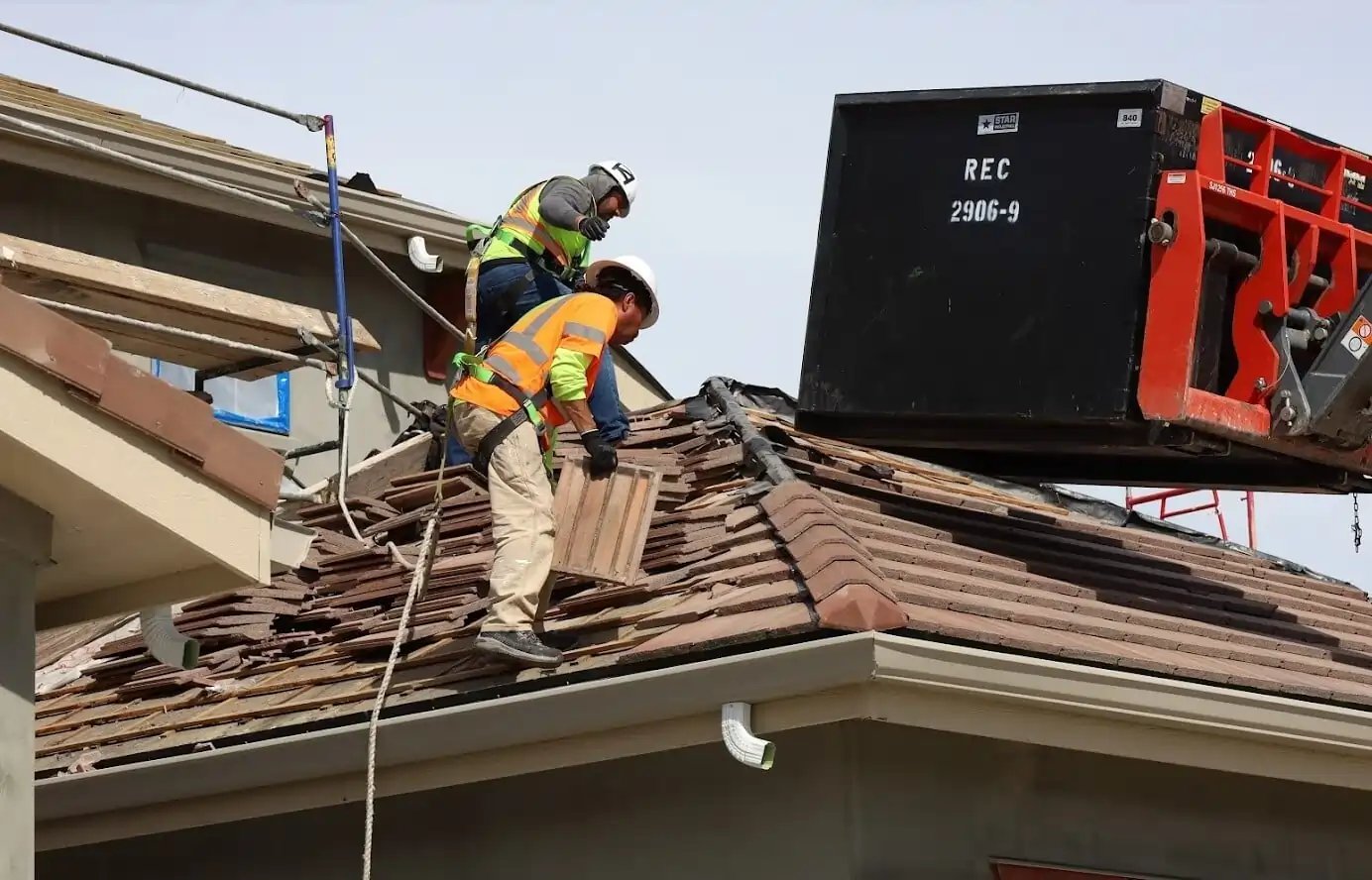
This is the part of the decision that determines the outcome. The best material in the industry, installed poorly, will fail before a mid-tier material installed correctly. Neither Colorado nor Wyoming licenses roofing contractors at the state level, which means licensing happens city by city and the bar to call oneself a roofer is low. Verify everything.
Verify Before Signing
- Local licensing. Confirm the contractor holds the license required in the specific jurisdiction where the building sits. Denver, Colorado Springs, Aurora, Cheyenne, and Casper all have their own requirements.
- Insurance, verified at the source. Ask for a certificate of insurance showing general liability and workers compensation, sent directly from the insurance carrier or agent rather than from the contractor. If a worker is hurt on an uninsured crew, the exposure can land on the property owner.
- Manufacturer certification for the specific system. Membrane manufacturers certify installers, and certification is what makes an extended manufacturer warranty available on the building. A contractor certified for shingles is not automatically certified for TPO.
- Physical local address and time in business. A permanent office in Colorado or Wyoming means someone is here to answer a warranty call in year seven. Ask how long the company has operated under its current name.
- Commercial references at the same scale. Ask for three references on small commercial buildings with a similar roof system, completed in the last two years. Then call them.
- Safety record. Ask about the safety program and any OSHA history. On an occupied commercial building, safety practices are also liability protection for the owner.
Understand the Two Warranties
Every commercial roof involves two separate warranties, and owners routinely conflate them:
- The manufacturer warranty covers the materials. On membrane roofs, a manufacturer no dollar limit warranty can cover both material and labor for repairs, but it is only available through certified installers and it typically requires documented maintenance. On steep-slope commercial roofs, manufacturer terms are often shorter or structured differently than the residential versions of the same product, so the commercial warranty document should be reviewed specifically.
- The workmanship warranty covers the installation and comes from the contractor. This is the one that matters most in the first several years, because the large majority of early roof failures are installation related rather than material related. Ask for the length in writing and ask what specifically is excluded.
Step Seven: Plan the Budget, Permits, and Building Logistics
Commercial roofing costs vary widely, and any contractor who quotes a firm number before seeing the roof is guessing. The factors that actually drive price are roof area, existing system and how many layers must come off, deck condition, insulation requirements under current code, the number of penetrations and rooftop units, roof access and staging space, and building height. Colorado-specific pricing by system is covered in How Much Does a Commercial Roof Cost in Colorado?.
Three planning items owners frequently miss:
- Denver's Green Buildings Ordinance. In Denver, existing buildings with 25,000 square feet or more of gross floor area must install a cool roof and select a compliance option when the roof is replaced. The threshold is based on gross floor area, not roof area, so a two-story building with a modest roof can still qualify. Owners near the threshold should confirm their status before the roofing permit is submitted, because compliance affects both material selection and cost.
- Tenant and occupancy impact. The building is probably operating during the work. Ask specifically how the contractor stages material, where the dumpster goes, how parking is affected, what the daily schedule looks like, and how odor and noise are managed. A restaurant with a dining room and a dental office with treatment rooms have very different tolerances, and a good contractor will plan around both.
- Capital planning. For owners holding a building long term, or serving on an HOA or association board, roof replacement belongs in the reserve study with a realistic remaining service life rather than a default number. A professional condition assessment every few years keeps that number honest.
The Most Common Mistakes Small Commercial Owners Make
- Choosing on price alone. The lowest bid is usually low because something was left out. Find out what.
- Deferring small repairs. A failed pipe boot costs very little to fix and can saturate a large area of insulation if it is ignored through a wet season.
- Skipping the moisture survey. Installing new membrane over wet insulation guarantees failure and voids warranties.
- Buying a coating to postpone a replacement. A coating over an aging roof carries a high failure risk and a warranty that is easily voided.
- Ignoring the drainage. New roof, same standing water, same result.
- Hiring the storm chaser. Out of state crews chase claims, not warranties, and they are not here in year five.
- Never inspecting between storms. Two inspections a year, spring and fall, plus one after any significant hail event, catch nearly everything while it is still cheap.
Working With Excel Roofing
Excel Roofing has served property owners across Colorado and Wyoming since 1993. The company's teams work on both low-slope membrane and steep-slope systems, which means Excel Roofing evaluates the whole building rather than the portion that happens to match a specialty. Services for small commercial properties include inspections, repairs, storm damage documentation and insurance coordination, low-slope and steep-slope replacement, gutter and drainage work, and attic ventilation and insulation. For owners who also have a home in the service area, the residential team is the same company, with the same warranty behind it.
Every project starts with a straightforward inspection and a written scope that can be compared line by line against another bid. That is the whole idea behind how Excel Roofing does business: You Don't Pay A Cent Until You're Content.
Ready to talk about the building? Schedule a commercial roof inspection with Excel Roofing and get a straight answer about what the roof actually needs, not what is easiest to sell. We're On Top Of It.
Frequently Asked Questions
What are the top roofing services for small commercial properties?
The top roofing services for small commercial properties are documented roof inspections, targeted roof repair, hail and storm damage assessment, low-slope roof replacement, steep-slope roof replacement using residential-grade systems, gutter and drainage correction, attic ventilation and insulation, and a scheduled preventive maintenance program. The right combination depends on the building's roof systems, the damage level, and how long the owner plans to hold the property.
Do small commercial properties need residential roofing services?
Many do. Converted houses, small professional offices, churches, and low-rise multifamily buildings often have pitched roofs covered with the same asphalt shingles, stone-coated steel, or standing seam metal used on homes, frequently alongside a low-slope membrane section. These buildings need residential roofing skills such as steep-slope installation, attic ventilation, and gutter sizing, delivered with commercial documentation, scheduling, and warranty terms.
Should a small commercial roof be coated instead of replaced?
Coatings are often quoted at roughly half the cost of replacement, but they do not fix existing leaks, they fail when any moisture or seam defect is present in the existing roof, and manufacturer warranties are typically voided if the substrate was not in flawless condition. Excel Roofing no longer installs roof coatings for these reasons and recommends targeted repair or full replacement instead.
How long does a commercial roof last in Colorado?
It depends on the system. Single-ply membranes such as TPO and EPDM typically last 20 to 30 years, modified bitumen 15 to 25 years, asphalt shingle 15 to 30 years, and metal or stone-coated steel 40 years or more. Colorado's hail frequency, intense ultraviolet exposure at altitude, and freeze-thaw cycling tend to push actual service life toward the lower end of these ranges unless the roof is maintained and the material was selected for impact resistance.
Should I repair or replace my small commercial roof?
Repair generally makes sense when the roof is in the first half of its service life, the damage is isolated to a specific area, and the insulation beneath the membrane is dry. Replacement generally makes sense when the roof is at or past its service life, leaks are appearing in multiple new locations, moisture testing shows saturated insulation, or storm damage is widespread. A moisture survey or core cut provides an objective answer rather than a guess.
Does insurance cover commercial roof replacement after hail?
Frequently yes, though coverage depends on the policy. Replacement cost value policies pay to replace with like kind and quality, while actual cash value policies deduct depreciation. Many commercial policies carry a separate wind and hail deductible expressed as a percentage of insured value rather than a flat amount. A qualified contractor should inspect the roof and document the damage before a claim is filed and should be present when the adjuster inspects.
What is the difference between commercial and residential roofing?
The main differences are slope, system, and scale. Commercial buildings often have low-slope roofs using membrane systems that require different installation methods, equipment, and manufacturer certifications than steep-slope residential roofing. Commercial projects also involve more rooftop penetrations, larger drainage demands, occupied-building logistics, and code requirements around insulation and secondary drainage. Many small commercial buildings also have steep-slope roofs, which is why a contractor who works in both disciplines is valuable at this scale.
Does Denver's Green Buildings Ordinance apply to small commercial roofs?
Denver's Green Buildings Ordinance requires existing buildings with 25,000 square feet or more of gross floor area to install a cool roof and select a compliance option when the roof is replaced. The threshold is based on gross floor area, not roof area, so a two-story building with a modest roof can still qualify. Owners near the threshold should confirm their status before the roofing permit is submitted.
What size gutters do I need on a small commercial building?
Standard 5 inch residential gutter is often undersized for a commercial roof. For most small commercial applications in Colorado and Wyoming, 6 inch seamless gutter with oversized downspouts, and more downspouts than a residential layout would use, handles high-intensity storms far better. Proper sizing depends on the drainage area feeding each run and the local rainfall intensity, so it should be calculated rather than assumed.
What is ponding water and why does it matter?
Ponding is water that remains on a low-slope roof more than 48 hours after rainfall under conditions that should allow drying. It matters because it accelerates membrane deterioration, adds substantial dead load to the structure, magnifies ultraviolet damage, and voids many manufacturer warranties. Correcting it usually means adding tapered insulation, adding drains, or both, and that correction belongs in the replacement scope from the start.
How do I verify a commercial roofing contractor is legitimate?
Confirm the contractor holds the license required in the specific city, since neither Colorado nor Wyoming licenses roofers at the state level. Request a certificate of insurance for general liability and workers compensation sent directly by the carrier or agent. Verify manufacturer certification for the exact system going on the building. Confirm a permanent local address and time in business under the current name. Then call three references on comparable small commercial projects completed in the last two years.
What is a Class 4 impact rating and is it worth it?
Class 4 is the highest impact resistance rating under UL 2218, awarded to steep-slope products that withstand a two inch steel ball dropped from twenty feet without cracking. For low-slope products, the comparable standard is FM 4473, which rates hail resistance as MH, SH, or VSH, with VSH being the top tier. In the Colorado and Wyoming hail corridor these ratings frequently pay for themselves through reduced storm damage and, on many policies, insurance premium credits.
How long does a small commercial roof replacement take?
A typical small commercial roof replacement runs from a few days to a few weeks depending on roof size, how many existing layers must be removed, deck repairs discovered during tear-off, the number of rooftop units and penetrations, and weather. Because these buildings are usually occupied during the work, owners should ask for a written schedule that covers daily start and stop times, staging locations, dumpster placement, and parking impact.
How often should I have my commercial roof inspected?
Twice a year, in spring and fall, plus an additional inspection after any significant hail or high-wind event. Regular inspection catches small failures such as a cracked pipe boot or an open seam while they are inexpensive to correct, and documented maintenance is a requirement under most manufacturer warranties.
About Excel Roofing: Founded in 1993 by J Bretz, Excel Roofing provides residential and commercial roofing, storm damage restoration, and gutter services throughout Colorado and Wyoming. More than three decades of work in this climate informs every recommendation in this guide.