
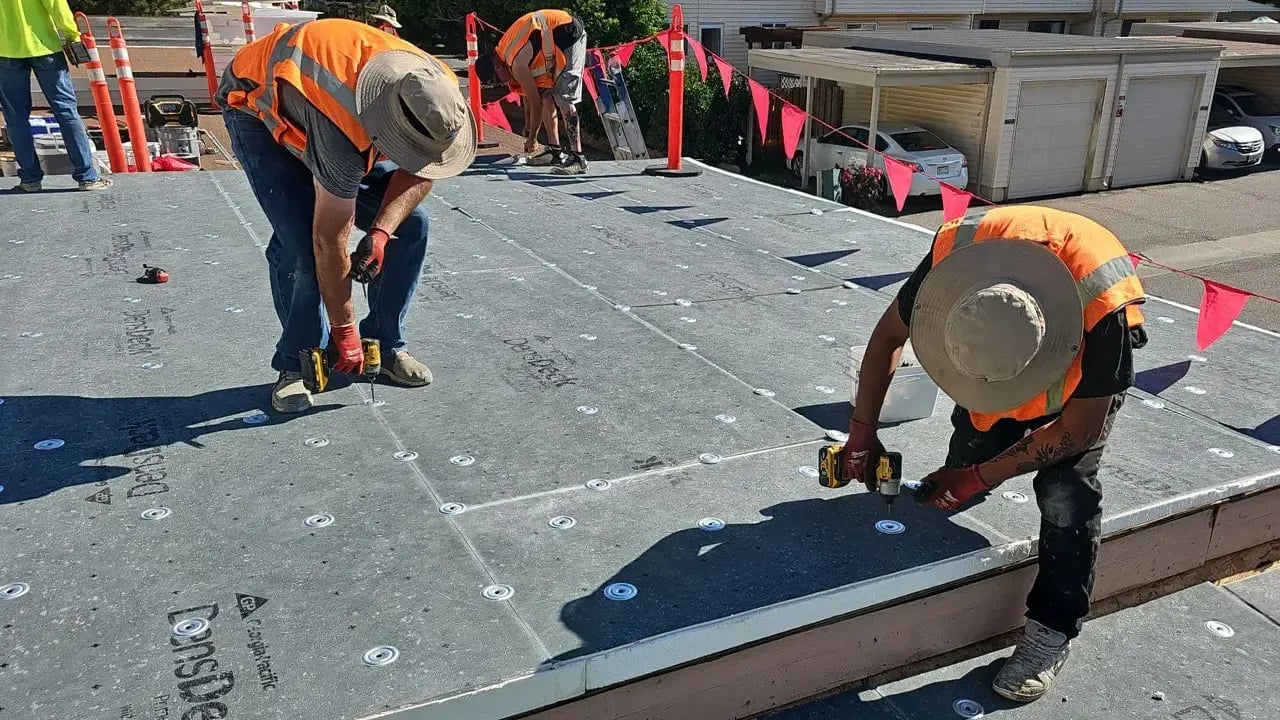
Excel Roofing has been roofing commercial and residential properties across Colorado and Wyoming since 1993, and the pattern is consistent. Owners of large portfolios have roof asset management programs. Owners of one, two, or five small buildings usually do not, because nobody ever told them what one looks like or what it should cost. This guide is meant to close that gap. It covers the services small commercial owners tend to overlook, the events that should trigger a call for a roof repair, and a straightforward way to evaluate roofing contractors so the selection process stops feeling like a coin flip.
Why Small Commercial Roofs Get Neglected
Three things work against the small commercial owner.
First, low-slope roofs hide their problems. A shingle roof on a house can tell you something is wrong from the street. A TPO, EPDM, modified bitumen, or built-up roof gives you almost no visual warning from ground level. Water can travel a long way under a membrane before it appears at a ceiling tile, and by the time you see the stain, the wet insulation may already cover several hundred square feet.
Second, the roof is often out of sight and out of budget. Small commercial properties frequently run on a reactive maintenance budget. Parking lot striping, HVAC service, and snow removal all have obvious triggers. Roofing does not, so it gets deferred until it becomes an emergency.
Third, tenants and vendors are on the roof constantly and nobody is tracking it. HVAC technicians, satellite installers, sign companies, exhaust hood cleaners, and telecom crews all access the roof. Every one of those visits is an opportunity for a dropped tool, a punctured membrane, a cut sealant bead, or an improperly flashed new penetration. Most owners have no roof access log and no idea who was up there last.
Roofing Services Small Commercial Owners Are Not Thinking About
When most owners think about roofing contractors, they think about two services: replace the roof, or fix the leak. There are many more services that should be considered, and this list, is where the real savings live.
Scheduled Biannual Inspections With Written Documentation
The single highest-return service in commercial roofing is a documented inspection twice a year, typically in spring after hail and freeze-thaw season and in fall before snow load. What you are paying for is not just the visual check. You are paying for a dated written record with photographs, which becomes the evidence file for an insurance claim, a warranty claim, a lender inspection, or a sale. Without that documentation, an adjuster can argue that damage is long-term deterioration rather than a covered storm event.
Drain, Scupper, and Gutter Clearing
Low-slope roofs fail at the drainage points more often than in the field. Cottonwood seed, elm samaras, hail stone debris, gravel migration, and blown-in trash collect at drains and scuppers. Ponding water that remains more than 48 hours after a storm, accelerates membrane aging, adds structural load, and voids many manufacturer warranties. Clearing drains is inexpensive. Repairing the deck under a ponding area is not.

Rooftop Equipment Curb and Penetration Maintenance
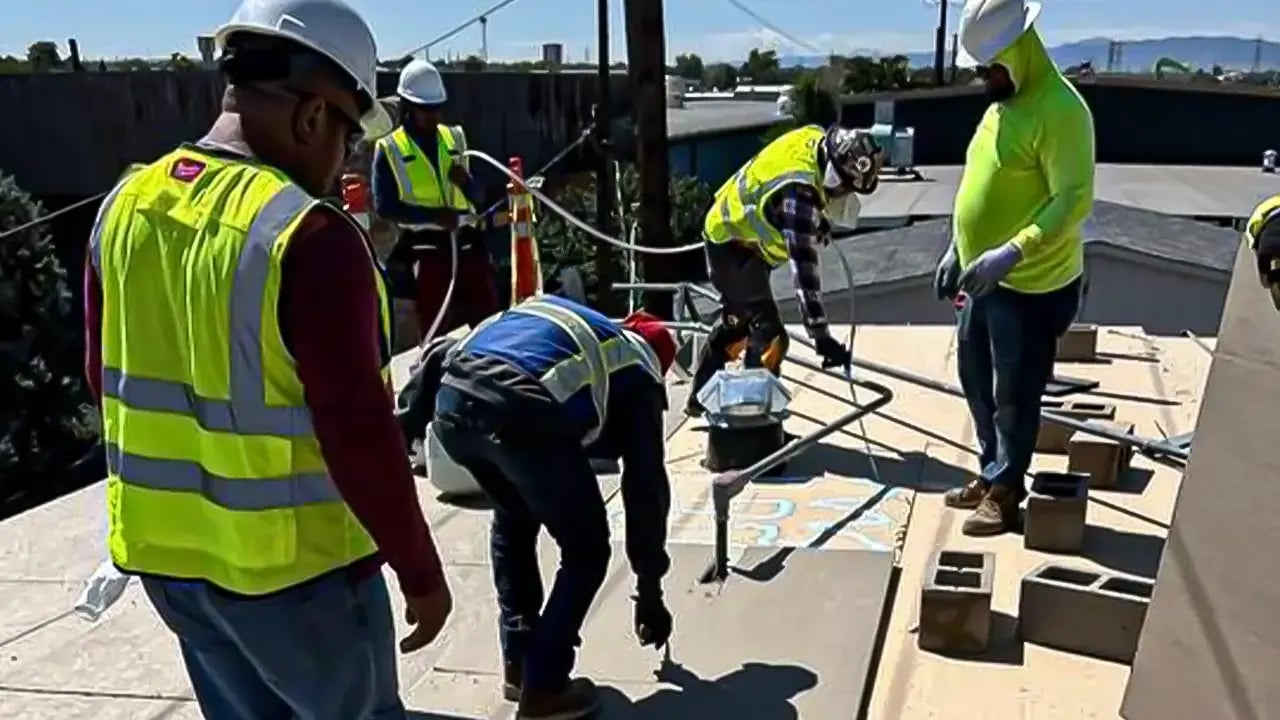
Every HVAC unit, exhaust fan, vent, conduit run, and gas line that penetrates the roof has a flashing detail that has a shorter service life than the membrane itself. Pitch pans dry out and shrink. Termination bar sealant cracks under Colorado ultraviolet exposure. Curb caps loosen. On most small commercial buildings we inspect, the majority of active leaks originate at a penetration, not in the open field of the roof.
Walkway Pad Installation
If technicians walk the same path to the same rooftop unit twice a month for a decade, that path wears through. Walkway pads are one of the cheapest protective measures available and are frequently missing on small commercial buildings, especially ones where the original roof was installed on a tight budget.
Infrared or Moisture Scanning
Wet insulation under an intact membrane is invisible from above and destroys the thermal performance you are paying for on every utility bill. An infrared scan or capacitance survey maps saturated areas so you can cut out and replace a few hundred square feet of wet insulation rather than discovering the problem later when the entire roof has to come off.
Sealant and Flashing Renewal
Sealants are consumables, not permanent components. Counterflashing, reglets, coping joints, and pitch pans all need periodic renewal. Colorado and Wyoming conditions are hard on them. High altitude ultraviolet exposure, wide daily temperature swings, and hundreds of freeze-thaw cycles a year, age sealant faster than almost anywhere else in the United States.
Warranty Registration and Compliance Inspections
Many commercial roof warranties require documented maintenance and periodic manufacturer inspections to stay in force. Owners routinely discover during a claim that their warranty lapsed years earlier because nobody performed the required inspections. If you bought the building with the roof already on it, the warranty may be transferable, but usually only within a defined window and with a transfer fee.
Snow and Ice Management Planning
Wyoming wind loads and Colorado spring snow create drift patterns that concentrate weight at parapets, mechanical screens, and where the roof changes in level. A roofing contractor can identify drift zones and advise on safe removal practices. Untrained crews with metal shovels cause an enormous amount of membrane damage every time they shovel the roof.
Roof Access Logging and Tenant Coordination
A simple sign-in requirement for anyone accessing the roof, paired with a lease provision making tenants responsible for damage caused by their vendors, converts a mystery leak into an accountable event. This costs nothing and can pay for itself the first time it works.
Events That Should Trigger a Roof Repair Call
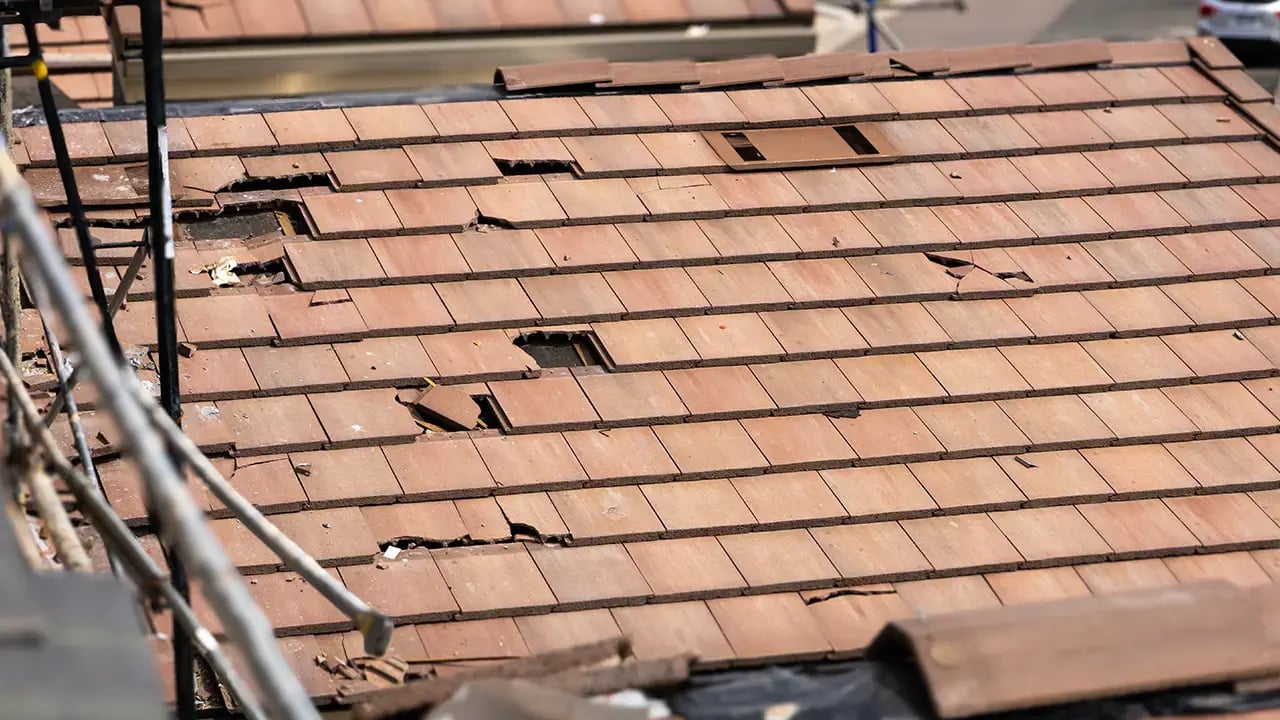
These are the specific triggers we tell small commercial owners to watch for. If any of them occur, call for an inspection rather than waiting for a leak.
Weather Triggers
- Any hail event of one inch or larger within your zip code, whether or not you see obvious damage. Hail bruises modified bitumen and built-up roofs in ways that are invisible until the fractured area open months later.
- Wind events with gusts above 58 miles per hour. This is the severe threshold used by the National Weather Service. Downslope wind events and sustained wind routinely lift membrane edges and peel back flashing.
- Heavy wet spring snow followed by rapid melt, which loads the structure and tests every drainage point at once.
- Extended ponding, meaning standing water still present 48 hours after a storm ends.
Building Activity Triggers
- Any new rooftop equipment installation, replacement, or removal. A removed unit leaves an open curb that needs proper infill, and a new unit means new penetrations cut by an HVAC contractor rather than a roofer.
- New signage, antennas, satellite dishes, or solar equipment, all of which usually involve fasteners going through the roof assembly.
- Tenant improvement work, which often includes new plumbing vents, exhaust fans, or electrical conduit.
- Grease-producing tenants such as restaurants, where exhaust discharge degrades single-ply membrane over time and requires a grease containment plan.
Condition Triggers
- Any interior water stain, no matter how small, and any musty odor in a tenant space.
- Visible seam separation, blisters, ridging, or fastener backout on the membrane surface.
- Loose or rattling coping and edge metal. This is often the first component to fail in strong wind.
- An unexplained increase in heating or cooling costs, this can indicate wet insulation.
- Vegetation growth, which means organic debris and standing moisture have been present long enough to sustain plant growth.
Transaction and Compliance Triggers
- Any pending sale, refinance, or new loan. Lenders and buyers will order a roof condition report and it is far better to know what it will say in advance.
- Insurance policy renewal or a carrier-ordered inspection, especially given how carriers across Colorado have tightened roof underwriting.
- Reaching an age milestone. Generally the ten year mark on a single-ply system and the fifteen year mark on a modified bitumen or built-up system.
- Any change in roofing contractor or property manager, which is the right moment to establish a documented baseline.
How to Choose a Commercial Roofing Contractor in Colorado and Wyoming
Contractor selection is where most owners feel least equipped, particularly after a storm when the solicitation volume spikes. Here’s a practical filter.
1. Confirm Licensing and Insurance in Writing
Colorado does not issue a statewide roofing contractor license. Licensing is handled at the municipal and county level, so a contractor legitimate in one jurisdiction may not be permitted in the next. Wyoming similarly leaves licensing to individual municipalities. Ask for the specific local license number for the jurisdiction your building sits in, ask for certificates of general liability and workers compensation insurance sent directly from the insurance agent rather than as a forwarded PDF.
2. Understand That Colorado Roofing Law Protects Homeowners, Not You
Colorado Senate Bill 12-038 established important protections for residential roofing customers, including the right to rescind a contract within a set period after an insurance claim is denied and a prohibition on contractors paying or rebating a customer deductible. Those provisions are written for residential roofing services and residential roof installation.
As a commercial owner, you generally do not have that statutory backstop. Your protection lives in your contract, which means the contract terms matter more for you than they do for a homeowner. Read the scope, the exclusions, the change order process, and the payment schedule before signing.
3. Ask Whether They Actually Do Commercial Work
A great many roofing contractors are excellent at steep-slope residential roofing services and have never welded a TPO seam. Low-slope commercial roofing is a different trade with different equipment, different detailing, and different failure modes. Ask directly what percentage of their annual volume is low-slope commercial, and ask for addresses of comparable small commercial projects you can inspect with your own eyes.
4. Check Manufacturer Certification
Roofing manufacturers certify contractors and restrict their strongest warranties to certified installers. Excel Roofing is an Owens Corning Platinum Preferred Contractor, a designation held by a small percentage of contractors nationally. Certification matters for two reasons. It means the manufacturer has vetted the company, and it means the manufacturer-backed warranty options are actually available to you rather than being a workmanship promise from a company that may not exist in ten years.
5. Get Clear on What Kind of Warranty You Are Being Sold
Warranty language causes more confusion than any other part of a commercial roofing proposal. In broad terms, you may be offered a material-only warranty from the manufacturer, a system warranty covering materials/specified components, a no dollar limit (NDL) warranty covering both materials and labor to repair, and a separate workmanship warranty from the contractor. These are not interchangeable. Ask for the actual warranty document, not the summary in the proposal, and ask what maintenance obligations keep it valid.
6. Evaluate the Proposal, Not Just the Price
A commercial roofing proposal should specify the system and manufacturer, the insulation type and R-value, the attachment method, the edge metal detail, the flashing details at every penetration type, the tear-off and disposal scope, the provisions for deck repair if rot is discovered, and the daily site protection plan.
If two proposals differ by 30%, the difference is almost always in these details rather than in profit margin.
7. Ask About Tenant and Business Continuity Planning
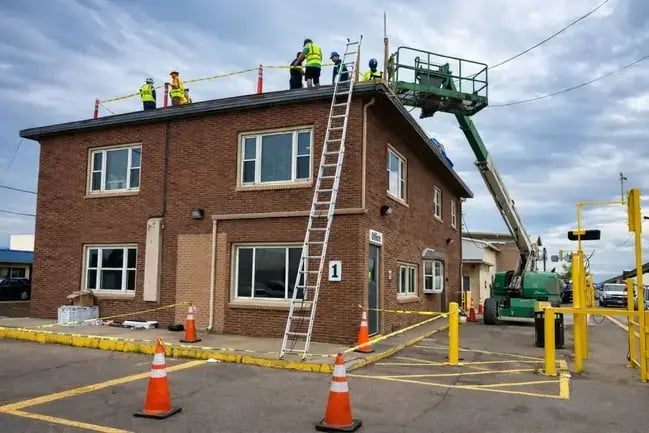
Your tenants have customers, patients, inventory, and operating hours. A contractor who does commercial work regularly will proactively discuss staging, crane or hoist placement, noise timing, parking impact, odor from hot work, and the plan for dry-in at the end of each day. A contractor who has not discussed these with you, is a strong red flag.
8. Confirm Safety Program and Local Presence
Ask about fall protection and OSHA compliance. A crew working without proper fall protection on your building is a huge liability exposure for you. Then ask a simpler question: where is their nearest permanent office, and who answers the phone for a service call in 3 years?
Storm-chasing operations sell aggressively and disappear. Excel Roofing has been in Colorado since 1993 and maintains offices in Englewood and Colorado Springs in Colorado. As well has offices Sheridan and Casper in Wyoming since 2007.
A 5-Step Maintenance Program You Can Start This Quarter
You do not need an enterprise roof asset management system. For a small commercial property, a workable program looks like this.
- Get a baseline inspection with photographs, a written condition report, and an estimate of remaining service life.
- Locate your warranty documents, confirm whether they are still in force, and confirm whether they transferred when you bought the building.
- Put two inspections a year on the calendar, spring and fall, and add drain clearing to each visit.
- Create a roof access log and require vendors and tenant contractors to sign in.
- Address small repairs immediately rather than batching them, since a $50 sealant repair and a $50,000 deck replacement are frequently the same defect at different ages.
- Set aside a roof reserve line item in your operating budget based on the remaining service life estimate from step one.
The economics here are not subtle. A documented maintenance program on a small commercial roof typically costs a small fraction of replacement cost per year and reliably extends service life. Deferred maintenance does the opposite, and it usually delivers the bill at the exact wrong time.
Frequently Asked Questions
How often should a small commercial roof be inspected?
Twice a year is the standard recommendation, in spring and in fall, plus an additional inspection after any significant hail or wind event. In Colorado and Wyoming the spring inspection matters most because it follows both the freeze-thaw season and the beginning of hail season.
How long does a commercial roof last in Colorado?
Service life depends on the system, the installation quality, and the maintenance history. Single-ply systems such as TPO and EPDM commonly serve twenty to thirty years, and modified bitumen and built-up systems are in a similar range. Colorado conditions, particularly hail, high altitude ultraviolet exposure, and freeze-thaw cycling, tend to push real-world performance toward the lower end of those ranges when a roof is not maintained.
Does hail damage on a commercial roof always show up right away?
No. On membrane and modified bitumen roofs, hail often causes fractures in the reinforcement or bruising that is not visible as an open leak for months or even years. This is why we recommend an inspection after any hail event of one inch or larger rather than waiting for water to appear inside, and why dated inspection documentation is valuable when filing a claim.
Can a commercial roof be repaired instead of replaced?
Frequently, yes. If the insulation is dry and the deck is sound, options include targeted repair, section replacement, or a coating and restoration system that can extend service life at a fraction of replacement cost. A moisture scan is the deciding factor, since widespread saturated insulation generally makes replacement the correct call.
Who is responsible when a tenant’s HVAC contractor damages the roof?
That depends on your lease language. Many leases are silent on rooftop access, which leaves the owner absorbing the cost. Adding a provision that assigns responsibility for vendor-caused roof damage, combined with a roof access log, is one of the least expensive risk reductions available to a small commercial owner.
Do I need a different contractor for commercial and residential roofing?
Not necessarily, but you should confirm that the contractor genuinely performs both. Steep-slope residential roof installation and low-slope commercial work require different crews, equipment, and certifications. Many owners of small commercial buildings also own residential rental property, and it is convenient to work with one company that is qualified for both rather than managing two relationships.
Talk to Excel Roofing About Your Property
If you own a small commercial property in Colorado or Wyoming and you cannot remember the last time anyone was on the roof with a clipboard, this is the place to start. We will walk the roof, document what we find with photographs, tell you plainly what needs attention now, what can wait, and give you a realistic estimate of remaining service life so you can budget with actual numbers.
We have been doing this along the Front Range and across Wyoming since 1993, and our approach has not changed. You Don’t Pay A Cent Until You’re Content, and We’re On Top Of It.
Call Excel Roofing or request a commercial roof evaluation to get on the schedule.