

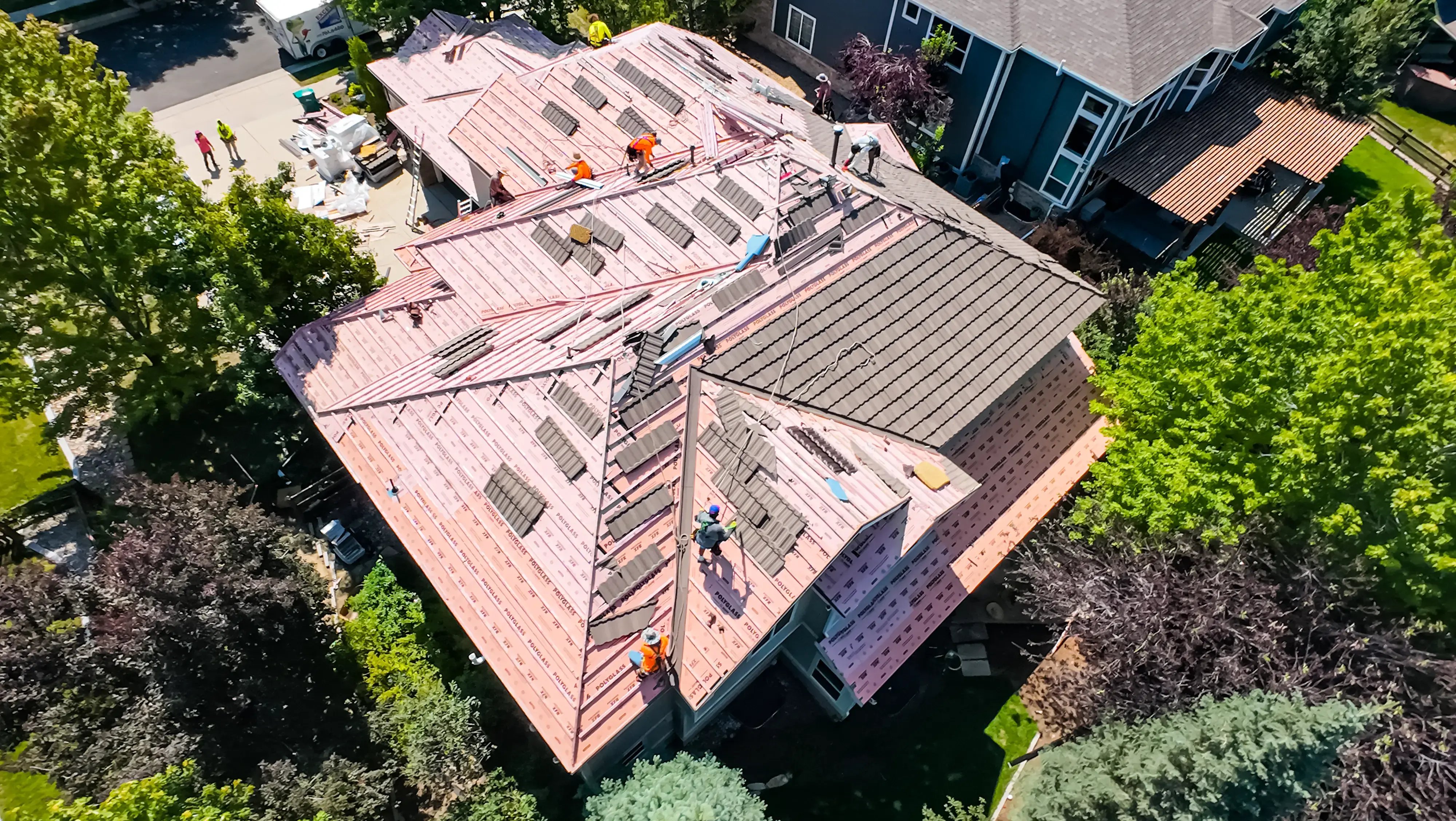
Residential roofing costs in Colorado are shaped long before a crew sets up the first ladder. The city a home sits in, the permit rules that city enforces, the condition of the deck under the shingles, the state laws that govern roofing contracts, and the decision to repair or replace all move the final number. Two houses on the same Denver street can receive very different estimates for reasons that have nothing to do with a contractor’s markup.
Excel Roofing has served Colorado homeowners since 1993 and has completed more than 55,000 roofing projects across Colorado and Wyoming. This guide explains the local factors behind Colorado roofing prices in the Denver metro area, shares Excel Roofing’s own 2026 installed pricing, and walks through the decision factors that determine whether a roof should be repaired or replaced.
Excel Roofing’s 2026 Denver Metro Area Roof Replacement Pricing
The figures below reflect Excel Roofing’s Colorado market pricing as of September 12, 2026. Every price is fully installed and includes materials, labor, tear-off of the existing roof, and disposal. Roofing is measured in squares, and one roofing square equals 100 square feet of roof surface, so the per square foot column is the per square price divided by 100. The average column uses a 30-square (3,000 square foot) roof so every product can be compared on equal footing.
Asphalt Shingle Replacement Pricing
|
Product |
Impact Rating |
Per Square Foot |
Per Roofing Square |
30-Square Average |
|
Owens Corning Oakridge |
Class 3 |
$5.85 to $6.00 |
$585 to $600 |
$18,000 |
|
Owens Corning Duration |
Class 3 |
$6.50 to $7.30 |
$650 to $730 |
$21,900 |
|
Owens Corning Duration Storm IR |
Class 4 |
$7.00 to $8.00 |
$700 to $800 |
$24,000 |
|
Owens Corning Duration FLEX IR |
Class 4 |
$7.50 to $8.25 |
$750 to $825 |
$24,750 |
|
CertainTeed Presidential |
Class 3 |
$10.00 to $12.00 |
$1,000 to $1,200 |
$36,000 |
|
CertainTeed Presidential IR |
Class 4 |
$7.25 to $11.50 |
$725 to $1,150 |
$34,500 |
Most roofs are smaller than the 30-square example. For an average-sized Denver metro home, an Excel Roofing asphalt replacement typically lands between $15,000 and $20,000. Smaller homes with standard dimensional asphalt shingles sit near the low end, while larger homes, steeper pitches, complex roof designs, and Class 4 premium shingles push projects past $20,000. Excel Roofing’s most recommended product for Denver homeowners is a Class 4 impact-resistant dimensional shingle, which balances price, hail durability, and long-term value. A deeper breakdown is available in Excel Roofing’s Denver asphalt roof cost guide.
Premium Roofing Replacement Pricing
|
Roofing System |
Impact Rating |
Per Square Foot |
Per Roofing Square |
30-Square Average |
|
Concrete Tile |
Class 4 |
$12.75 |
$1,275 |
$38,250 |
|
Stone-Coated Steel (Direct to Deck) |
Class 4 |
$12.75 |
$1,275 |
$38,250 |
|
Stone-Coated Steel (Batten Mounted) |
Class 4 |
$13.75 |
$1,375 |
$41,250 |
|
Standing Seam Metal (1.5 Inch Snap Lock) |
Class 4 |
$13.50 |
$1,350 |
$40,500 |
|
DaVinci Synthetic |
Class 4 |
$20.00 |
$2,000 |
$60,000 |
|
Brava Synthetic |
Class 4 |
$21.50 |
$2,150 |
$64,500 |
Premium systems cost more upfront, but they are built to outlast asphalt in hail country.
Excel Roofing’s stone-coated steel vs. asphalt shingles cost guide compares the two in detail, and the full Colorado roofing and services pricing guide covers flat roofs, cedar, slate, and more.

How the Good, Better, Best Estimate Works
Every Excel Roofing estimate includes three tiers so homeowners can compare performance and price side by side. The Good tier is a Class 3 asphalt shingle. The Better tier is a Class 4 asphalt shingle or stone-coated steel. The Best tier is stone-coated steel, synthetic polymer roofing, or standing seam metal. Seeing all three on one page makes it easier to judge whether the step up to the next tier is worth it for a specific home and budget.
Repair or Replace? The Decision Factors That Matter Most
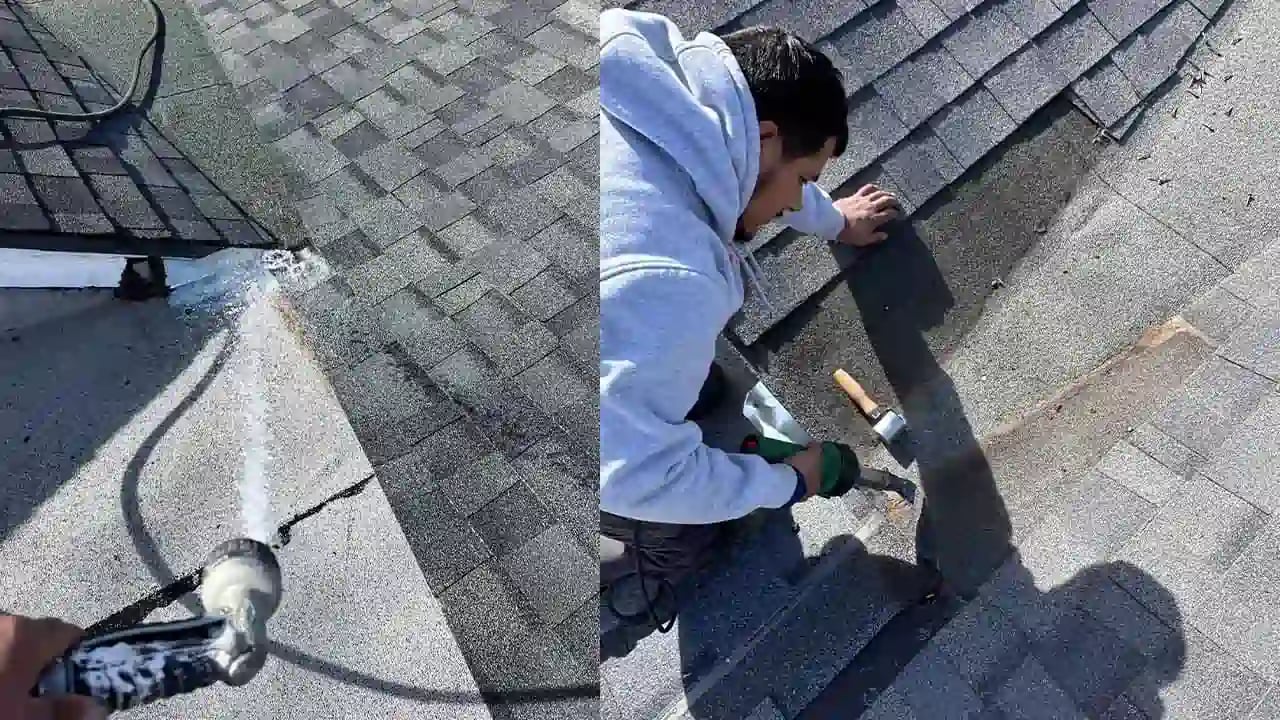
A repair can mean resealing a single wind-lifted shingle or rebuilding the flashing around a chimney, and those two jobs have almost nothing in common on an invoice. What homeowners can evaluate are the factors that decide whether a repair makes financial sense in the first place.
How Much of the Roof Is Affected
Scope matters in Colorado because each city draws its own line between a repair and a replacement. In the City and County of Denver, a residential repair needs a roofing permit once it covers more than 10% of the roof or more than two roofing squares, whichever is smaller. Denver also requires a permit for every new roof penetration, and it allows a partial roof to be replaced only when the work ends at a natural edge, such as a ridge, eave, or gutter line, rather than stopping partway across a slope.
Littleton is stricter. Its roofing policy (Policy #24-001, revised January 7, 2026) treats anything more than one square of total removal or replacement as a roof replacement for code purposes. Englewood likewise requires a reroofing permit once work exceeds one square. The practical takeaway is that a patch counted as a simple repair in one suburb can trigger permit fees, inspections, and full code compliance a few miles away, and those added requirements can erase the savings that made a repair attractive.
Whether the Repair Will Actually Match
Shingle manufacturers update product lines and retire colors regularly, and even an identical product weathers differently after years of high-altitude sun. A mismatched patch on a street-facing slope can hurt curb appeal and resale value. Before approving a repair on a visible slope, homeowners should ask whether the existing shingle is still manufactured and how closely a new bundle will blend in.
The Age and Condition of the Surrounding Shingles
Asphalt shingles become brittle with age. Lifting older shingles to slide in replacements can crack the neighboring pieces, turning a small repair into a larger one. A roof in the final stretch of its expected life is often a poor candidate for piecemeal work, and insurers have noticed the same thing. Many carriers are changing how they cover aging roofs, as Excel Roofing explains in its article on insurance companies denying coverage for asphalt shingle roofs.
Isolated Damage Versus Systemic Failure
Isolated problems usually point toward repair: a cracked pipe boot, a few shingles torn off in a windstorm, a nail pop, or one failed flashing detail. Systemic problems point toward replacement: hail bruising spread across multiple slopes, granule loss on every elevation, leaks showing up in more than one room, or a deck that feels soft underfoot.
The Roof’s Repair History
A roof that needs its third or fourth service call in a few years is sending a message. Each visit may seem affordable on its own, but the combined cost of repeat repairs, plus interior damage from every leak, adds up while the underlying problem remains. Keeping receipts from past repairs gives an inspector valuable context.
|
Signs a Repair May Make Sense |
Signs Replacement May Be the Better Investment |
|
Damage is limited to one area or one component |
Damage is spread across several slopes |
|
The roof is early or midway through its expected life |
The roof is nearing the end of its expected life |
|
The existing shingle is still made and will match |
The shingle is discontinued or visibly mismatched |
|
The work stays under the city’s permit threshold |
The scope exceeds the city’s repair threshold |
|
This is the first leak or first service call |
Repairs keep repeating within a few years |
Excel Roofing’s guide to whether a roof needs repair or replacement covers the warning signs in more depth. The most reliable answer still comes from an in-person inspection, since hail bruising and failed sealant strips are rarely visible from the ground.
Colorado Cost Factors That Online Averages Miss
Local Code Requirements Change From City to City
Colorado does not issue a statewide roofing license. Licensing and code enforcement happen at the city and county level, and those differences show up in estimates. Denver requires roofing contractors to hold a Class D roofing license before a permit can be issued. Littleton’s roofing policy requires ice and water barrier underlayment at the eaves extending at least two feet inside the exterior wall line, plus drip edge at roof edges, and it addresses ASTM D7158 Class H wind-rated shingles.
A contractor who prices a job using one city’s rules can underbid a project in another, and the gap usually surfaces later as a change order. Excel Roofing’s article on ice and water shield explains why that underlayment matters on Colorado roofs.
Historic Districts and HOA Approvals
Homes inside a Denver historic district, or homes designated as individual landmarks, need design review from the Landmark Preservation Commission before a roofing permit is issued. Many Denver metro-area HOAs also restrict roofing materials, profiles, and colors. These approvals add time and can remove the least expensive option from consideration, so they belong in the budget conversation from the start.
Penetrations and Rooftop Equipment
Skylights, swamp coolers, chimneys, satellite mounts, and solar arrays all require extra labor and detailing. Some estimates leave this work out entirely. Excel Roofing has found that many homeowners spend an additional $5,000 or more on related work such as gutters, skylight updates, and other exterior improvements identified during a roofing project. Homeowners with rooftop solar should ask whether panel removal and reinstallation is included in the estimate and who will perform it.
Add-Ons Cost Less When Bundled With a New Roof
Ventilation, gutter, and snow protection upgrades are often cheaper when completed during a replacement, because the roof is already open and the crew is on site. The attic fan pricing below shows how large that difference can be.
|
Upgrade |
Excel Roofing Price |
Typical Total or Retail Price |
|
Solar Attic Fan |
$999 with a roof |
$2,375 retail |
|
Electric Attic Fan |
$875 with a roof |
$2,250 retail |
|
5 Inch Aluminum Gutters |
$12.40 per linear foot |
$2,750 average system |
|
6 Inch Aluminum Gutters |
$15.60 per linear foot |
$3,432 average system |
|
Snow Guards |
Around $30 each |
$350 to $1,500 system |
|
Standard Heat Cable |
Around $11 per linear foot |
$3,500 to $6,000 system |
What Is Found After Tear-Off
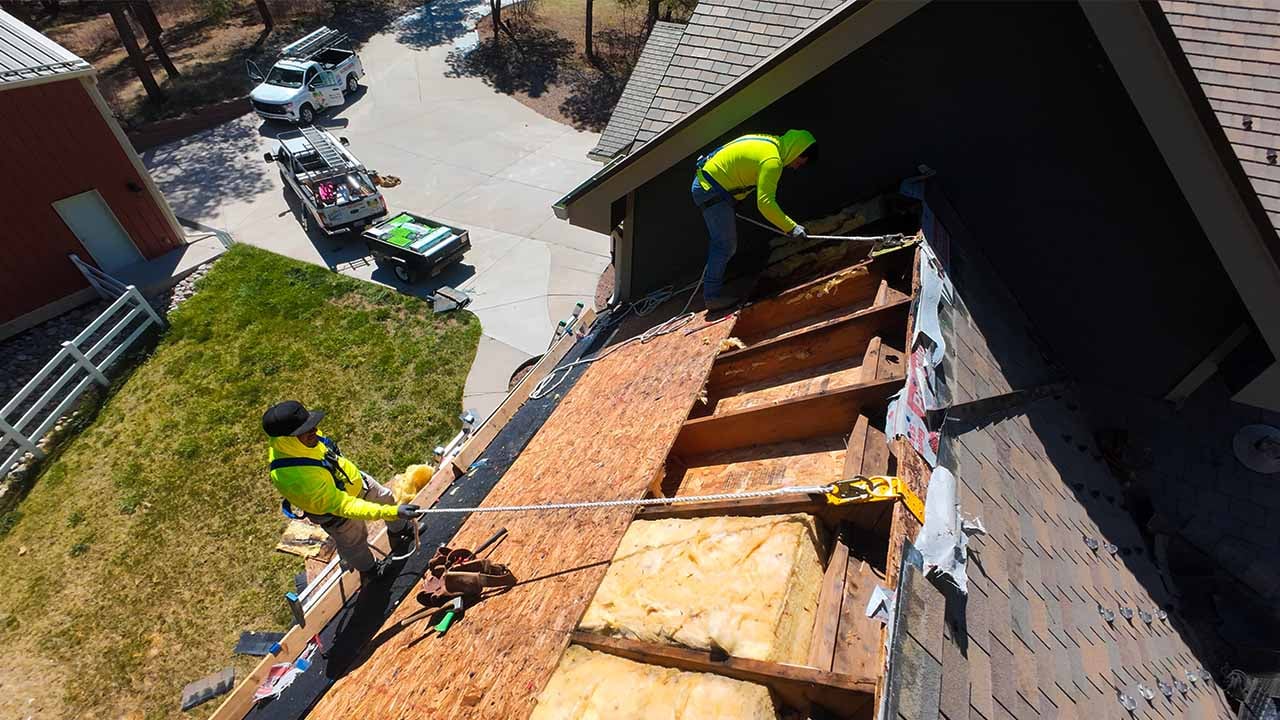
Excel Roofing always includes tear-off and disposal in its quotes and recommends removing every existing shingle layer so the new roof bonds properly and delivers its full hail resistance. After tear-off, crews occasionally find rotted decking or spaced board sheathing that cannot properly hold fasteners. This happens on roughly 5 percent of Excel Roofing projects, and the added cost is always communicated to the homeowner before work continues.
Material Prices Have Climbed Year After Year
Roofing materials rose 10% to 20% in 2021, 8% to 12% in 2022, and roughly 4% to 7% each year from 2023 through 2025. An estimate that is several months old may not reflect current supplier pricing. Excel Roofing covers the full picture in Why Roofing Costs More in Colorado in 2026.
Colorado Roofing Contract Law Every Denver Homeowner Should Know
Colorado’s residential roofing statute, C.R.S. 6-22-101 through 6-22-105, was enacted in 2012 through Senate Bill 12-038. It gives homeowners specific protections, and knowing them makes it far easier to spot a contractor who is cutting corners.
What a Colorado Roofing Contract Must Include
Before any roofing work begins, the contractor must provide a written contract signed by both the contractor and the property owner. At a minimum, it must include:
- The scope of roofing services and the materials to be provided
- The approximate dates of service and approximate costs based on the damage known when the contract is signed
The 72-Hour Right to Cancel After an Insurance Denial
When insurance proceeds will pay for the roof, the homeowner may also rescind the contract within 72 hours of receiving written notice from the insurer that the claim was denied in whole or in part. Notice of rescission can be delivered electronically, by mail, or in person to the address listed in the contract, and the contractor must return any payments or deposits within 10 days.
Deductible Rules and Public Adjusting
A roofing contractor may not advertise or promise to pay, waive, or rebate a homeowner’s deductible. If a contractor does, the insurer is not obligated to consider that contractor’s estimate, and both the homeowner and the insurer can sue the contractor for resulting damages. Roofing contractors also cannot claim to be or act as public adjusters, although a contractor with a valid contract may discuss the scope of repairs with the insurance company on the homeowner’s behalf.
Senate Bill 26-155: Colorado’s New Resilient Roof Grant Program
Signed on June 4, 2026, SB26-155 creates a state enterprise that will fund grants for hail-resistant roof systems, set standards for which roof systems qualify, develop codes of conduct for roofing contractors, and support installer training. The program is funded by a fee on homeowners insurers that does not begin until 2027, so grants are not available yet. Priority is expected to go to primary residences, lower-income households, older roofs, and areas with greater historical exposure to severe weather. Contractors who receive grant funding will be prohibited from waiving deductibles, and beginning no sooner than January 1, 2027, insurers will report how many insured homes have resilient roofs, the discounts applied to them, and how their hail and wind claims compare.
Law and Ordinance Coverage
City code requirements such as ice barrier underlayment, deck upgrades, and ventilation changes can add real cost to a replacement. Colorado requires homeowner insurers to offer Law and Ordinance coverage equal to at least 20 percent of dwelling coverage, which can help pay for upgrades a city requires after a covered loss. Offered does not mean included, so homeowners should check the declarations page or ask an agent whether this coverage is active. For the deductible side of the equation, see Excel Roofing’s guide to 2026 roofing insurance deductible changes in Colorado and Wyoming.
How to Compare Local Roofing Contractors in the Denver Metro
The lowest bid only means something when every bid covers the same work. When comparing local roofing contractors, homeowners should confirm that:
- The contractor’s physical address, email address, and phone number
- The contractor’s surety and liability insurer, if applicable
- The cancellation and refund policy, including the right to rescind and receive a full refund of any deposit within 72 hours of signing
- A statement that the contractor cannot pay, waive, or rebate any part of the insurance deductible when insurance proceeds will pay for the work
- A bold-faced statement that the contractor will hold any payment in trust until materials are delivered to the home or a majority of the work is complete
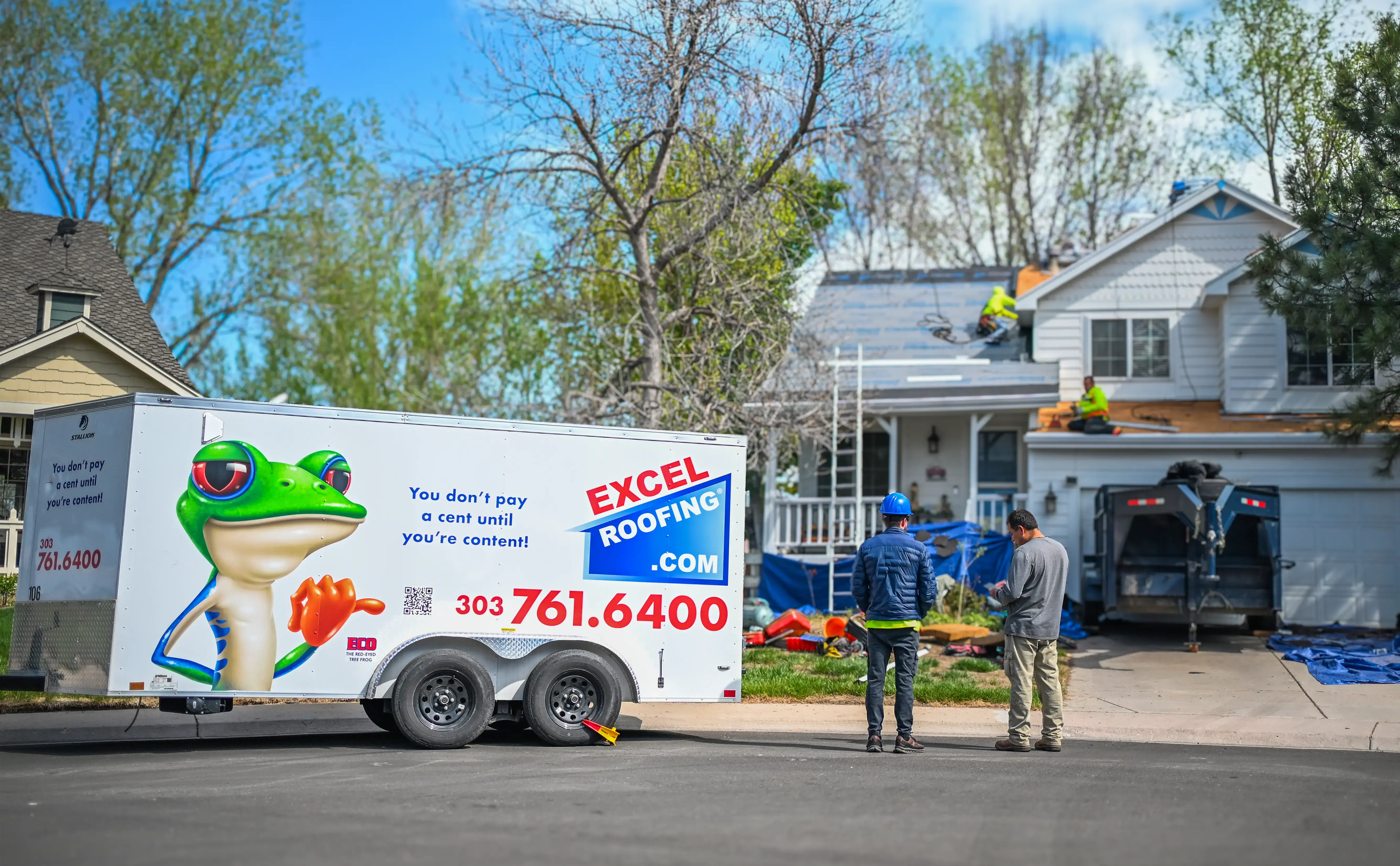
Excel Roofing has been an Owens Corning Platinum Preferred Contractor since 2012, and J Bretz has served on the Owens Corning Platinum Advisory Board. Excel Roofing’s approach to payment is built into its promise: You Don’t Pay A Cent Until You’re Content.
Financing a New Roof In Denver
For homeowners who prefer to spread out the cost of a new roof, Excel Roofing offers three financing plans: 12 months at 0 percent deferred interest, 60 months at 7.99 percent APR, and 120 months at 7.99 percent APR. Financing is subject to credit approval. Details are available on Excel Roofing’s financing page.
Frequently Asked Questions
How much does a new roof cost in the Denver metro area in 2026?
Excel Roofing’s asphalt shingle replacements in the Denver metro typically cost $15,000 to $20,000 for an average-sized home. Owens Corning asphalt products run $585 to $825 per roofing square, or $5.85 to $8.25 per square foot, installed. Premium systems such as stone-coated steel, standing seam metal, and synthetic roofing range from $1,275 to $2,300 per square. All prices include tear-off and disposal.
How much does a roof repair cost in Denver?
Excel Roofing does not publish a standard repair price because repairs vary too widely to average. The cost depends on how much of the roof is affected, access and pitch, whether the existing shingle can still be matched, and whether the work crosses the local permit threshold. An inspection is the only reliable way to price a specific repair.
When does a roof repair need a permit in Denver?
In Denver, a residential roof repair needs a permit when it covers more than 10% of the roof or more than two roofing squares, whichever is smaller, and every new roof penetration requires a permit. Littleton treats more than one square of work as a replacement, and Englewood requires a reroofing permit above one square. Because the rules vary by city, the permit question should be answered before a repair is approved.
Can a roofing contractor pay a homeowner’s insurance deductible in Colorado?
No. Under C.R.S. 6-22-105, a roofing contractor cannot advertise or promise to pay, waive, or rebate any part of a homeowner’s insurance deductible when insurance is paying for the roof. If a contractor does, the insurer does not have to consider that contractor’s estimate, and the homeowner or insurer can sue for damages.
What is Colorado’s new hail-resistant roof grant program?
Senate Bill 26-155, signed June 4, 2026, creates a state enterprise that will award grants to help homeowners install resilient, hail-resistant roof systems. Funding comes from a fee on homeowners insurers that begins in 2027, so applications are not open yet. Priority is expected to go to primary residences, lower-income households, older roofs, and higher-risk weather areas.
Does Excel Roofing offer financing for a new roof?
Yes. Excel Roofing offers 12 months at 0% deferred interest, subject to credit approval. Not all who apply will qualify.
Important Financing Disclosure
All interest rates, loan terms, fees, and financing programs described above are subject to change without notice Actual rates, terms, loan amounts, and eligibility requirements may vary based on creditworthiness, loan-to-value ratio, property type, occupancy status, and other underwriting criteria.
Financing approval is not guaranteed and is subject to the lender's review and approval process. Additional conditions, restrictions, and requirements may apply. Certain loans may require an appraisal, title work, or other documentation, which may result in additional costs.
The information provided by Excel Roofing is for general informational purposes only and should not be considered financial, legal, or tax advice. Customers should consult directly a Credit Union and their financial advisors regarding current rates, loan terms, eligibility requirements, and the suitability of any financing product for their specific situation.
Schedule a Good, Better, Best Estimate
Whether a roof needs a targeted repair or a full replacement, the right decision starts with an honest inspection. Excel Roofing will inspect the roof, explain exactly what is driving the cost, and provide a Good, Better, Best estimate with real numbers. Call (303) 761-6400, visit the Englewood headquarters at 4510 S Federal Blvd.
You Don’t Pay A Cent Until You’re Content, and when it comes to protecting Denver metro homes, Excel Roofing lives by its motto: We’re On Top Of It.
