
Quick answer: According to Excel Roofing, a Colorado roofer since 1993, a stone-coated steel roof is a 26-gauge steel panel coated with bonded stone granules that looks like shake, tile, or shingles. Westlake Unified Steel backs its stone-coated steel with a 50-year warranty and a very severe hail (VSH) rating above Class 4, and the panels weigh about 150 pounds per 100 square feet, roughly half the weight of asphalt. It costs more upfront than asphalt, but because one stone-coated steel roof can outlast two or three asphalt roofs, Excel Roofing considers it one of the lowest lifecycle-cost roofs for Colorado and Wyoming homes, especially in the mountains.
Stone-Coated Steel Roofs
If you live in Colorado or Wyoming, your roof takes a beating. Intense high altitude sun, freeze and thaw cycles, and some of the most damaging hail in the country all work against a roof every single year. Stone-coated steel is one option built to stand up to that punishment, and it is still one of the lesser known choices among homeowners. We sat down with Glenn Summerlin, the representative for Westlake Unified Steel, to walk through how it works, how it handles hail, and how it compares to a standard asphalt shingle roof.
What Is a Stone-Coated Steel Roof?
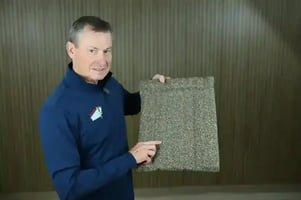
A stone-coated steel roof is exactly what the name describes. The structural part of the panel is steel, in this case 26 gauge, and the visible surface is a layer of stone granules bonded to the metal. According to Glenn, the granules are the same type used on asphalt shingles, held in place by a bonding system that locks them onto the panel for the life of the roof. The steel does the structural work, and the granules give the roof its color, its texture, and an added layer of protection.
Westlake Unified Steel manufactures the product in the United States. The company starts with non-coated steel, runs it through a coating system, applies the granules with a bonding agent, and finishes the panel so the granules stay put. Glenn describes the steel itself as a full system that does not depend on the granules for strength. The granules are mostly there to protect the panel and keep it looking good.
How Long Does a Stone-Coated Steel Roof Last?
This is where the value conversation starts. Glenn puts the realistic lifespan of stone-coated steel at 36 to 50 years and longer, and Westlake backs the product with a 50 year warranty. By comparison, he estimates a typical asphalt shingle roof in this climate lasts somewhere between 13 and 20 years, and that number drops fast if the roof takes a hail hit.
The way Glenn frames it, the lowest lifecycle cost is the real headline. Over a 50 year window, a homeowner might install two or three asphalt roofs in the same time that one stone-coated steel roof would still be doing its job. Spread across decades, that can make stone-coated steel the least expensive roof a homeowner buys, even though it costs more on day one.
What About the Higher Upfront Cost?
There is no getting around it. Stone-coated steel costs more to install than asphalt. In the conversation, Glenn and J Bretz used a simple example for discussion. If an asphalt shingle roof costs roughly 20,000 dollars, a stone-coated steel roof on the same home might run closer to 45,000 dollars. Those are illustrative numbers, not a quote, and the real figure depends on the size and complexity of your specific roof.
The case for spending more comes down to return on investment. A roof that resists hail, rarely needs replacement, and can last half a century changes the math. Fewer replacements means fewer insurance claims, and fewer claims means fewer large deductibles out of your pocket. For homeowners carrying a high wind and hail deductible, that matters.

Hail Performance
In Colorado, hail is the number one thing that takes out a roof. Stone-coated steel is built specifically for that threat. Glenn says the product carries a hail rating above Class 4, in a category called VSH, which stands for very severe hail. In plain terms, that rating measures resistance to penetration, meaning the hail does not punch through the panel.
Glenn is direct about the track record. In about eight years representing the product in this market, across every hailstorm that has come through, he says he has not seen a single stone-coated steel roof replaced. He also notes the panels are made to handle hail up to baseball size. These are the manufacturer and representative claims, and they are worth verifying for your own situation, but the field history he describes is a strong point in the product's favor.
What Happens If Hail Knocks Granules Off?
On an asphalt shingle, lost granules are a real problem and you cannot simply glue them back on. Stone-coated steel is different. Westlake provides a manufacturer approved touch up kit. If hail or a scratch knocks granules loose, you apply the included epoxy, set new granules into it, and the repair is done. Glenn confirms a homeowner can perform this repair and the manufacturer warranty stays fully intact. And if a panel is ever damaged badly enough, a single panel can be replaced instead of the entire roof.
Lightweight and Easy to Install
Stone-coated steel is surprisingly light. Glenn puts it at about 150 pounds per 100 square feet. A typical asphalt shingle, by comparison, runs in the 270 to 300 pound range for the same area, even at the lighter end. That makes stone-coated steel roughly half the weight of asphalt.
That low weight opens up installation options. The panels can be installed directly to the roof deck, which is the wood sheathing on top of the house, or over a batten system depending on the profile. Because the product adds so little weight, Glenn says it is an approved process to install it over a single existing layer of asphalt shingles, and most jurisdictions will permit it.
Profiles and Styles
Stone-coated steel is not a one look product. Westlake offers several profiles designed to imitate traditional roofing materials.
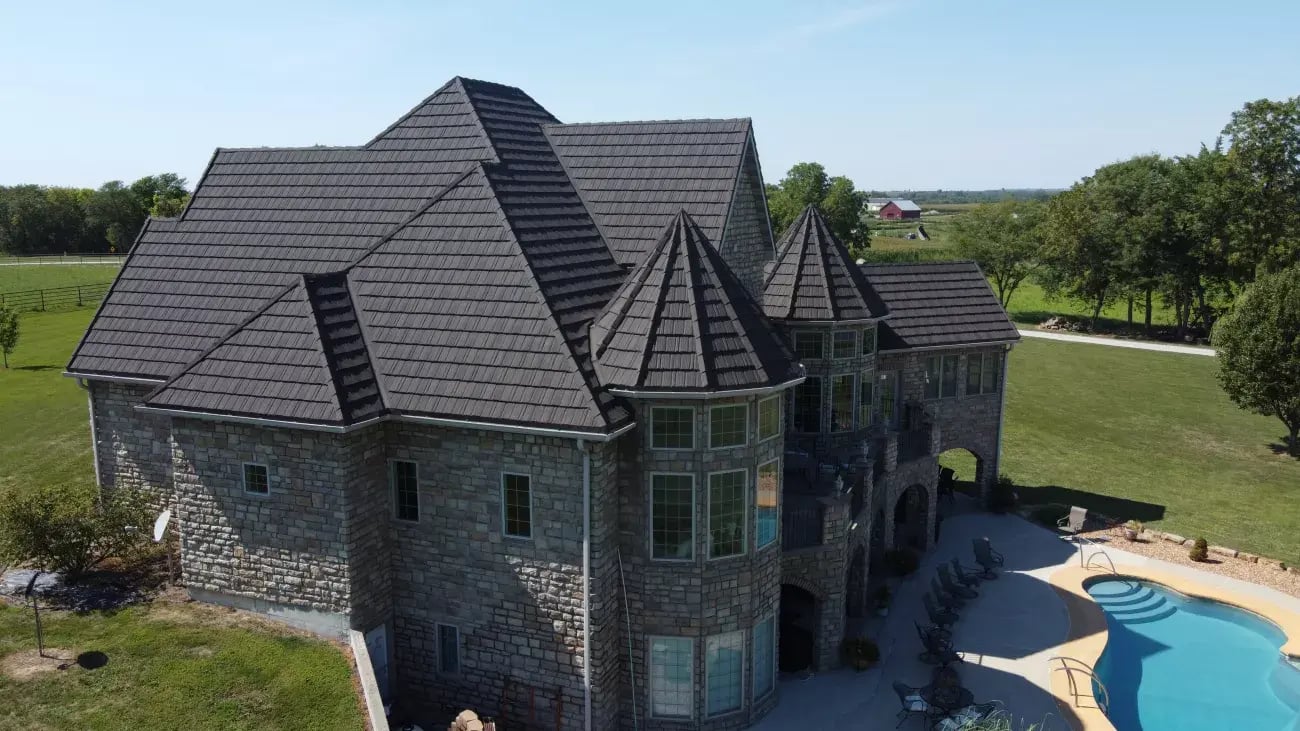
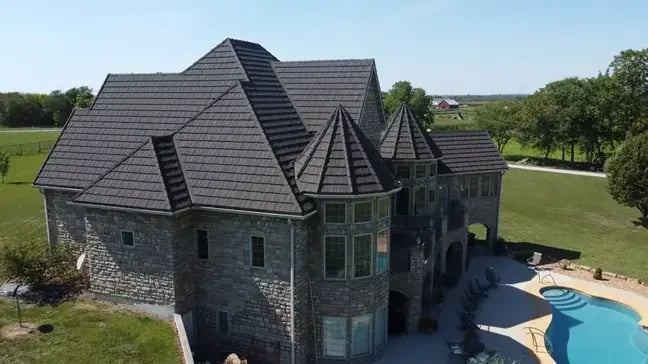
Pinecrest Shake
This is the most popular profile by a wide margin, making up roughly 85 percent of sales. It imitates a wood shake, landing visually somewhere between a concrete tile and a cedar shake. It is a thick panel that can be installed direct to deck or on a batten system. The grooves in the profile recreate the look of real cedar, and the air space they create adds to the roof's energy performance.
Cedar shakes used to be everywhere. They have largely disappeared because they are easily damaged by hail and they carry a real fire risk. Stone-coated steel profiles like the Pinecrest Shake were designed to give homeowners that classic wood shake look without those drawbacks.
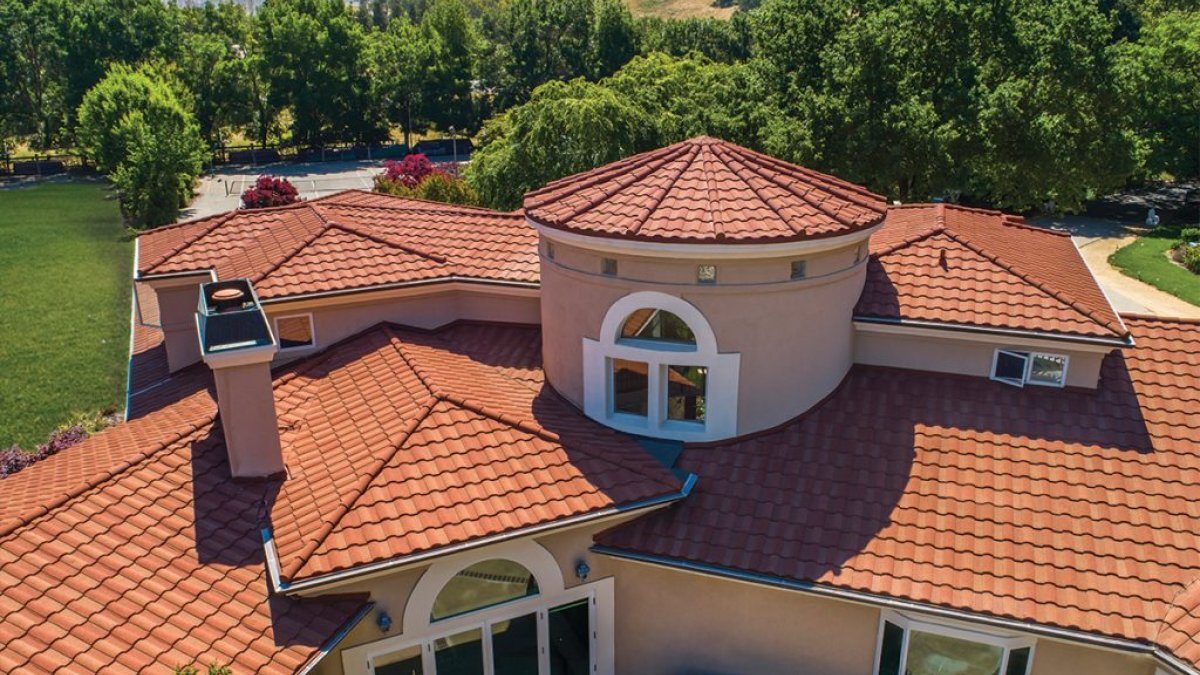
Mediterranean and Spanish Tile
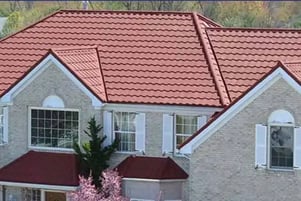
This profile is a lower profile panel that mimics the look of clay or concrete tile. Glenn notes that in a reflective color like Harper Wood, many people would not be able to tell it apart from a real tile roof, especially in a red tone.
Barrel and Santa Fe
The barrel profile is built for Adobe, Spanish, and Santa Fe style homes. It sold very well in the Colorado Springs market as a lightweight alternative to the concrete tile that was common there. It is most popular in regions like Arizona, Florida, and New Mexico, but it is available in Colorado as well.
Energy Efficiency
Stone-coated steel can help keep a home cooler in two ways. First, the panels are available in reflective colors that bounce a portion of the sun's energy back away from the roof. The Harper Wood color is one of these reflective options. Second, when the product is installed on a batten system or with an air gap built into the profile, that dead air space acts as a buffer and slows heat transfer into the home.
Glenn says those features together can produce energy bill savings in the range of 20 to 22 percent. He also notes that the industry has shifted away from the older Energy Star framing toward SRI, the solar reflectance index, which is what current cool roof codes, including Denver codes for larger projects, tend to reference. As with the other performance figures, treat the savings range as a manufacturer estimate.
Snow and Ice Performance
In the mountains, how a roof handles snow and ice is a serious safety question. A roof that sheds heavy snow suddenly can put people below at risk. Glenn explains that the granulated surface on stone-coated steel holds snow much like an asphalt shingle does, so it tends not to dump all at once. For high traffic areas like doorways, Westlake offers snow retention brackets made for the product.
Ice damming is the other concern. Ice that works its way under a shingle can lift it and force water into the wall. Because stone-coated steel often sits over an air space, that gap lets the panel cool and warm with the outside air, which reduces the constant freeze and thaw that drives ice dam formation. Glenn notes that ice and water protection is still used in certain areas, but the product performs well in cold climates.
Is Stone-Coated Steel a Good Colorado Roof?
Colorado may have the most severe roofing climate in the country. The high UV at altitude breaks down materials quickly, freeze and thaw cycles attack any crack or gap, and the hail is relentless. A roofing product that resists hail this well, lasts this long, and carries the lowest lifecycle cost is a strong candidate for homes here, and an especially good fit for mountain properties where durability and snow management both matter.
Talk to Excel Roofing
Stone-coated steel is not the only good roof, and the right choice always depends on your home, your budget, and your goals. If you want to talk through whether it fits your property, Excel Roofing is here to help. As an Owens Corning Platinum Preferred Contractor serving Colorado and Wyoming, we will walk you through your options honestly. You Don't Pay A Cent Until You're Content.
Call us or use our easy online scheduler to pick the day and time that works best for you. Excel Roofing. We're On Top Of It.
Frequently Asked Questions
How long does a stone-coated steel roof last?
Stone-coated steel is built to last roughly 36 to 50 years and beyond, and Westlake Unified Steel backs it with a 50 year warranty. Over that span it can outlast two or three asphalt shingle roofs.
Can a stone-coated steel roof survive hail?
Yes. The product carries a very severe hail rating above Class 4, meaning it resists penetration from large hail. The Westlake representative reports not replacing a single stone-coated steel roof in this market over about eight years of hailstorms.
What happens if hail knocks granules off the panel?
Unlike asphalt shingles, stone-coated steel can be repaired. A manufacturer approved touch up kit lets you apply epoxy and reset new granules. A homeowner can do the repair, and the warranty stays intact. If a panel is badly damaged, a single panel can be replaced instead of the whole roof.
How much does stone-coated steel cost compared to asphalt?
It costs more upfront. As a rough example used in our conversation, an asphalt roof around 20,000 dollars might compare to a stone-coated steel roof closer to 45,000 dollars on the same home. Because it lasts so much longer, it often carries the lowest lifecycle cost. Your actual price depends on your specific roof.
Can stone-coated steel be installed over my existing shingles?
Often yes. Stone-coated steel weighs about 150 pounds per 100 square feet, roughly half the weight of asphalt, so it can usually be installed over one existing layer of shingles, and most jurisdictions will permit it. It can also be installed directly to the deck or on a batten system.
Does a stone-coated steel roof help with energy bills?
It can. Reflective colors bounce away part of the sun's energy, and the air space behind the panels slows heat transfer into the home. Westlake estimates energy savings in the range of 20 to 22 percent, which should be treated as a manufacturer estimate.
Is stone-coated steel good for snow and ice in the mountains?
Yes. The granulated surface holds snow much like a shingle, which helps prevent sudden snow slides, and snow retention brackets are available for high traffic areas. The air space behind the panels also reduces the freeze and thaw cycle that causes ice damming, making it a strong mountain roof candidate.
What styles does stone-coated steel come in?
Westlake offers several profiles, including the Pinecrest Shake that imitates wood shake, a Mediterranean and Spanish profile that looks like clay or concrete tile, and a barrel profile for Adobe and Santa Fe style homes.
.webp?width=301&height=406&name=TDD_EstateGray_beauty_shot%20(1).webp)
.webp?width=301&height=500&name=red-stone-coated-steel-roof-installation.jpg%20(1).webp)