
Most homeowners buy exactly one or two roofs in a lifetime. That is not enough repetition to get good at it, which is why so many people spend $15,000 to $20,000 on a roof without ever asking the 3 questions that determine whether it lasts 25 years or 12.
Excel Roofing Founder and CEO J Bretz recently sat down with Octavian Avila, Regional Sales Leader for the Mountain Region at Owens Corning, and asked him a simple question. If someone at a cocktail party mentioned they needed a new roof, what 3 things would he tell them to know before they wrote the check?
Octavian answered without hesitation, because he gets asked constantly. Here is what he said, and why our crews see the same three issues play out on Colorado and Wyoming roofs every season.
The short version:
Get a Class 4 impact rated shingle, buy the full system instead of shingles alone,
and do not skip attic ventilation.
What Are The Three Things To Consider Before Buying A New Roof?
1. Confirm The Shingle Has A Class 4 Impact Rating
This was Octavian's first answer, and in Colorado and Wyoming it should be the first question every homeowner asks. Class 4 is the top classification in the UL 2218 impact test, where a steel ball is dropped onto the shingle from increasing heights to see whether the mat cracks.
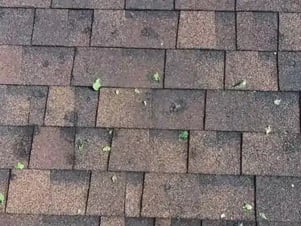
The Front Range sits in one of the most active hail corridors in the country. A shingle that survives a hailstorm without bruising is the difference between a cosmetic inspection and a full replacement claim. Homeowners should ask for the rating in writing on the proposal and should not accept a verbal assurance that a shingle is "impact resistant," because that phrase is not a rating.
There is a practical financial benefit as well. Many insurance carriers writing policies in Colorado offer a premium credit for a Class 4 roof. It is worth a call to the agent before signing, because that discount can follow the homeowner for the life of the roof.
2. Buy A Full Roofing System, Not Just Shingles
Octavian put it plainly. A roof is all the components, all the different pieces that go into it, and there are more of them than most people think. The goal is an assembly that is as waterproof as possible and stands up to the elements as long as possible.
This is where a lot of low bids hide their savings. Two proposals can both say "architectural shingle" on the front page while one includes synthetic underlayment, ice and water barrier in the valleys and at the eaves, a manufactured starter strip, and purpose built hip and ridge caps, and the other includes felt and cut up field shingles at the ridge. The shingle line item looks identical. The roof is not.
Here is what a complete system actually includes:
|
System Component |
What It Does On The Roof |
|
Class 4 impact rated shingle |
The visible surface and the primary defense against hail bruising and granule loss. |
|
Ice and water barrier |
Seals around valleys, eaves, and penetrations where wind driven rain and ice damming push water backward. |
|
Synthetic underlayment |
The secondary water barrier across the full deck, underneath the shingles. |
|
Starter strip |
Locks down the first course at the eaves and rakes, which is where wind uplift begins. |
|
Hip and ridge cap |
Purpose built caps for the ridge lines instead of cut up field shingles that crack early. |
|
Intake and exhaust ventilation |
Lets the attic breathe so heat and moisture leave instead of condensing on the underside of the deck. |
When comparing bids, compare the components line by line. If a proposal does not list them, that absence is the answer.
3. Do Not Skip Attic Ventilation
This is the one Octavian said most people never touch, and he is right. In his words, that thing needs to breathe in order to be functional.
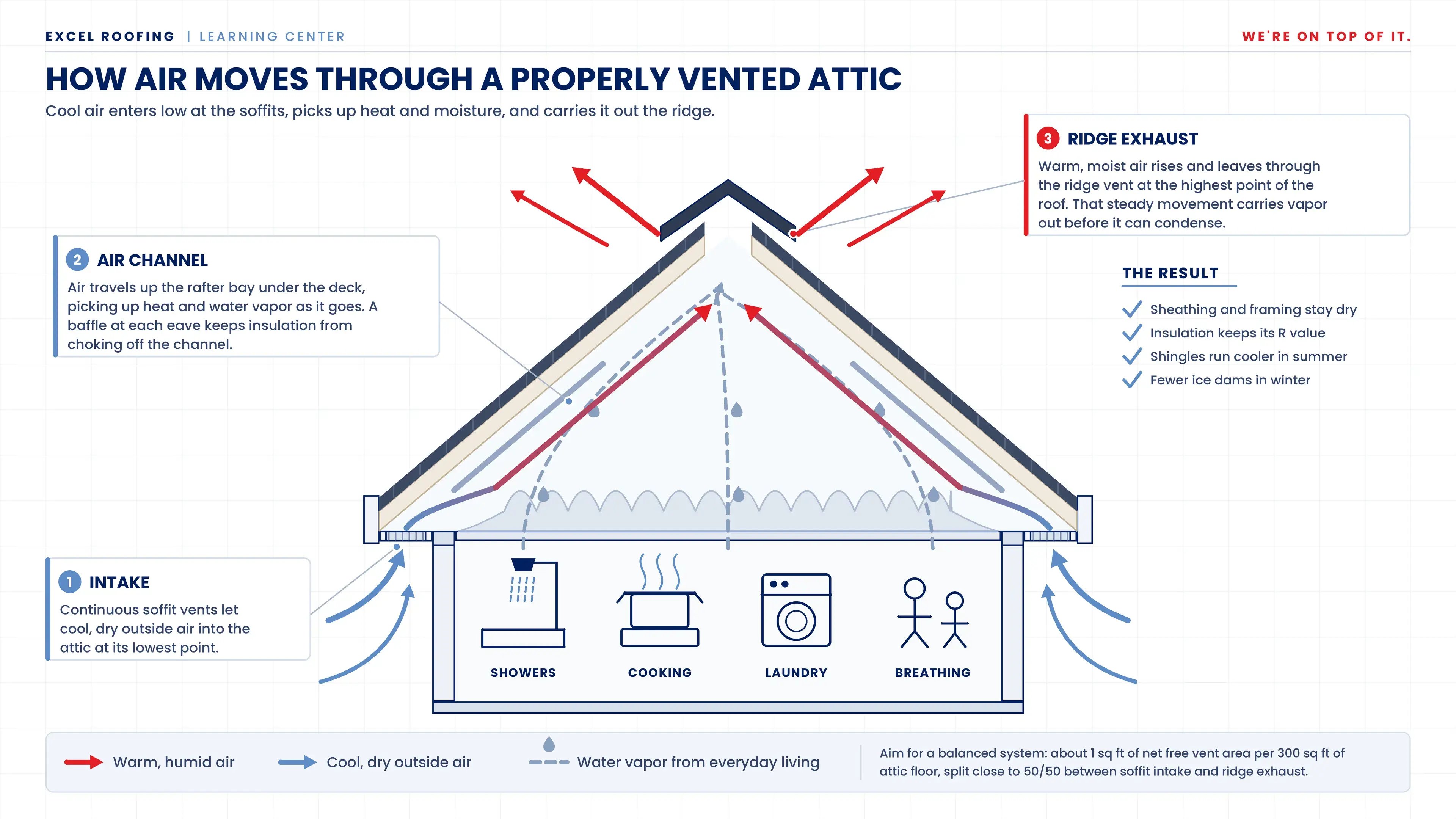
There is a common assumption that more waterproofing is always better. It is not. An attic generates moisture from showers, cooking, laundry, and simple daily living. If that warm moist air has nowhere to go, it condenses on the underside of the roof deck. The result is damp sheathing, compressed and ineffective insulation, mold, and shingles that age from below where nobody is looking.
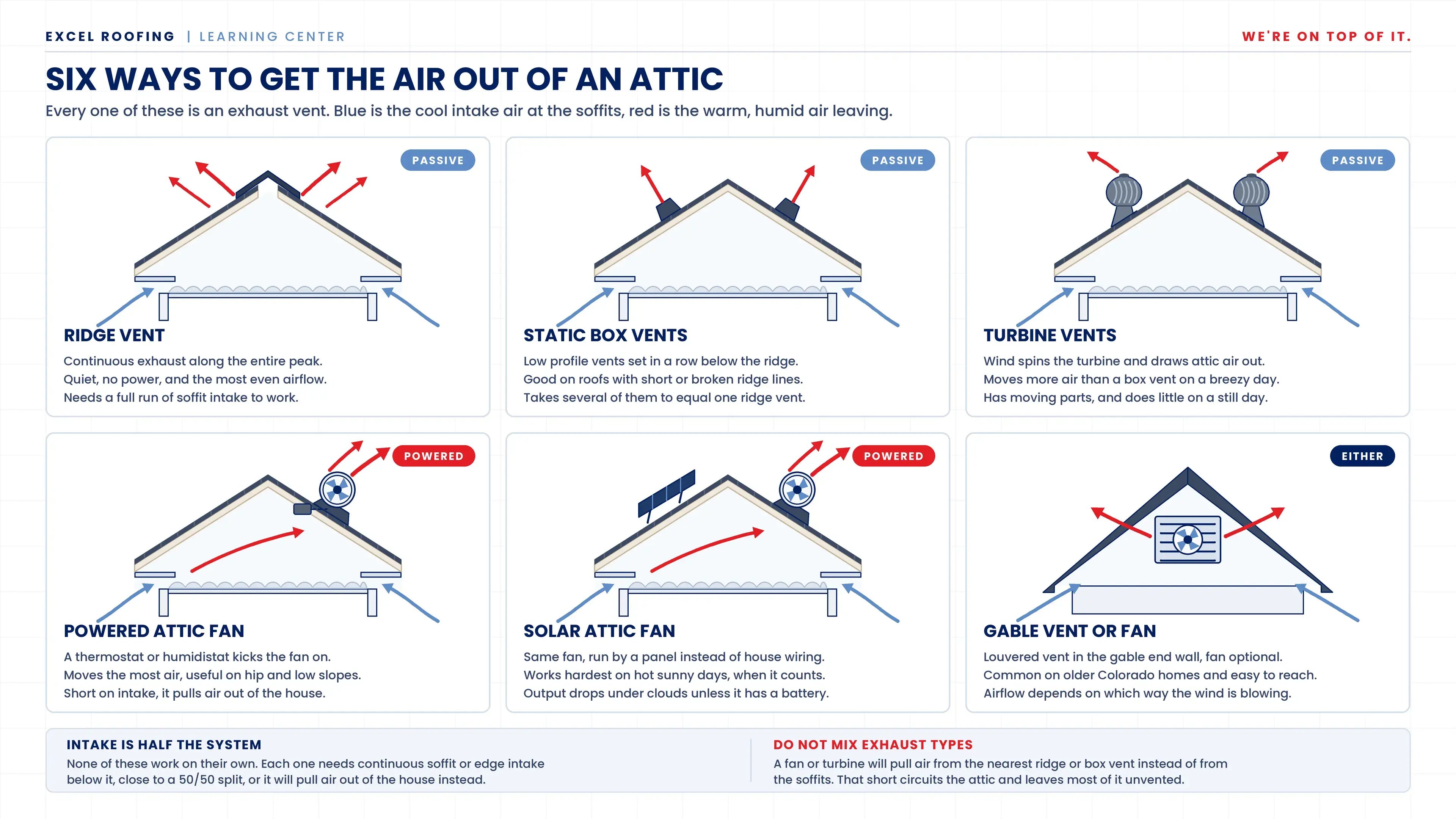
Proper ventilation means balanced intake and exhaust. Intake comes in low, usually at the soffits or eaves. Exhaust leaves high, at or near the ridge. Both halves have to be present and they have to be sized to each other. Adding a ridge vent without opening up intake does not fix a hot attic, it simply moves the problem.

Why Is Attic Ventilation The Most Common Roofing Mistake?
After 33 years in the field, J Bretz names attic ventilation as the number one thing Excel Roofing sees done wrong on existing roofs. Not flashing. Not nailing patterns. Ventilation.
Part of the reason is that it is invisible. A homeowner standing in the driveway can see whether the shingles look straight. Nobody climbs into the attic in July to check whether the sheathing is damp. And because ventilation problems take years to surface as visible damage, the contractor who got it wrong is usually long gone by the time the deck begins to fail.
That is why our estimators inspect ventilation on every estimate rather than treating it as an optional add on. If intake is blocked by insulation, or the home never had enough net free area to begin with, the new roof is the moment to correct it. It is the cheapest it will ever be to fix.
What Does Owens Corning Platinum Preferred Mean?
Platinum Preferred is the highest tier in the Owens Corning Roofing Contractor Network. As Octavian described it, Platinum contractors are the best of the best and represent roughly the top one percent of contractors in the entire country.
Excel Roofing has held that designation since 2012 and also serves on the Owens Corning Platinum Advisory Board, which gives the manufacturer direct feedback from the field on market conditions and on what they should be doing to serve contractors and homeowners better.
We have always viewed that relationship as a two way street. Doing the best job possible for our customers requires the best shingles and materials available. Owens Corning makes what our team considers one of the best shingles on the market for both residential and multifamily work, and the way the company stands behind that product matters just as much as the product itself.
How Should A Homeowner Choose A Roofing Contractor?
When asked for closing advice for consumers, Octavian kept it short: look for the Platinum badge, then look for Owens Corning shingles with a Class 4 rating.
Excel Roofing would add three things from the contractor side of the table:
- Verify the manufacturer designation independently. Platinum Preferred status can be confirmed through Owens Corning rather than simply claimed on a website.
- Read the cancellation terms before signing anything. A contract with a cancellation fee is designed to keep a customer in the deal after they have changed their mind.
- Ask what happens if the work is not satisfactory. Excel Roofing customers do not pay a cent until they are content. That is not a retired slogan, it is how the company operates.
Frequently Asked Questions
What are the three most important things to consider before buying a new roof?
Class 4 impact resistance, a full roofing system rather than shingles alone, and correct attic ventilation. Those are the three items Octavian Avila of Owens Corning names, and after 33 years in Colorado roofing J Bretz puts them in the same order.
What does a Class 4 impact rating mean?
Class 4 is the highest impact classification under the UL 2218 test, in which a steel ball is dropped onto the shingle from progressively greater heights without cracking the material. In hail exposed markets like Colorado and Wyoming it is the rating homeowners want on the roof, and many insurance carriers offer a premium credit for it.
Is a full roofing system really necessary, or are good shingles enough?
A roof is an assembly. The shingle is the part that is visible from the ground, but the underlayment, ice and water barrier, starter strip, hip and ridge cap, and ventilation are what keep water out and keep the assembly attached in wind. Pairing a premium shingle with the cheapest available components undercuts the shingle the homeowner paid for.
Why does attic ventilation matter so much?
An attic needs to breathe. Without balanced intake at the eaves and exhaust at or near the ridge, warm moist air from inside the home condenses on the underside of the roof deck. That leads to damp sheathing, mold, degraded insulation, and premature shingle aging from below. It is also the item most homeowners never ask about.
What is an Owens Corning Platinum Preferred Contractor?
Platinum Preferred is the highest tier in the Owens Corning Roofing Contractor Network and is held by roughly the top one percent of roofing contractors nationwide. Excel Roofing has been Platinum Preferred since 2012 and serves on the Owens Corning Platinum Advisory Board.
How can a homeowner tell if a roofing contractor is trustworthy?
Start with the manufacturer badge, since a Platinum Preferred designation is verifiable and cannot be self awarded. Then read the contract. If there is a cancellation fee attached to signing, that is a signal about how the company intends to hold onto the customer. Excel Roofing customers do not pay a cent until they are content, and Excel Roofing agreements carry no cancellation fees.
The Bottom Line
Choose the right shingle with a Class 4 hail rating. Install the whole system, not just the visible layer. Get the attic ventilation right. Do those three things and the result is the best roof possible, which is exactly where Octavian Avila and J Bretz landed at the end of their conversation.
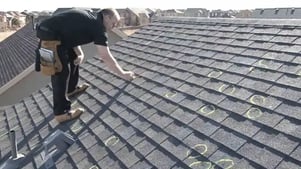
Excel Roofing has served Colorado and Wyoming since 1993 from offices in Englewood, Colorado Springs, Sheridan, and Casper. Homeowners who want a free inspection and an honest read on their shingles, system components, and attic ventilation are welcome to give us a call.
You Don't Pay A Cent Until You're Content. We're On Top Of It.