
The Most Common Roof Damage in Colorado, and How to Spot It Early
Colorado sits in the heart of Hail Alley, so it is no surprise that the two most common types of roof damage here are hail damage and wind damage. The good news is that both leave clues you can usually spot from the ground if you know what to look for. The key is catching them early, because the damage that goes unnoticed is the damage that turns into a leak, rot, or a denied insurance claim down the road.

Why Spotting It Early Matters
Roof damage often hides in plain sight. A bruised shingle or a lifted tab does not announce itself, and from the driveway your roof can look fine while it is quietly compromised. Left alone, small damage lets water in, shortens the life of the roof, and can grow into an expensive interior problem. There is also a clock running: most insurance policies require you to file a storm claim within a limited window, often a year, so the sooner you identify damage, the better your options.
Signs of Hail Damage
After a hailstorm, walk your property and look for these telltale signs:
-
Dents on soft metals. This is one of the most reliable tells. Check your gutters, downspouts, roof vents, and metal flashing for dimples. If the soft metals took hits, your roof very likely did too.
-
Granules in the downspouts. A pile of sandy shingle granules washing out onto the driveway or grass means the protective surface of your shingles is coming off.
-
Down leaves and branches. A fresh layer of shredded leaves and small branches in the yard is a strong sign the neighborhood just got hit hard.
-
Damage around the house. Torn window screens, dented or cracked plastic shutters, dinged siding, hail marks on vehicles, and broken windows all point to a serious storm.
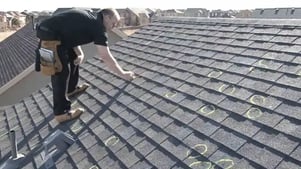
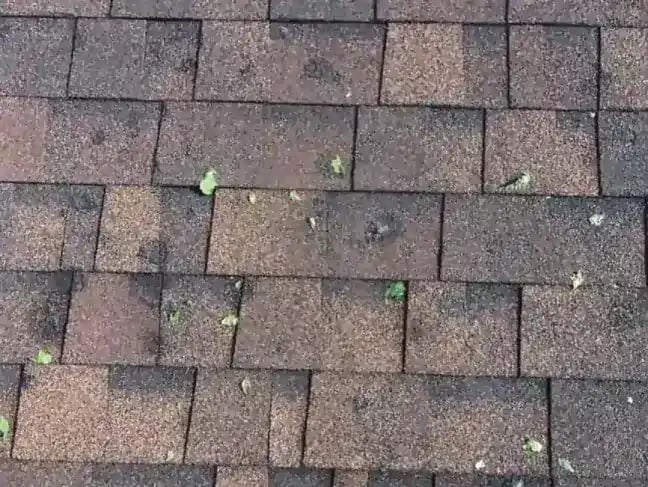
Up close on the roof, hail leaves dark, roughly circular bruises where the granules are knocked away and the asphalt is exposed, and those spots often feel soft to the touch. That part of the inspection is best left to a professional for safety.
Signs of Wind Damage
Wind damage tends to be even easier to see from the ground:
-
Lifted or creased shingles. Wind can fold shingles up and break the seal, leaving a visible crease even after they fall back down.
-
Missing shingles. Bare spots on the roof are an obvious red flag.
-
Shingles in your yard. If you are finding shingles or pieces of shingles on the ground or in the bushes, the wind pulled them off your roof or a neighbor's.
-
Debris damage. Branches and windborne debris can crack or puncture the roof surface.
The Smart Move After a Storm
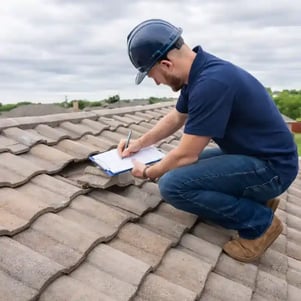
Because both hail and wind damage can be subtle on the roof itself, the safest step after any significant Colorado storm is a professional inspection. A trained eye catches the early damage you might miss from the ground and documents it properly, which matters both for protecting your home and for any insurance claim.
At Excel Roofing, we have been inspecting and repairing storm damaged roofs across the Denver metro, Colorado Springs, Casper, and Sheridan since 1993. If a storm has rolled through, let us take a look before small damage becomes a big problem. We're On Top Of It. You Don't Pay A Cent Until You're Content.
SOURCES
-
Evolve Construction, Identifying Hail Damage on Asphalt Shingles: A Complete Guide: https://evolveconstruction.com/blog/identifying-hail-damage-on-asphalt shingles-guide/
-
Insurance Institute for Business and Home Safety, Wind Uplift of Asphalt Shingles: https://ibhs.org/wp-content/uploads/member_docs/Wind-Uplift-of-Asphalt Shingles_IBHS.pdf




.webp?width=301&height=365&name=The%20Taylors%20home%20after%20an%20intense%20christmas%20windstorm%20(1).webp)