
A roof leak rarely waits for good weather. When water starts coming through your ceiling, the goal is simple: stop it from doing more damage until a professional can make a proper repair. We will walk through how to mitigate a leak right now, and then what a real, lasting fix actually looks like.
One important note before we start. We do not recommend DIY roof repairs. Getting on a roof is dangerous, and most leaks are trickier than they look. The steps below are meant to help you limit interior damage and understand the process, not to replace a qualified roofer.
Step One: Catch the Water Inside
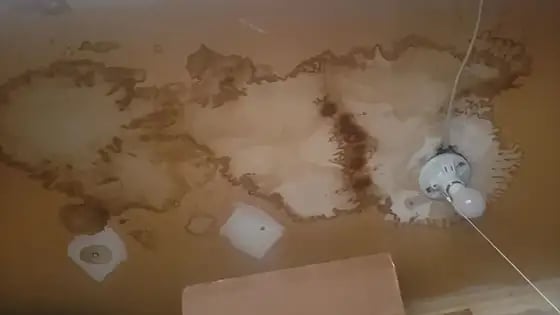
If you see a water spot on your ceiling, the first thing to do is track it. Outline the edge of the stain with a marker and write the date next to it. If the spot grows past your line, you know the leak is still active and getting worse.
Next, control where that water goes. A bucket on the floor is a start, but water running off a ceiling is unpredictable, and a bucket can overflow or splash onto hardwood and drywall. A better option is a leak diverter tarp. These look like a small upside down tent that funnels water into a hose and down into a bucket, a sink, or a drain. Roofing and industrial suppliers sell them for a modest price, and you can also build a simple version with a tarp and a length of PVC pipe. It may feel like an unnecessary expense, but it is far cheaper than replacing soaked flooring, drywall, and trim.
A practical approach: put a bucket under the active drip, tarp around the bucket so stray water is contained, and order or build a diverter as soon as you can.
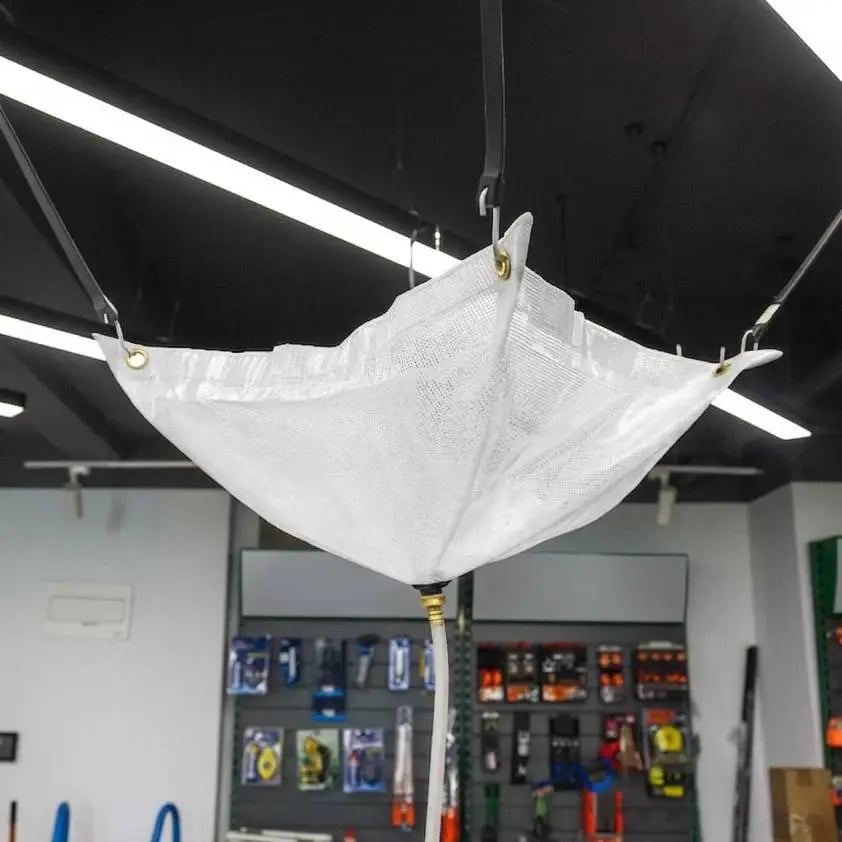
Leak divertor is an effective way to manage leaking water
Step Two: Find and Cover the Source on the Roof
Mitigating from inside buys time, but the water is getting in somewhere above. This is where the work gets more involved, and where a professional is worth calling.
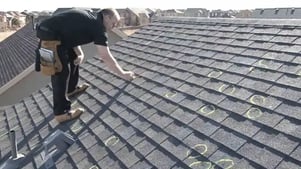
Most leaks do not start in the open field of shingles. They start where the roof is interrupted. Industry data backs this up: flashing failure is the leading cause of residential roof leaks. The usual suspects are sidewalls and headwalls, chimneys, skylights, and pipe jacks or plumbing vents that poke through the roof. If you can safely get into the attic during or just after rain, you can often see where the decking is wet and trace the water back to where it is entering.
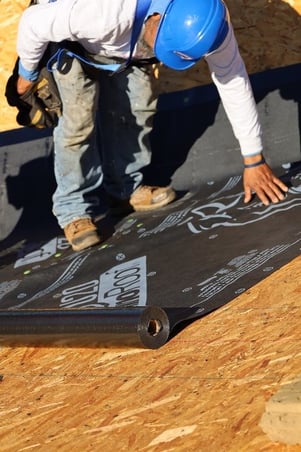
Once the source is found, the temporary fix is a tarp. The tarp should extend well past the damaged area, ideally a few feet above a skylight or penetration, and the top edge should tuck up under the shingles so water sheds over it instead of running underneath. Some roofers use synthetic underlayment or ice and water shield for this instead, simply because it is already on the truck and does the job.
If you are covering a large area, do not rely on the perimeter alone. Wrap the tarp edges around thin wood battens and fasten them with screws or nails into solid decking, not just around the outside but across the tarp at regular intervals. A loose tarp catches wind, balloons, and tears off, which is the most common reason a temporary cover fails. In windy areas like Colorado and Wyoming, closer fastener spacing holds far better than a handful of nails around the edge.
There is a good reason to act fast beyond the obvious. Most homeowners insurance policies require you to take reasonable steps to prevent further damage after a covered event, so a properly installed tarp also helps protect your claim. Take photos before and after.
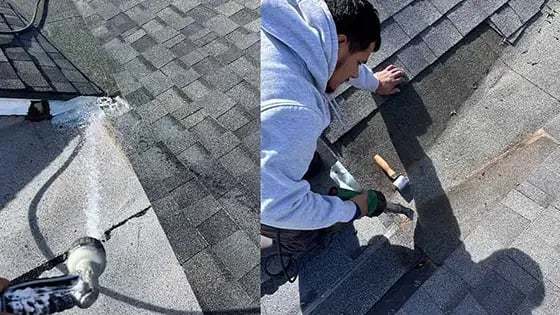
After repairing a leak, it is important to test the repair to confirm its fixed
Step Three: The Real Repair Comes Later
A tarp is mitigation, not a repair. When the weather clears and scheduling allows, the leak needs to be fixed properly, and that means going down to the decking.
Be wary of any roofer who wants to climb up and smear caulk over the problem. Patching over a leak with caulk or tar almost never lasts. A proper repair removes the shingles, underlayment, and any failed flashing down to the deck. Once you are at the decking, the staining tells the story, showing exactly where water has been getting in.
Why Leaks Are Sneakier Than They Look
Two things make leaks genuinely hard to diagnose, which is the biggest reason to bring in a professional.
First, water travels. A leak entering at a headwall can catch a rafter or beam and run several feet before it drips through the ceiling, so the stain you see is often not directly below the actual hole. You can also have two separate leaks a few feet apart. Without someone tracing it properly, it is easy to fix one and miss the other.
Second, it might not be a roof leak at all. Condensation is commonly mistaken for a leak, especially with poor attic ventilation or on homes with little attic space. Telltale signs include rusty nails, mold, and rows of small drip marks on the insulation beneath the nails. Plumbing can fool you too. A plumbing vent pipe that has lost its seal at an elbow, or one that was never connected and simply dead ends in the attic, can release water that looks exactly like a roof leak.
A quick tell: wiggle the vent pipe. If it is solid and sturdy, it is likely connected. If it wobbles loosely, it may not be.

Frequently Asked Questions
How do I temporarily stop a roof leak from inside the house?
Track the stain first by outlining it with a marker and writing the date, so you can tell if it grows. Then control the water with a bucket and, ideally, a leak diverter tarp that funnels water into a hose and down to a bucket, sink, or drain. Tarp around the bucket so stray water cannot reach your floors and drywall.
Where do most roof leaks come from?
Most leaks do not start in the open field of shingles. They start where the roof is interrupted, and flashing failure is the leading cause. The usual suspects are sidewalls and headwalls, chimneys, skylights, and pipe jacks or plumbing vents.
How do you tarp a roof so it does not blow off?
Extend the tarp well past the damaged area and tuck the top edge under the shingles so water sheds over it. For larger areas, wrap the tarp edges around thin wood battens and fasten them into solid decking at regular intervals, not just around the perimeter. A loose tarp catches wind, balloons, and tears off, which is the most common reason a temporary cover fails.
Is it okay to just put caulk on a roof leak?
No. Patching over a leak with caulk or tar almost never lasts. A proper repair removes the shingles, underlayment, and any failed flashing down to the decking, where the staining reveals exactly where water has been getting in.
What if the stain is not directly below the leak?
Water travels. A leak entering at a headwall can run along a rafter several feet before it drips through the ceiling, so the stain is often not directly below the actual hole. The problem may even be condensation or a plumbing vent rather than the roof, which is why a professional diagnosis matters.
Let Excel Roofing Take It From Here
Mitigating a leak is something you can do in a pinch. Diagnosing and permanently repairing one is our job. We will find the true source, repair it down to the decking, and make sure it is not something simpler hiding as a leak.
At Excel Roofing, we have been keeping homes dry across the Denver metro, Colorado Springs, Casper, and Sheridan since 1993. We are on top of it, and you do not pay a cent until you are content.
Topics:




.webp?width=301&height=365&name=The%20Taylors%20home%20after%20an%20intense%20christmas%20windstorm%20(1).webp)