
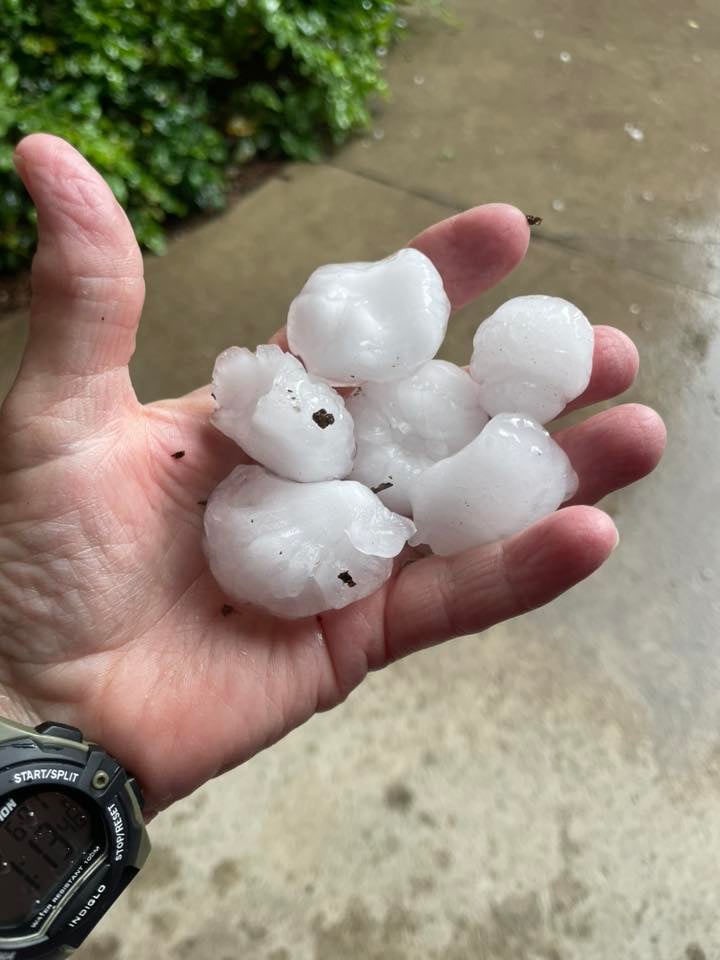
Quarter sized hail near Capitol Hill - Photo courtesy of Debbie Butler - posted on facebook
On Monday, June 1, 2026, the first major hail storm of the season swept across Colorado's Front Range. Storms built fast along the I-25 corridor in the early afternoon, hammered the Denver metro with hail, and a second round of cells worked over the Colorado Springs area to the south before the whole system pushed onto the eastern plains by evening. I have been roofing Colorado homes since 1993, and I can tell you from experience that a storm like this one quietly damages thousands of roofs whose owners will not find out until a leak shows up months later.
This is the long version of the report: how the storm came together, exactly how big the hail got, what it does to a roof, how your insurance really works, and how to protect yourself from the scammers who follow every storm into town.
The June 1 Storm at a Glance
|
Date |
Monday, June 1, 2026 |
|
Onset |
Early afternoon; severe thunderstorm warning about 1:15 PM |
|
Largest hail reported |
1.75 inches (golf ball) |
|
Average hail reported |
1.21 inches |
|
Homes in one inch or larger swath |
More than 90,000 (Denver metro estimate) |
|
Metro impact rating |
3 (significant event) |
|
Areas affected |
Denver metro and the Colorado Springs region |

How the Storm Developed
Colorado was primed for severe weather all day. Forecasters had flagged the Front Range and eastern plains for a risk of severe storms, with large hail, damaging wind, and even isolated landspout tornadoes in play. The day before, the National Weather Service had already confirmed tornadoes out in Yuma County, so the atmosphere was clearly active.
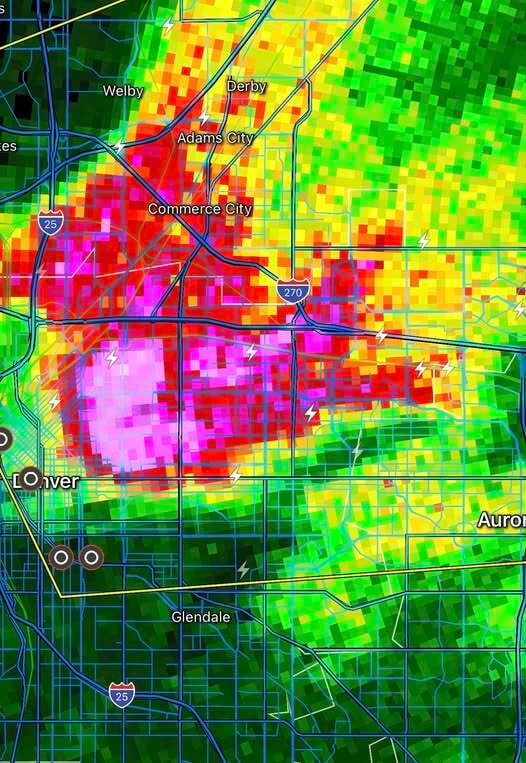
By early Monday afternoon, scattered thunderstorms fired right along the I-25 corridor. One cell intensified just south of Commerce City and prompted a severe thunderstorm warning for Denver, Adams, and western Arapahoe counties at about 1:15 PM, with radar indicating hail up to two inches. That storm tracked east at roughly 25 miles per hour, clipping northern Aurora, southwestern Thornton, southern Westminster, Commerce City, and Denver International Airport before rolling onto the plains. Farther south, separate storms brought hail to the Colorado Springs area. By evening, the threat had shifted east and the Front Range was in the clear.
Hail Sizes and Homes Affected
Hail size is the single biggest factor in whether your roof is damaged, so it is worth looking at the numbers. Based on regional hail mapping, here is the estimated number of homes that fell inside each size band:
|
Reported Hail Size |
Estimated Metro Homes in Swath |
|
1.00 inch (quarter) |
90,844 |
|
1.25 inch (half dollar) |
52,261 |
|
1.50 inch (walnut) |
9,638 |
There were 13 confirmed on-the-ground reports across the region. The average reported stone was 1.21 inches and the largest was 1.75 inches, which is golf ball size. The Denver metro earned an impact rating of 3, which marks this as a significant event rather than a passing shower.
How Big Was the Hail, and Why One Inch Matters
People often assume hail has to be the size of a baseball to do harm. That is not how it works. One inch is the size where things change. Here is roughly how common hail sizes line up:
- Pea: about a quarter inch
- Penny or dime: about three quarters of an inch
- Quarter: one inch, the point where asphalt shingles start to take real damage
- Golf ball: about one and three quarter inches, which is what the largest stones reached on June 1
With stones up to golf ball size in this storm, plenty of roofs in the path took hits hard enough to matter. The damage is rarely dramatic. It is bruising, cracking, and granule loss that you usually cannot see from the ground.
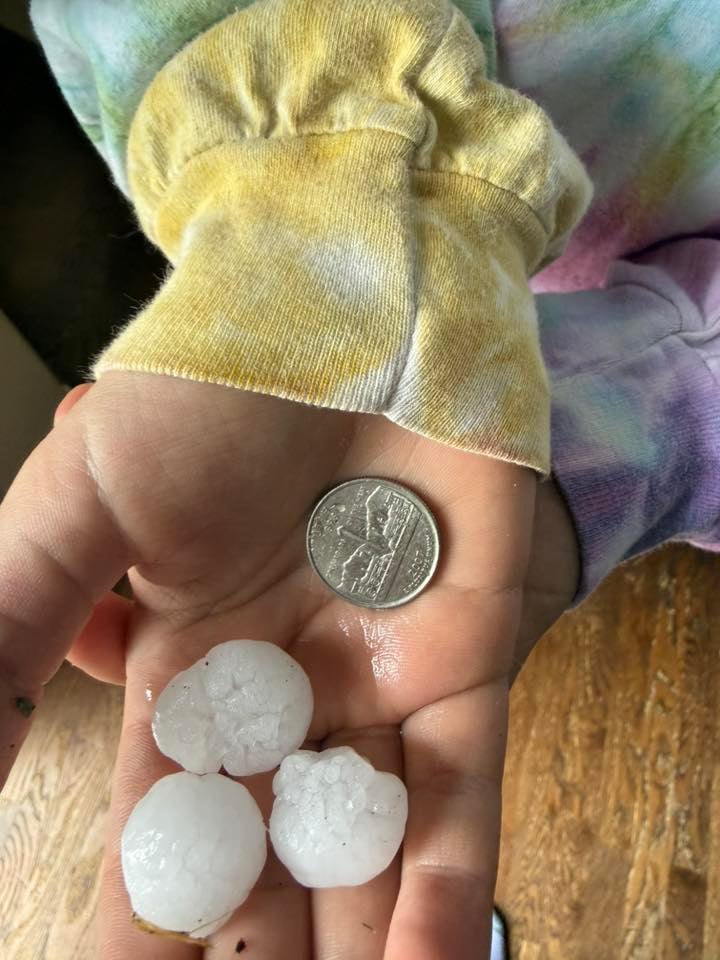
Quarter sized hail near Briargate in Colorado Springs - photo courtesy of Becky Dougherty - facebook
Where the Hail Fell
This storm covered a lot of ground. In the Denver metro, hail was reported across:
- Denver, Aurora, Lakewood, Arvada, Westminster, Thornton, Wheat Ridge, Edgewater, Glendale, Englewood, and Sheridan
- Commerce City, Brighton, Derby, Welby, Northglenn, Federal Heights, and surrounding communities including Applewood, Berkley, Holly Hills, Lakeside, Mountain View, North Washington, Shaw Heights, Sherrelwood, and Twin Lakes
To the south, in the Colorado Springs area, hail was reported across:
-
Colorado Springs, Cimarron Hills, Black Forest, and the Air Force Academy
If your home sits anywhere in that path, it is worth a look.
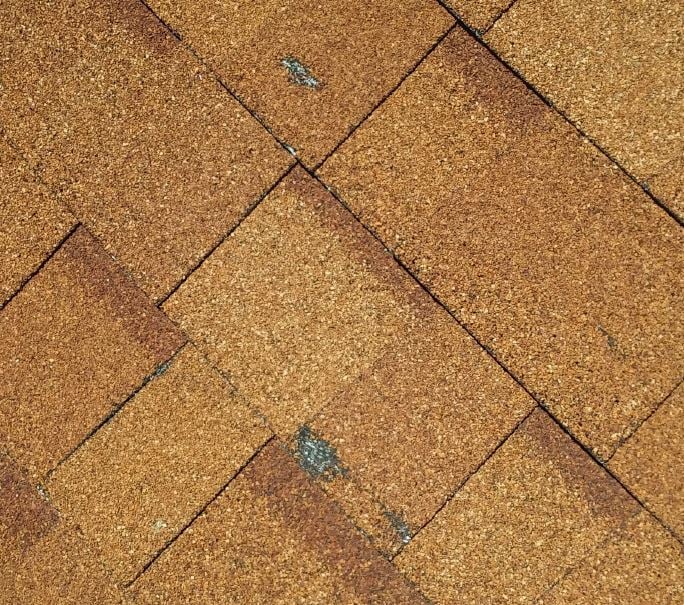
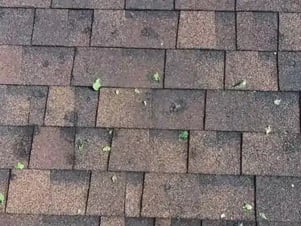
hail damaged asphalt shingles
What Hail Actually Does to Your Roof
A single hail strike does several things at once, and most of them are invisible from your driveway:
- It bruises the mat. A hard strike can fracture the fiberglass mat underneath the surface, creating a soft spot that fails early.
- It knocks off granules. Those granules are the shingle's sunscreen. Once they are gone, the sun cooks the exposed asphalt and the shingle ages fast.
- It cracks and splits shingles. Larger stones can crack a shingle outright, opening a direct path for water.
- It dents soft metals. Gutters, downspouts, vents, flashing, and your air conditioner fins show hail hits clearly, which is why we check them first.
- It damages other surfaces. Skylights, ridge caps, and roof vents are all vulnerable to cracking and leaks.
The reason hail damage is so sneaky is that a bruised or de-granulated shingle can look almost normal from the street while its real lifespan has been cut by years.

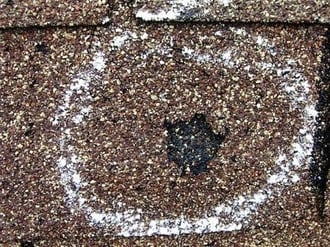
Signs of Hail Damage You Can Look For
You do not need to climb on the roof, and you should not. From the ground, look for:
- Dents or dimples on gutters, downspouts, and metal fascia
- Bent or pockmarked air conditioner condenser fins
- Torn or dented window and door screens
- Dings on garage doors, mailboxes, and grills
- Granules collecting in gutters or piling up at the base of downspouts
- Spatter marks on decks, fences, and painted surfaces
If you see hits on the soft metal around your house, your roof almost certainly took them too.
What to Do Next
- Check what you safely can from the ground. Use the checklist above. Do not climb up on the roof yourself.
- Write down the date. June 1, 2026. Insurance claims are tied to a specific storm date, and having it on record from day one makes the whole process smoother.
- Do not call your insurance company first. This is the mistake I see most often. The moment you call to report possible hail, many insurers open a claim on your record, even if it turns out you do not have enough damage to justify one. A claim that gets closed with no payout can still follow you and push up your future rates. Find out what you actually have before you involve your insurer.
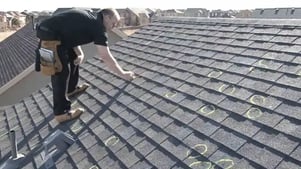
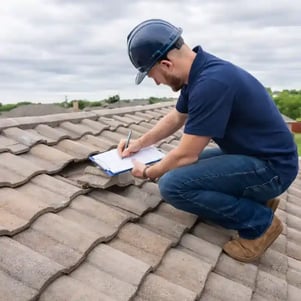
- Get a professional roof inspection before you file anything. A trained inspector can tell the difference between fresh storm damage, normal wear, and old repairs, and can tell you whether you have a claim worth filing in the first place.
- Know your deadline. Most Colorado homeowner policies give you a limited window to file a hail claim, often about one year from the date of loss. The sooner you know what you are dealing with, the more options you have.
Understanding Your Insurance Claim
Insurance is where a lot of homeowners get tripped up, so let me walk through how it usually works in Colorado. Every policy is different, so treat this as a map and not as legal advice, and always read your own coverage.
Your deductible
On a covered claim, you pay your deductible and your insurer covers the rest. If your damage does not add up to more than your deductible, there is nothing for them to pay, which is exactly why you want an inspection before you ever file.
Actual cash value versus replacement cost value
Most modern policies are replacement cost value, but they often pay in two parts. First they send the actual cash value, which is the cost to replace your roof minus depreciation for its age and wear. After the work is finished and invoiced, they release the rest, called the recoverable depreciation. An actual cash value only policy pays the depreciated amount and stops there, which can leave a large gap you cover out of pocket. Know which kind you have.
The one year clock
Many Colorado policies require you to file within about one year of the date of loss. For this storm, that clock started on June 1, 2026. Waiting too long can cost you the claim entirely.
Why you should not call your insurer first
This is the part people get wrong. The moment you call to ask about possible hail, many insurers log it as a claim. If an adjuster then decides there is not enough damage to clear your deductible, the claim closes with no payout, but it can still land on your insurance history and follow you to your next renewal or even your next home. Get an independent inspection first so you know whether you actually have a claim worth filing before you ever pick up the phone.
Watch Out for Storm Chasers
After every big Colorado hail storm, out of state crews descend on the neighborhoods. Some are fine. Many are not. After more than 30 years in this business, here are the red flags I tell my own neighbors to watch for:
- A request for money in advance. A reputable roofer does not need your cash before the work is done.
- A contract with cancellation fees. If a company locks you in with a penalty, treat it as a red flag and walk away.
- Pressure to sign the same day. A roof is not a now or never decision, no matter what they tell you.
Work with a local company that will still be here next year, the next time you need them. Call Excel Roofing first.
Why Acting Sooner Beats Waiting
Every hail season, we meet homeowners who waited. The leak they could have caught in June becomes a ceiling stain in December and a much bigger repair by spring. Catching damage early protects your home, keeps your claim clean, and gives you time to make a good decision instead of a rushed one. There is no prize for waiting it out.
Why Colorado Sees So Much Hail
If it feels like Colorado gets more than its share of hail, that is because it does. The Front Range sits in what is often called Hail Alley, where the rapid rise from the plains up to the mountains creates the perfect setup for the strong updrafts that grow hail. Our hail season runs roughly from April through September, and June is historically the busiest month of all. June 1 was an early and firm reminder of what the rest of the summer can bring.
Frequently Asked Questions
How big was the hail on June 1, 2026?
Most reports across the Front Range were around one inch, about the size of a quarter. The average reported size was 1.21 inches and the largest stones reached 1.75 inches, about golf ball size. Radar indicated cores capable of two inch hail.
Which areas were hit by the June 1 hail storm?
The storm covered the Denver metro, including Denver, Aurora, Lakewood, Arvada, Westminster, Thornton, Wheat Ridge, Englewood, and surrounding communities, as well as the Colorado Springs area to the south, including Cimarron Hills, Black Forest, and the Air Force Academy.
Can one inch hail damage my roof?
Yes. One inch hail is generally considered the threshold at which asphalt shingles begin to sustain damage, including bruising of the shingle mat, granule loss, and soft spots that can lead to leaks over time.
Should I call my insurance company first after a hail storm?
No. It is wise to get an independent roof inspection first. Contacting your insurer can open a claim on your record even if there is not enough damage to justify one, and a closed claim with no payout can still affect your future rates.
How do I avoid roofing scams after a Colorado hail storm?
Never pay a roofer money in advance, never sign a contract with cancellation fees, and do not let a door to door crew pressure you into signing on the spot. Work with an established local contractor that will still be here next year.
How long do I have to file a hail claim in Colorado?
Many Colorado homeowner policies allow about one year from the date of loss to file a hail claim. Confirm the exact deadline in your own policy.
Why Colorado Homeowners Trust Excel Roofing
We have been on Colorado roofs since 1993, and we have helped more than 55,000 homeowners get through storms just like this one. We are an Owens Corning Platinum Preferred Contractor, a credential held by only a small fraction of roofers in the country. We work out of our Englewood headquarters at 4510 S Federal Blvd and our Colorado Springs office at 2622 N Union Blvd, so wherever the June 1 storm hit, we are nearby.
Here is our promise. Our inspection is free. You don't pay a cent until you're content, and there are no upfront costs and no cancellation fees. Every job also comes with the things that should be standard but often are not, like a porta potty on site to keep your property clean and a carbon monoxide detector for your home. If you do not have damage, we will tell you so honestly. If you do, we will document it properly and walk you through your insurance the right way.
If the June 1 storm passed over your neighborhood, do not wait for a leak or a door knock to find out. Call us at (303) 761-6400 to schedule your free inspection. We're on top of it.
Sources
National Weather Service, Severe Thunderstorm Warning, Denver, June 1, 2026.
https://www.weatherbug.com/alerts/denver-co-80203
9NEWS, Stronger storms possible in Denver today and tomorrow, June 1, 2026.
https://www.9news.com/article/weather/severe-weather/severe-storms-chances-colorado-monday-forecast/73-19140c0e-6b26-4425-b1b5-20724d2665ce
FOX31 KDVR, Large hail could hit Colorado on Monday, June 1, 2026.
https://kdvr.com/weather/wx-news/large-hail-could-hit-colorado-on-monday-heres-where/
Interactive Hail Maps, Hail Map for Denver, CO, June 1, 2026.
https://maps.interactivehailmaps.com/HailMap/denver-co/2026-06-01
NOAA Hail Storm Reports, Colorado Geospatial Data.
https://geodata.colorado.gov/datasets/esri2::noaa-hail-storm-reports-24-hours/




.webp?width=301&height=365&name=The%20Taylors%20home%20after%20an%20intense%20christmas%20windstorm%20(1).webp)