
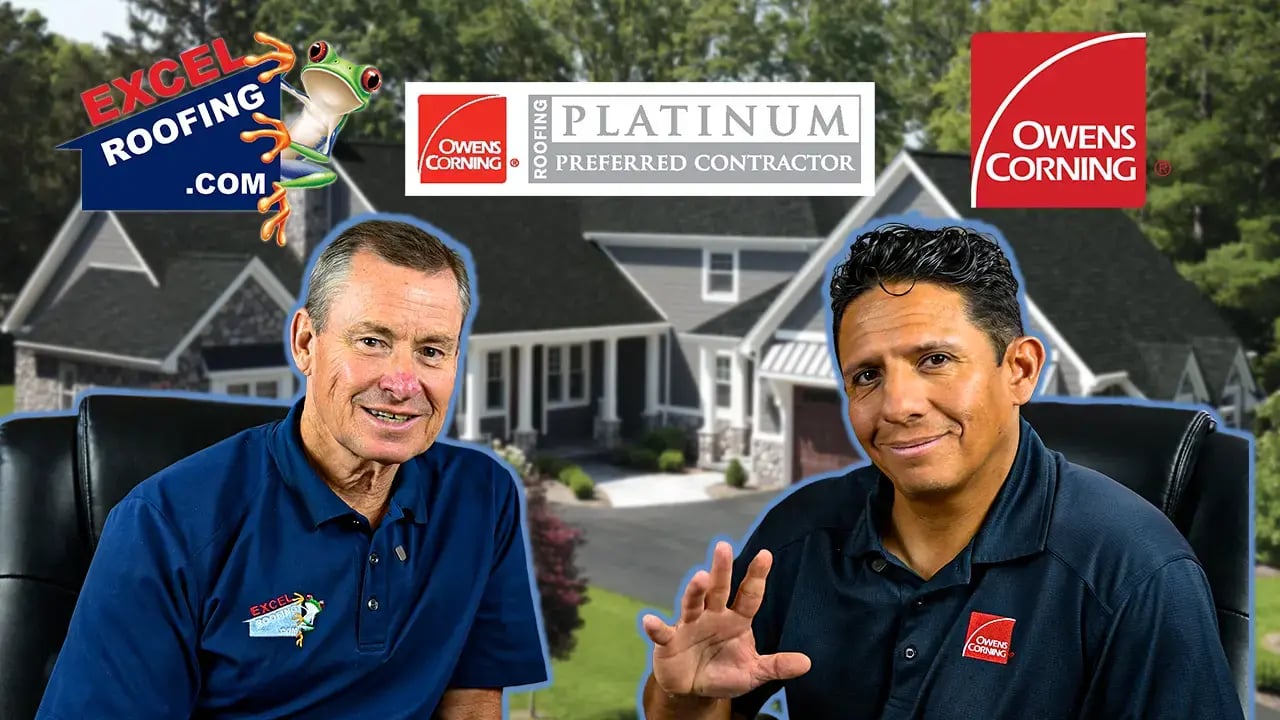
Owens Corning invented the fiberglass shingle, and every asphalt shingle sold in the United States today is built on that technology. What separates one Owens Corning shingle from the next comes down to three things: whether it carries a Class 4 impact rating, whether it uses the SureNail strip, and whether the asphalt is SBS modified to absorb hail impact.
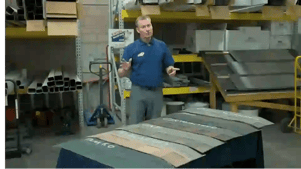
Octavian Avila is the Owens Corning Regional Sales Leader for the mountain region, a territory that runs from Montana down to New Mexico. He sat down with J Bretz, founder of Excel Roofing, to walk through the full shingle lineup and explain, in plain terms, what a homeowner is actually paying for when they upgrade from an economy shingle to a premium one.
Excel Roofing has installed Owens Corning products since the company's earliest days and became an Owens Corning Platinum Preferred Contractor in 2012. Here is what came out of that conversation.
|
The short version Oak Ridge is the economy option and carries no impact rating. The Duration line adds the SureNail strip. Duration STORM and Duration FLEX add impact resistance, with FLEX using SBS modified asphalt that flexes on impact instead of bruising. Woodmoor and Woodcrest are the premium profiles and now carry a Class 4 rating. The 160 mph wind warranty applies across the Duration series, and it requires six nails per shingle. |
Why Did Owens Corning Create the Fiberglass Shingle?
Because the shingles that came before it were built on a paper core, and paper absorbs water.
Owens Corning has been an American manufacturer since the 1930s. When the company moved into roofing, the industry standard was an organic mat that behaved exactly the way paper behaves in a Colorado winter. Snow, sleet, and freeze-thaw cycles soaked into the core, the shingle swelled and warped, and the roof failed years earlier than it should have.
Owens Corning replaced that core with fiberglass. The result was a shingle that did not absorb water and lasted significantly longer. Every other manufacturer followed. As Avila put it during the interview, every shingle on the market today is a fiberglass shingle, and that traces back to Owens Corning.
What Are the Different Owens Corning Shingles?
Owens Corning builds a tiered lineup, and the differences are not cosmetic.
Here is how the products compare.
|
Shingle |
Impact Rating |
Key Feature |
Best Fit |
|
Oak Ridge |
None |
Economy fiberglass shingle, long-standing industry staple |
Budget replacements and rental or investment property where an impact rating is not required |
|
Duration |
Class 3 |
SureNail strip for a wider nailing zone and a stronger sealant bond |
Homeowners who want upgraded wind performance without moving to impact resistance |
|
Duration STORM |
Class 4 |
Reinforcing mat on the back of the shingle to resist indentation and bruising |
Hail-exposed neighborhoods where impact resistance is the priority |
|
Duration FLEX |
Class 4 |
SBS modified asphalt that flexes and rebounds when hail strikes |
Front Range and high plains homes, steep or tall roofs, and multifamily properties |
|
Woodmoor and Woodcrest |
Class 4 |
Thick, dimensional premium profiles that replicate the look of cedar shake |
Homes where curb appeal and impact resistance both matter |
Oak Ridge is a good shingle and it has been in the field for decades. What it does not carry is a class verification, which is the industry term for an impact rating. In hail country, that distinction matters for both roof life and insurance premiums.
What Is the SureNail Strip and Why Does It Matter?
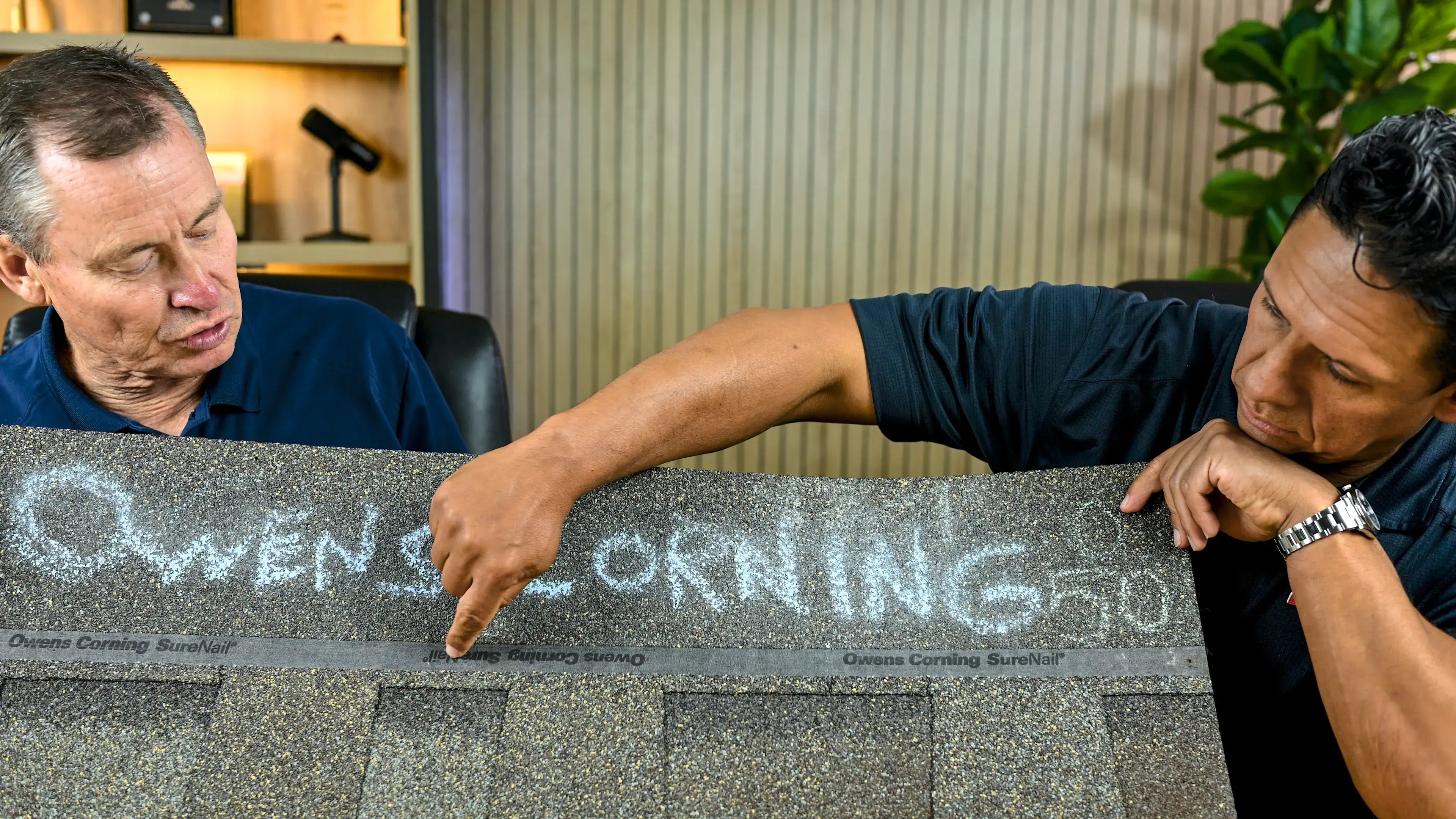
SureNail is a reinforced fabric strip that runs horizontally across the face of the shingle in the nailing zone. It does two jobs at once.
- It gives the installer a visible, clearly marked target. Nails land where the engineering says they should land, not above or below the zone.
- It gives the sealant a flat, engineered surface to bond to instead of loose granules.
- Look for the Platinum badge. Owens Corning publishes its certified contractor list, and Platinum Preferred status can be confirmed independently in about a minute.
- Look for a Class 4 rated shingle. In hail country, an impact rating protects the roof and often reduces the homeowner's insurance premium.
That second point is the one most homeowners never hear. Flip a shingle over and there is a strip of factory-applied sealant on the back. When the sun heats the roof, that sealant softens and bonds the shingle above to the shingle below. On a conventional shingle, it bonds to a bed of granules, and granules can release. On a Duration shingle, it bonds to the SureNail strip. No other manufacturer offers this feature.
|
The tape analogy Try sticking a piece of tape to carpet and it will not hold. Stick it to a flat surface and it holds hard. That is the difference between bonding to granules and bonding to a reinforced strip, and it is a meaningful part of why the Duration line resists wind uplift the way it does. |

What Does SBS Mean in Duration FLEX?
SBS stands for styrene-butadiene-styrene, a polymer that is blended into the asphalt to make it rubberized.
A standard asphalt shingle is relatively rigid. When a hailstone hits it hard enough, the mat bruises or fractures beneath the granule surface, and that damage becomes a leak path over time. An SBS modified shingle behaves differently. The asphalt flexes on impact and returns to shape, so the energy is absorbed rather than transferred into the mat.
There is a second benefit that matters in Colorado and Wyoming. SBS modified shingles stay pliable across a much wider temperature range, which means they can be installed in cold weather and in heat without the handling problems that cause installation damage on conventional shingles.
For a three-story home, a steep roof, or a multifamily building where mobilizing a crew is expensive and disruptive, that added durability is worth serious consideration. The goal is not to be back on that roof any sooner than necessary.
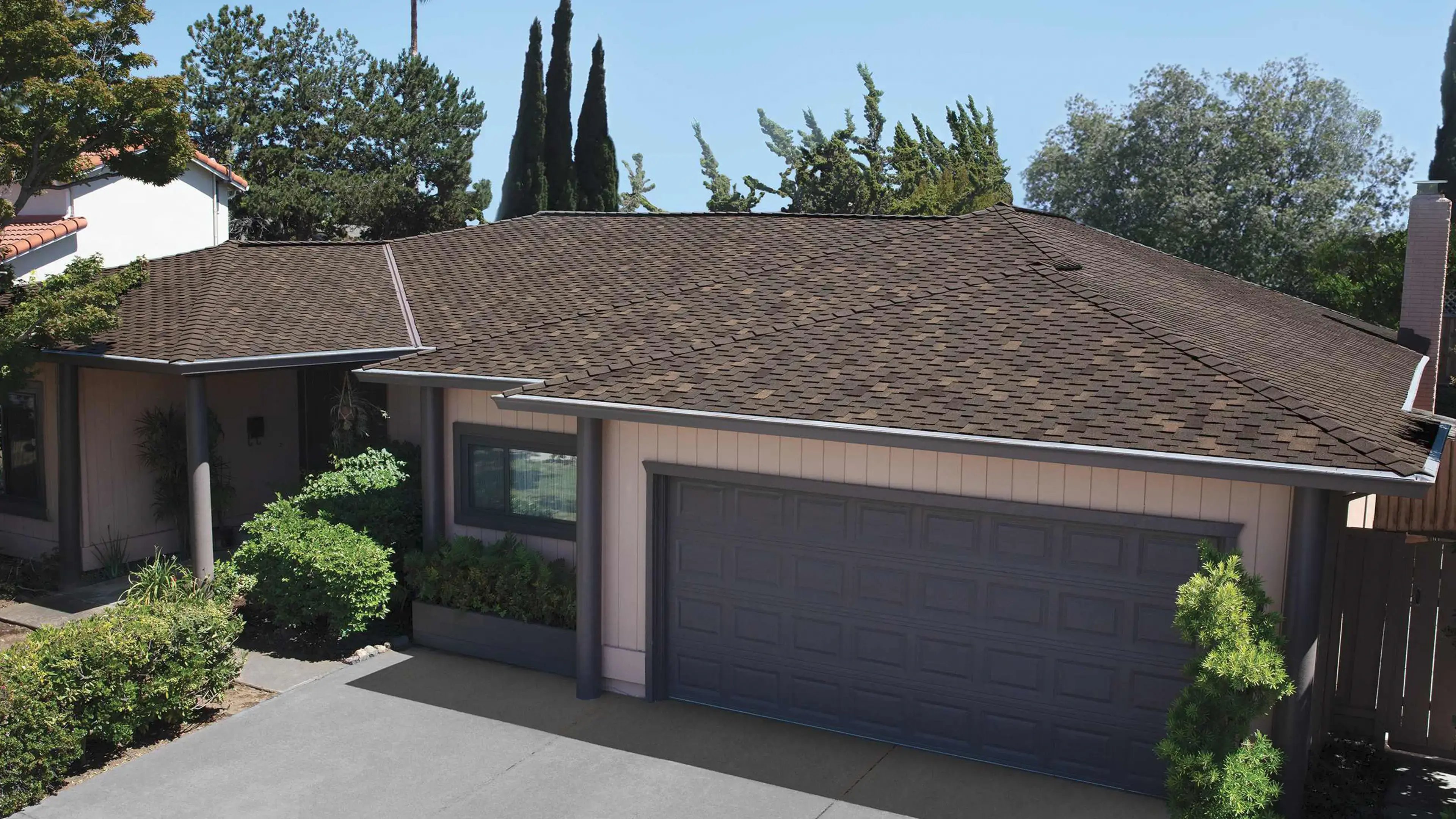
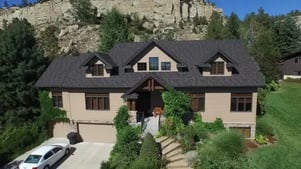
Chestnut color Woodcrest shingles
What Makes Woodmoor and Woodcrest Different?
These are the premium end of the Owens Corning line, and they are now Class 4 rated.
Woodmoor and Woodcrest were designed to reproduce the depth and shadow line of cedar shake without the maintenance, fire risk, or cost of real wood. They are noticeably thicker than a standard architectural shingle, and the profile reads as genuinely dimensional from the street rather than printed.
The addition of a Class 4 impact rating means a homeowner no longer has to choose between the look and the protection. For properties where curb appeal drives value, these are the shingles worth looking at.
How Do Owens Corning Warranties Work?
Warranty coverage depends on the certification level of the contractor installing the roof, not just on the shingle.
Owens Corning certifies contractors in tiers, and Platinum Preferred is the top level. Platinum Preferred contractors represent roughly the top one percent of roofing contractors in the country, and they are the only ones authorized to offer Owens Corning's strongest warranty package, which extends coverage beyond the shingle itself to include workmanship.
This is the part homeowners most often miss. Two crews can install the identical shingle on identical homes, and the coverage the homeowner ends up holding can be completely different depending on who did the work. The shingle warranty follows the product. The workmanship warranty follows the certification.
Excel Roofing has held Platinum Preferred status since 2012, and J Bretz serves on the Owens Corning Platinum Advisory Board, a group of contractors who give the manufacturer direct market feedback on product performance and homeowner needs.
What Is the 160 MPH Wind Warranty?
It is Owens Corning's wind coverage on the Duration series, and it is among the highest in the industry.
Wind events have grown more severe and more widespread across the country, and Owens Corning responded by pushing its wind warranty up to 160 mph. What is notable is how they got there. The company did not reformulate the sealant or redesign the shingle to hit the number. They ran the testing on the existing product and it performed. The rating caught up to what the shingle was already doing.
For Front Range homeowners, this matters more than it might sound. Chinook winds coming off the foothills regularly produce gusts that would be treated as a major event almost anywhere else in the country.
Does the 160 MPH Rating Require Six Nails?
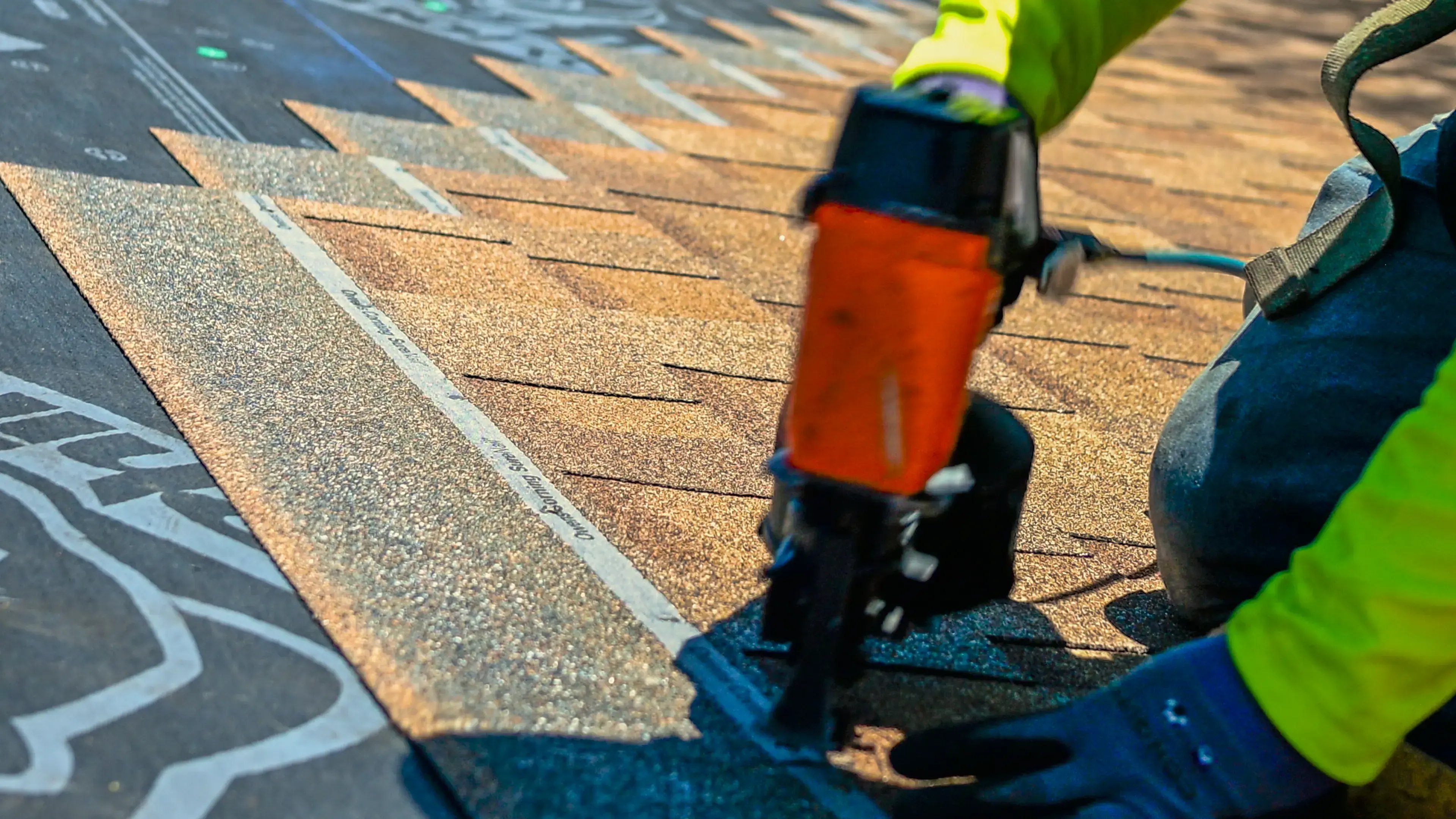
Yes. Six nails per shingle is a requirement, not a recommendation.
This is where a lot of roofs quietly fall short. Four-nail installation is faster and it is still common, and on a calm day nobody can tell the difference from the ground. But a four-nail roof does not qualify for the 160 mph warranty, and it does not perform like a six-nail roof when the wind actually arrives.
Excel Roofing installs six nails on every shingle, on every roof, without exception and without a line item asking the homeowner to pay extra for it.
How Should a Homeowner Choose a Roofing Product and Contractor?
Avila's advice at the close of the interview was direct, and it comes down to two things a homeowner can verify before signing anything.
Excel Roofing would add a third. Read the cancellation terms before signing. A contract that penalizes a homeowner for changing their mind is a contract written to protect the contractor, not the customer. Excel Roofing does not use cancellation fees, and the company's promise has not changed in thirty-three years: You Don't Pay A Cent Until You're Content.
Frequently Asked Questions
Is a Class 4 shingle worth the extra cost in Colorado?
For most Front Range and eastern plains homes, yes. Colorado sits in one of the most active hail corridors in the country, and a Class 4 shingle is built to survive impacts that would bruise a standard shingle. Many carriers also offer a premium discount for an impact-resistant roof, which offsets part of the upgrade cost over the life of the roof. Homeowners should confirm the discount with their carrier before assuming it applies.
What is the difference between Duration STORM and Duration FLEX?
Both carry a Class 4 impact rating, but they achieve it differently. Duration STORM uses a reinforcing mat on the back of the shingle to resist indentation. Duration FLEX uses SBS modified asphalt throughout, so the shingle itself flexes and rebounds on impact and stays pliable across a wider installation temperature range.
Does an impact-resistant shingle mean the roof will never need a hail claim?
No. Class 4 means the shingle passed a standardized impact test, not that it is indestructible. Severe hail can still damage a Class 4 roof, and it can damage vents, flashing, gutters, and other roof components regardless of the shingle rating. A free inspection after a storm is still the right move.
Can Owens Corning shingles be installed in cold weather?
SBS modified shingles like Duration FLEX handle cold-weather installation better than conventional asphalt shingles because they remain flexible at lower temperatures. Sealant strips still need heat to bond fully, so a roof installed in winter may not seal down completely until the first warm stretch. A qualified contractor accounts for this in the installation method.
What makes a contractor Platinum Preferred?
Owens Corning requires credential verification, insurance and licensing documentation, a track record of quality installations, and ongoing performance standards. Platinum is the highest tier and represents roughly the top one percent of roofing contractors nationally. Only Platinum Preferred contractors can offer Owens Corning's strongest warranty coverage.
Does Excel Roofing install Owens Corning on multifamily and commercial properties?
Yes. The same shingle systems used on single-family homes are installed on apartment buildings, townhome communities, HOA properties, and light commercial buildings across Colorado and Wyoming. Duration FLEX is a frequent specification on multifamily projects because reroofing a tall or occupied building is disruptive enough that owners want maximum service life out of the assembly.
Talk to Excel Roofing
Excel Roofing has served Colorado and Wyoming property owners since 1993 and has been an Owens Corning Platinum Preferred Contractor since 2012, with offices in Englewood, Colorado Springs, Sheridan, and Casper.
Inspections are free, estimates are honest, and there are no cancellation fees. Schedule an inspection at excelroofing.com.
We're On Top Of It.

.webp?width=301&height=406&name=TDD_EstateGray_beauty_shot%20(1).webp)