
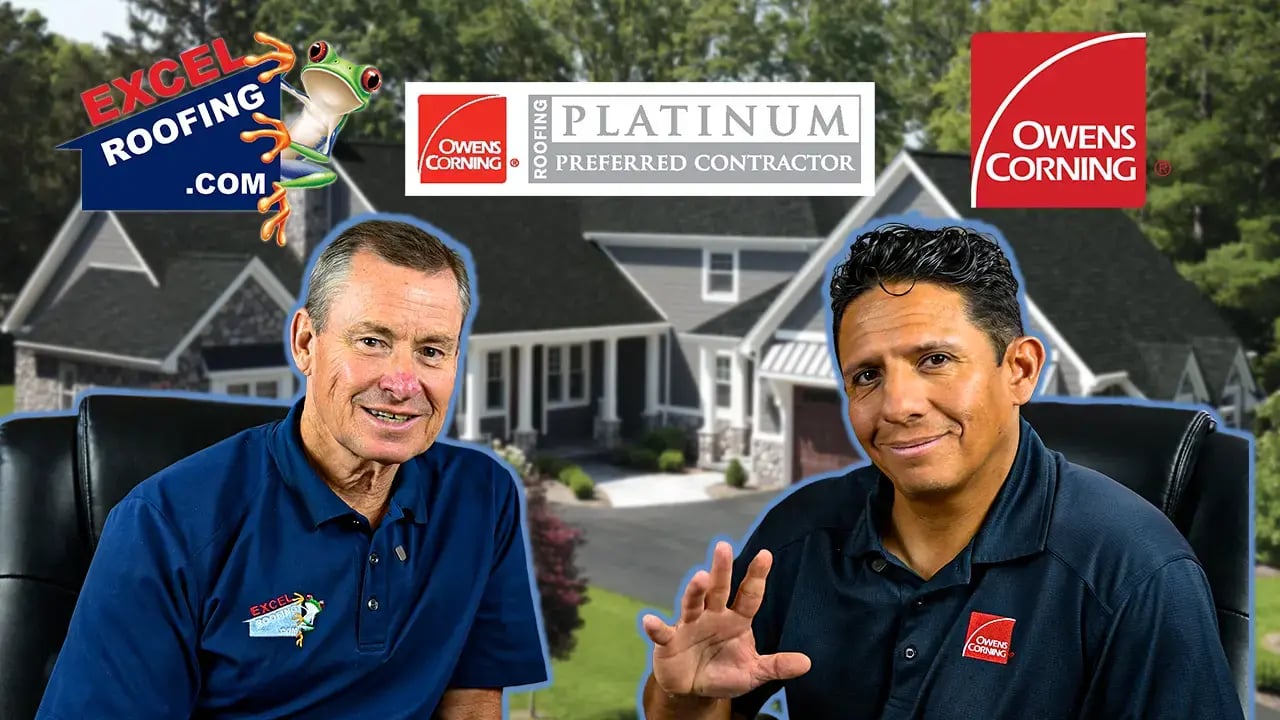
After thirty three years in Colorado roofing, J Bretz still hears the same question before almost every project: where can a homeowner save money, and where is it a mistake to try?
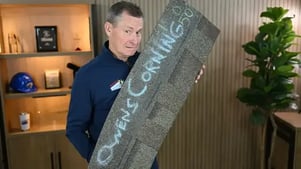
It is a fair question. Nobody wants to overspend on a roof. To answer it directly, Bretz sat down with Octavian Avila, Regional Sales Leader for the Mountain Region at Owens Corning, whose territory runs from Montana down to New Mexico. Avila gave a blunt answer, and Excel Roofing agrees with all of it.
The Short Answer
Homeowners can save money on choices that are cosmetic or logistical. They should not save money on the components that keep water out of the house.
As Avila framed it, a roof is typically the largest investment anyone makes. It is an asset the homeowner lives in every single day, and it is not something that should be left exposed. Stripping the system down to hit a lower number does not save money. It moves the expense a few years down the road, usually with water damage attached to it.
Excel Roofing has watched a lot of homeowners take the cheap route over three decades. It rarely ends well.
Where Homeowners Can Actually Save Money
1. Shingle color and product line
A standard architectural shingle in a common color performs the same as a designer profile in a boutique color. If the premium line is stretching the budget, the standard color is the place to give. The performance lives in the system, not the shade.
2. Timing the project
Colorado roofing runs on hail. When a major storm hits the Front Range, contractors from three states arrive and demand spikes. If a roof is not actively leaking and the homeowner has flexibility, scheduling outside that crunch usually means better availability and a calmer process.
3. Financing instead of downgrading
This is the option most homeowners overlook. If the complete system is out of reach this month, the answer is to finance the complete system rather than buy a lesser roof. There are several ways to finance a new roofing system: A HEILOC loan from a local credit union, a 2nd mortgage or using a financing company like Service Finance. Excel Roofing offers financing for qualified customers. A payment plan is a far better tool than a spec reduction.
4. Bundling related exterior work
If the gutters are due, they should go in with the roof. Same crew, same mobilization, same dumpster. Splitting them into two separate projects a year apart costs more in labor and setup than doing them both at once.
5. Understanding the insurance claim
Where there is legitimate storm damage, a policy may cover a significant portion of the replacement. Those savings come from documenting the damage properly and understanding the coverage, not from cutting the scope of work. Excel Roofing will walk the roof and give an honest assessment of whether a claim exists.

Where Homeowners Should Never Cut Corners
Avila said it plainly: get the full system, get it covered, get it taken care of. Otherwise the homeowner ends up replacing the roof more often instead of doing it right the first time.
Here is what "the full system" actually means, and why each piece matters:
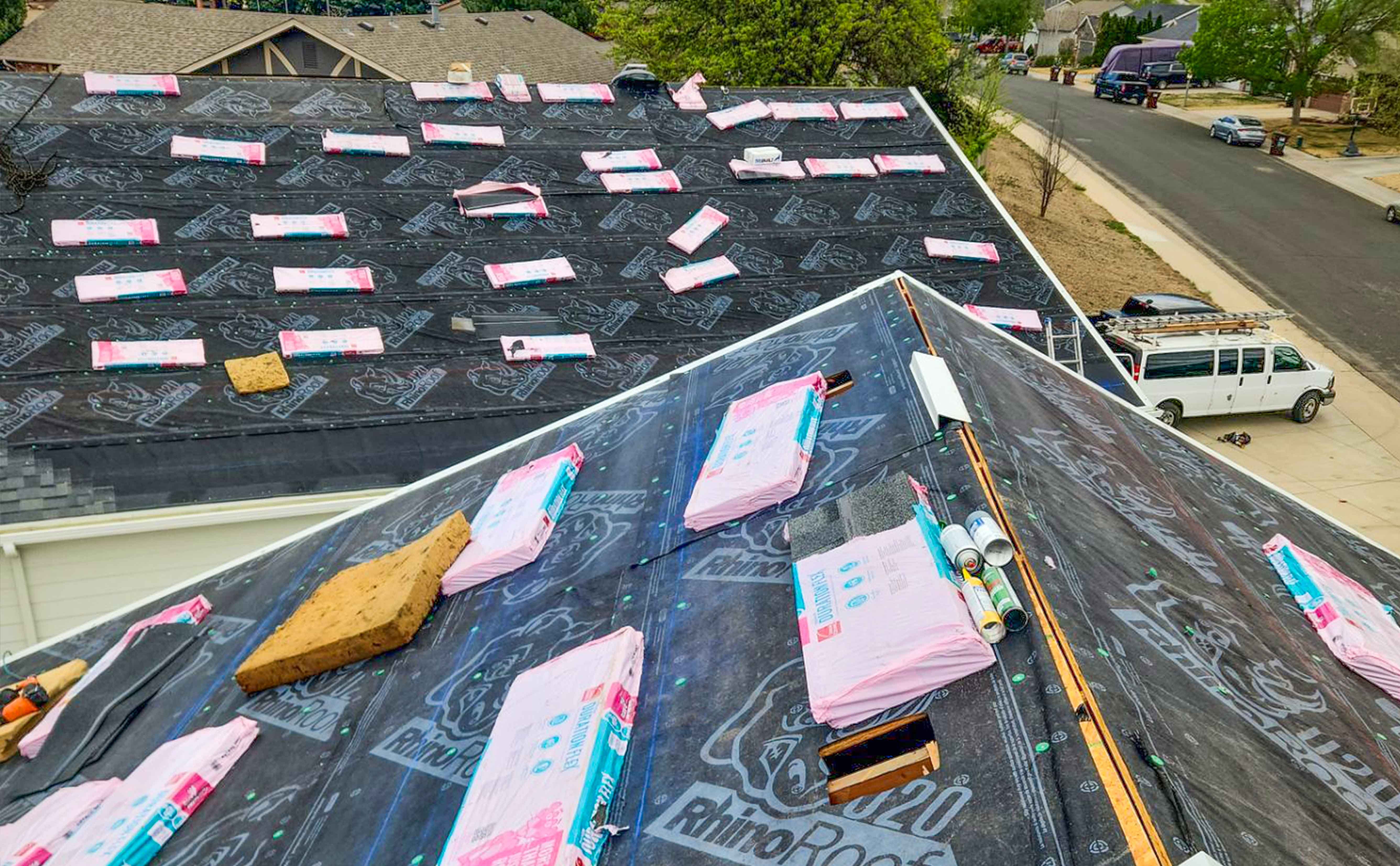
- Synthetic underlayment. The secondary water barrier between the shingles and the decking. Old fashioned felt tears during installation, wrinkles when it gets wet, and does not hold up to a Colorado wind event.
- Ice and water barrier. A self-sealing membrane at the eaves, in the valleys, and around every penetration. That is where roofs leak. Not in the middle of the field.
- Starter strip. A purpose-built starter course with a factory sealant line at the eaves and rakes. Cutting up field shingles to use as starter is a shortcut that shows up later as blow-offs and warranty denials.
- Proper flashing and drip edge. New flashing at every wall, chimney, and pipe. Reusing bent, rusted, or previously caulked flashing to shave a few hundred dollars is the single most common cause of the leaks Excel Roofing gets called out to fix on other contractors’ work.
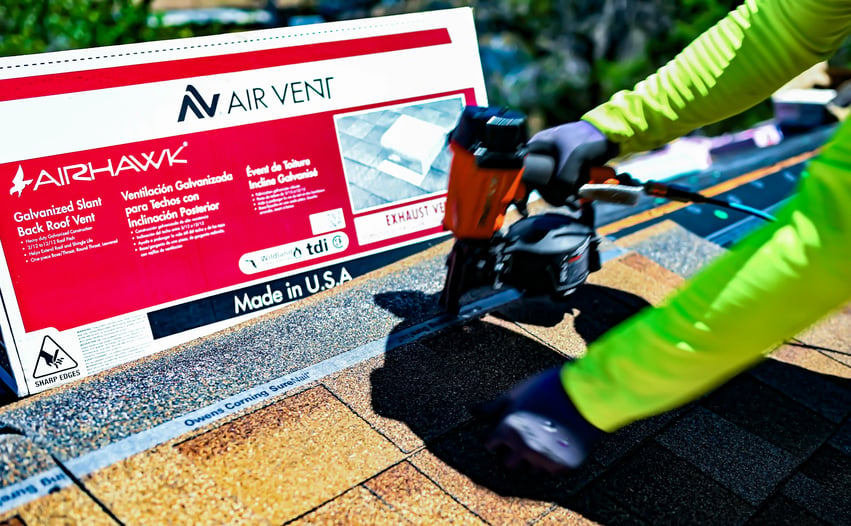
- Balanced attic ventilation. Intake at the soffit, exhaust at the ridge. Without it, heat and moisture build up in the attic, cook the shingles from underneath, and can void manufacturer coverage outright.
- Hip and ridge cap shingles. Purpose-made cap shingles at the most exposed lines on the roof.
- Decking repair. If the sheathing underneath is rotted, delaminated, or spaced too wide, it gets replaced. A warrantied roof cannot be fastened to bad wood.
- The installation itself. Nail placement, nail depth, course alignment, valley technique. Almost every premature roof failure Excel Roofing inspects is an installation failure, not a product failure.
Save Here, Not There: A Quick Reference
|
Line Item |
Safe Place To Save? |
Why |
|
Shingle color and style |
Yes |
Standard architectural colors cost less than designer lines and perform identically. |
|
Project timing |
Yes |
Booking outside of peak post-storm demand can improve scheduling and availability. |
|
Financing instead of downgrading |
Yes |
Spreading payments preserves the system spec instead of stripping it. |
|
Bundling gutters and related work |
Yes |
One mobilization, one crew, one trip charge instead of two separate projects. |
|
Synthetic underlayment |
No |
It is the secondary water barrier protecting the decking. Felt tears and wrinkles. |
|
Ice and water barrier |
No |
Valleys, eaves, and penetrations are where Colorado roofs actually leak. |
|
Flashing and drip edge |
No |
Reusing bent flashing to save a few dollars is the most common source of callback leaks. |
|
Attic ventilation |
No |
Poor ventilation cooks shingles from underneath and can void manufacturer coverage. |
|
Starter strip and ridge cap |
No |
Cut-up field shingles used as starter are a warranty problem and a wind problem. |
|
Decking repair |
No |
A warrantied roof cannot be fastened to rotten or delaminated sheathing. |
|
Installation labor |
No |
Nearly every premature roof failure is an installation failure, not a product failure. |
Why the Class 4 Rating Matters in Colorado
Asked what consumers should look for in a product, Avila was specific: Owens Corning shingles with a Class 4 rating.
Class 4 is the highest impact resistance rating under the UL 2218 standard, which tests a shingle by dropping steel balls onto it. Along the Front Range, where multiple damaging hail events can land in a single season, that rating is not a luxury upgrade. It is the appropriate spec for the environment.
There is a second benefit. Many Colorado insurance carriers offer a premium discount for impact resistant roofing. The amount varies by carrier and policy, so homeowners should call their agent before finalizing a shingle selection. That discount can offset a meaningful portion of the upgrade over the life of the roof.
How to Vet the Contractor, Not Just the Price
Avila offered homeowners a simple screening tool: look for the Platinum badge.
Owens Corning Platinum Preferred Contractor is the manufacturer’s highest credential, held by roughly the top one percent of roofing contractors in the country. It requires a verified track record, financial stability, insurance, and customer satisfaction standards that get re-audited over time. Excel Roofing became Platinum Preferred in 2012, and J Bretz has served on the Owens Corning Platinum Advisory Board, which gives contractors a direct line to the manufacturer for product and market feedback.
Beyond the badge, here is what every homeowner should confirm before signing anything:
- Is the contractor manufacturer certified, and can that certification be verified on the manufacturer’s own website rather than a logo on a truck?
- Are they licensed and insured in the specific municipality, and will they pull the permit?
- Does the written proposal itemize the full system, or does it simply say "tear off and replace shingles"?
- Does the contract contain a cancellation fee? If it does, walk away.
- Is a large deposit being requested before any material reaches the driveway?
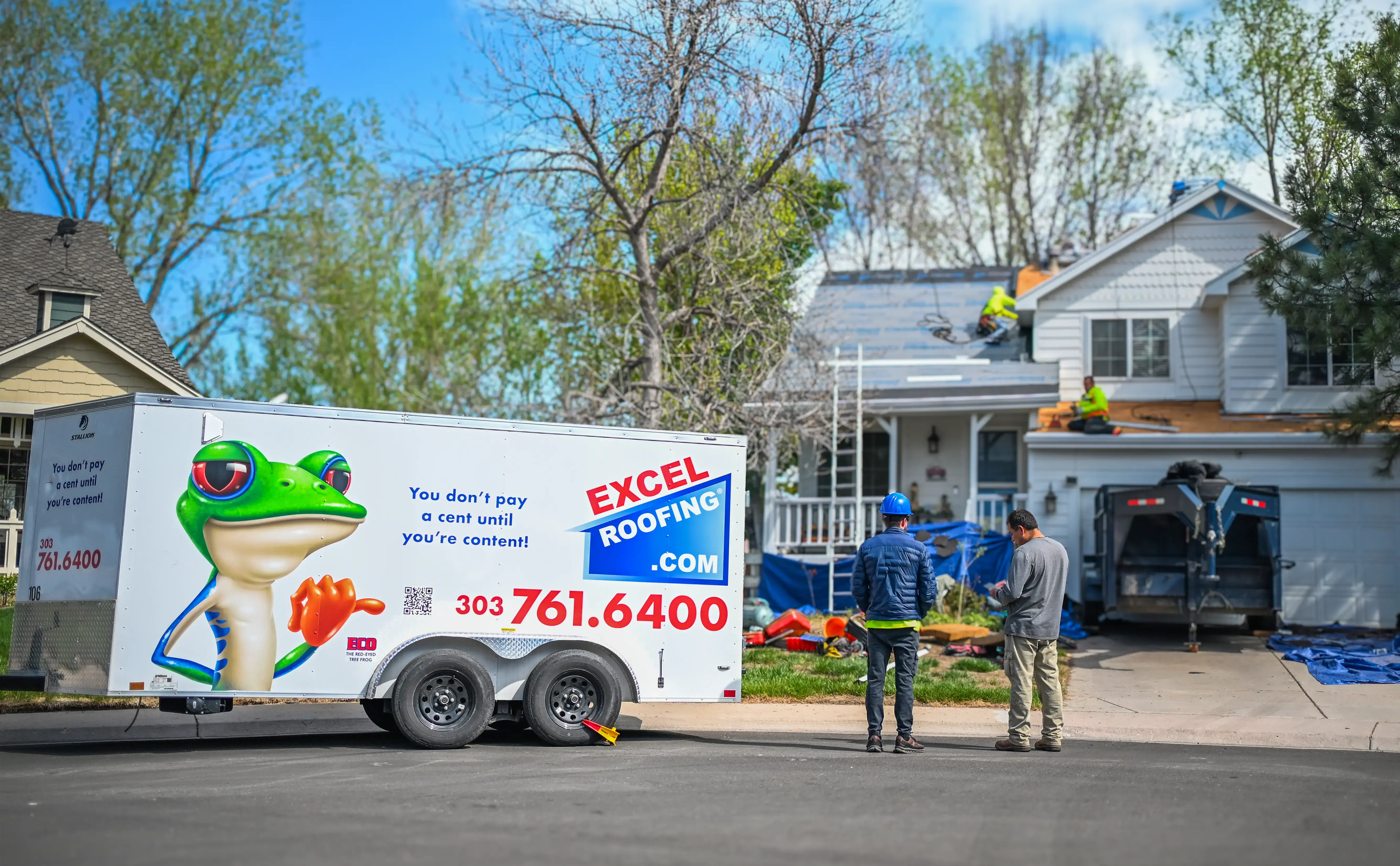
That fourth point matters more than most homeowners realize. A contract with a cancellation penalty is designed to trap a customer into a decision made under pressure at the kitchen table. Excel Roofing does not use them. You Don't Pay A Cent Until You're Content, and that is not a slogan hiding behind fine print.
Frequently Asked Questions
Where can I save money on a roof replacement?
Homeowners can save on cosmetic and logistical choices: selecting a standard architectural shingle color instead of a designer line, scheduling outside peak post-storm demand, bundling gutter work into the same project, and using financing rather than reducing the scope of work. Savings should never come from removing system components like underlayment, ice and water barrier, flashing, or ventilation.
Is it worth paying more for a better roof?
Yes. A roof is typically the largest single investment in a home and it protects everything underneath it. Installing a partial or minimum-spec roof usually means replacing it again sooner, often with interior water damage added to the cost. Buying the complete system once is less expensive over the life of the home than buying a cheap roof twice.
What is included in a full roofing system?
A complete roofing system includes synthetic underlayment, ice and water barrier at eaves, valleys and penetrations, purpose-built starter strip, new flashing and drip edge, the field shingles, hip and ridge cap shingles, and balanced attic ventilation with both intake and exhaust. Shingles alone are not a roofing system.
What does Owens Corning Platinum Preferred mean?
Platinum Preferred is Owens Corning’s highest contractor credential, held by approximately the top one percent of roofing contractors nationwide. It requires verified experience, proper licensing and insurance, financial stability, and sustained customer satisfaction standards. Excel Roofing has held Platinum Preferred status since 2012.
Why do I need Class 4 shingles in Colorado?
Class 4 is the highest impact resistance rating under UL 2218. Colorado and the Front Range see frequent and severe hail, so impact resistant shingles are the appropriate specification for the climate rather than an optional upgrade. Many Colorado insurance carriers also offer a premium discount for Class 4 roofs, though the amount varies by carrier.
Should I sign a roofing contract with a cancellation fee?
No. Cancellation fees exist to lock a homeowner into a decision made under sales pressure. A reputable contractor does not need one. Excel Roofing does not use cancellation fees and does not collect payment until the homeowner is satisfied with the completed work.
The Bottom Line
Save on the things that can be seen. Spend on the things that cannot.
The right approach is to buy the best roofing system the budget allows, have it installed by a manufacturer certified contractor, and put a Class 4 shingle on it anywhere near the Front Range. Skimping on a roof is not saving money. It is financing the next one. Homeowners who buy the complete system once tend to be done thinking about their roof, while homeowners who buy the cheapest version tend to buy it twice.
Excel Roofing has served Colorado and Wyoming homeowners since 1993, with offices in Englewood, Colorado Springs, Sheridan, and Casper. Schedule a free inspection and get a straight answer about the roof that is actually up there.
You Don’t Pay A Cent Until You’re Content. We’re On Top Of It.

.webp?width=301&height=406&name=TDD_EstateGray_beauty_shot%20(1).webp)