
Search for average residential roofing costs online and most national guides will tell you a new roof runs somewhere between $10,000 and $15,000. Then a Colorado homeowner gets three local estimates and wonders why every number on the page is higher. The short answer is that Colorado is not an average roofing market. Hail, wind, altitude, a competitive labor pool, evolving insurance policies, and a new statewide wildfire code all push residential roofing costs above what national calculators suggest.
This guide breaks down where that gap comes from, what Colorado homeowners are actually paying in 2026, and how to budget for a roof without overpaying for one.
What Colorado Homeowners Are Actually Paying in 2026
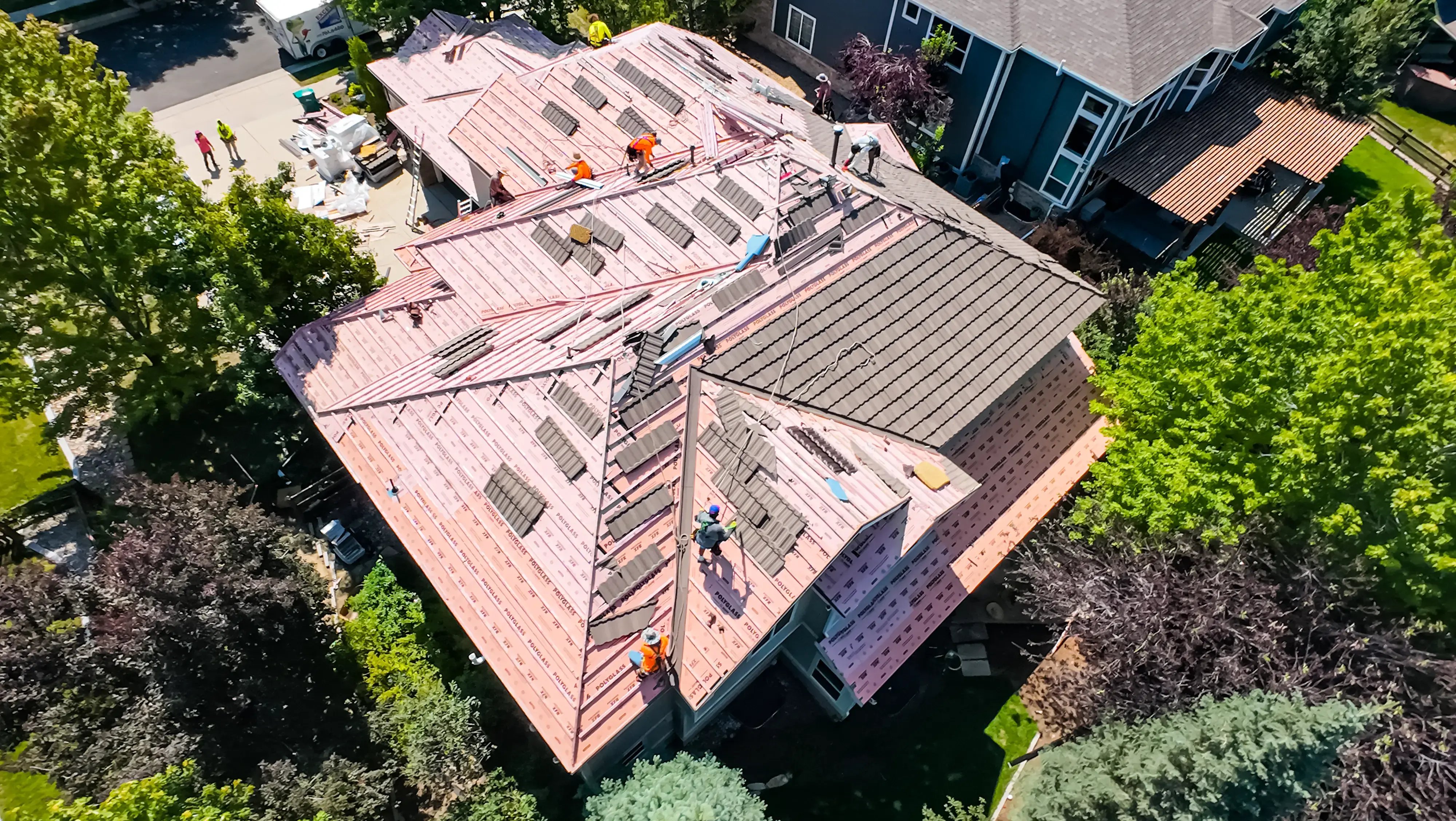
For a typical Colorado home between 1,500 and 3,000 square feet, a full residential roof replacement in 2026 generally lands between $9,500 and $24,000. Along the Front Range, where homes trend larger and roof designs trend more complex, many projects fall in the $12,000 to $28,000 range. Those figures include tear-off of the old roof, disposal, underlayment, flashing, ventilation, and the building permit, which is how any legitimate estimate should be written.
One quick piece of roofer lingo before the numbers. Contractors measure and price roofs in squares, and one square equals 100 square feet of roof surface. A typical Colorado home has 20 to 35 squares of roof, so when an estimate reads 28 squares, that means 2,800 square feet of roofing. Broken down by material, installed pricing in Colorado this year typically looks like this both ways:
- Asphalt shingles: roughly $4.50 to $7.00 per square foot installed, which is $450 to $700 per square, with impact-resistant products at the upper end of that range and beyond
- Metal roofing: roughly $9.00 to $16.00 per square foot installed, which is $900 to $1,600 per square, depending on panel style and complexity
- Tile and premium systems: $20.00 or more per square foot installed, which is $2,000 or more per square
Compare that with the simple national averages and the difference is real. It is not padding, and it is not markup for the sake of markup. It is the cost of building a roof that can survive Colorado.
Materials: Built for Hail, Wind, and Altitude
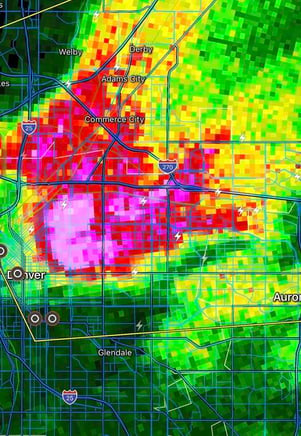
Colorado's Front Range sits in one of the most active hail corridors in the country, and hail is the number one reason roofs get replaced here. A standard three-tab shingle that performs fine in a milder climate may not survive a single Colorado storm season, which is why so many homeowners and insurance carriers now specify Class 4 impact-resistant shingles. Those products typically cost 15 to 30 percent more than standard shingles, but they hold up dramatically better against hail, and many insurers offer premium discounts for installing them.
Altitude adds a second layer of cost. At a mile above sea level and higher, roofs absorb significantly more UV radiation, which accelerates shingle aging. Manufacturers account for this with premium formulations, and some warranty terms actually change for installations above 8,000 feet. Colorado roofs also need components that many national cost guides never mention, such as ice and water shield along eaves and valleys to protect against ice damming, and upgraded ventilation to manage the freeze and thaw cycles that come with 300 days of sunshine punctuated by spring blizzards.

Labor: Skilled Crews Are in Demand
Roofing service pricing in Colorado also reflects a competitive labor market. Residential construction costs statewide have climbed as demand for skilled trades outpaces supply, and roofing feels this acutely during storm season. From May through September, a single major hailstorm can generate thousands of roof replacements in a matter of weeks, and experienced crews are booked accordingly. Quality installers who are trained on manufacturer specifications, steep-slope safety, and impact-rated products command higher wages than the national norm. That labor is worth paying for, because installation quality is the difference between a shingle warranty that holds and one that gets voided.
Insurance Factors That Change the Math
Any honest roofing market analysis for Colorado has to include insurance, because insurance pays for a large share of the roofs replaced in this state. Three policy trends are directly affecting what homeowners pay out of pocket in 2026:
- Percentage-based deductibles. Many Colorado policies now carry a separate wind and hail deductible calculated as a percentage of the dwelling coverage, often 1 or 2 percent. On a home insured for $500,000, that is a $5,000 to $10,000 deductible before insurance pays anything.
- RCV versus ACV coverage. Replacement cost value policies pay to replace the roof at today's prices. Actual cash value policies subtract depreciation, which on an older roof can leave the homeowner covering thousands of dollars of the gap.
- Ordinance-or-law coverage. When local code requires upgrades during a reroof, such as new decking, ice barrier, or wildfire-resistant components, standard policies may not cover those items unless the policy includes ordinance-or-law protection.
Homeowners who understand these three factors before a storm hits are in a far stronger position than those who discover them during a claim.
Permits, Inspections, and Local Code Requirements
Colorado does not license roofers at the state level, so permitting and code enforcement happen city by city and county by county. Permit fees are usually calculated from the project valuation and vary by jurisdiction, and most municipalities require mid-roof or final inspections. Local codes also drive real cost items: drip edge, ice and water barrier, proper ventilation ratios, and decking replacement when inspectors find rot or boards that no longer meet code. Decking is the most common source of a mid-project price change, which is why a professional contractor flags it as a possibility up front rather than surprising the homeowner after tear-off.
New for 2026: The Colorado Wildfire Resiliency Code
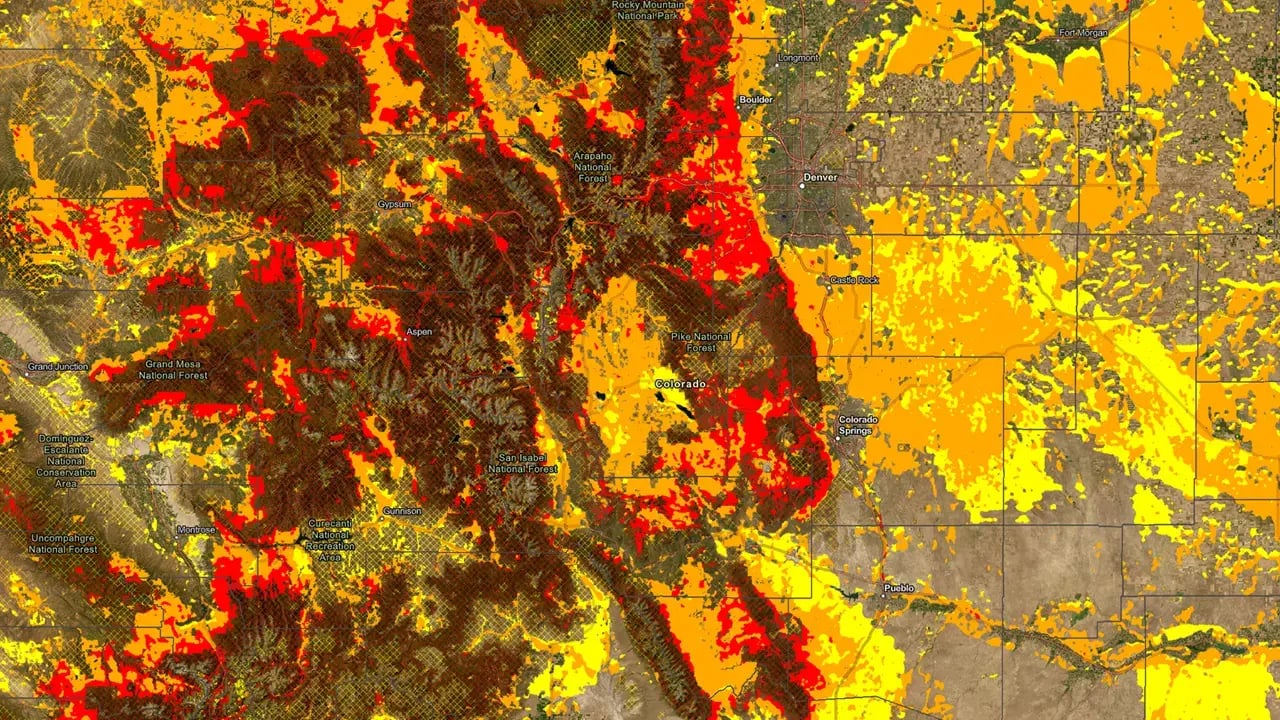
The biggest regulatory change in years reached full enforcement on July 1, 2026. The Colorado Wildfire Resiliency Code, or CWRC, now applies to building permits in mapped wildland-urban interface areas across the state. For homes inside those mapped zones, a reroofing permit can trigger requirements for Class A fire-rated roof assemblies, ember-resistant vents, protected valleys, and noncombustible gutters.
The code is not universal. It depends on whether the property sits inside a mapped WUI area and how the local building department has adopted the rules, and it does not apply to most of the Denver metro core. But for foothills and mountain communities, cost estimates for full code compliance on new construction have ranged from roughly 5 to 20 percent, and reroofing projects in mapped zones will see some of that pressure through upgraded assemblies and components. Homeowners planning a roof in a WUI area should confirm requirements with their building department, or work with a contractor who handles that verification as part of the estimate.
Here is the link to the interactive map where you can search for your address to see what rated area it is in
https://experience.arcgis.com/experience/34c113129c044004bc672ca5493378de
How to Budget for a Colorado Roof Without Overpaying
Higher costs do not mean homeowners are helpless. A few habits separate a fair price from an inflated one:
- Get an inspection-based estimate, not a number generated from a satellite photo or an online calculator
- Compare at least two or three written bids with identical scope: same material, tear-off, underlayment, flashing, ventilation, and warranty
- Ask every bidder how they handle decking replacement and code-required upgrades, and get unit pricing in writing
- Review the wind and hail deductible and RCV or ACV language in the insurance policy before storm season, not after
- Consider Class 4 impact-resistant shingles, which cost more up front but can lower premiums and outlast standard products in hail country
Talk to a Colorado Roofer Who Prices It Straight
Excel Roofing has been installing residential roofs across Colorado since 1993 and has served more than 55,000 customers along the way. As an Owens Corning Platinum Preferred Contractor, the team installs impact-rated systems built for Colorado weather, handles permitting and code requirements including CWRC verification, and walks homeowners through the insurance process step by step. There is no upfront payment and no cancellation fee, because as the company has said for decades, You Don't Pay A Cent Until You're Content.
For a free inspection and an itemized, no-pressure estimate, contact Excel Roofing today. We're On Top Of It.




.webp?width=301&height=365&name=The%20Taylors%20with%20Adam%20Omernick%20after%20their%20roof%20had%20been%20fully%20replaced%20(1).webp)