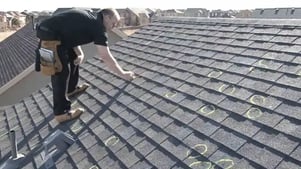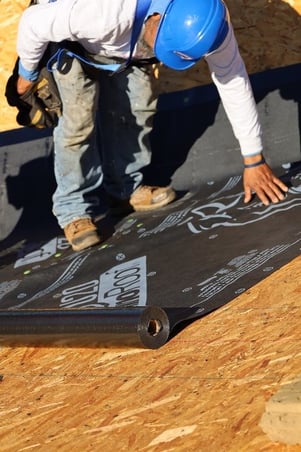

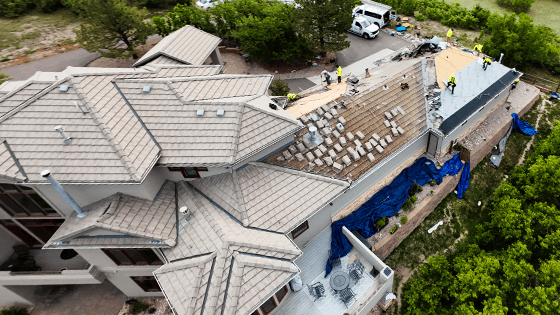
After a Colorado or Wyoming storm, the first question most homeowners ask is whether they need a simple repair or a whole new roof. The honest answer is that it depends on how much of the roof is actually compromised, and getting that call right can save you thousands of dollars and a lot of headaches. Here is how we decide, what a real repair involves, and the one insurance mistake that costs homeowners the most.
The Short Answer
Repair when the damage is localized and the rest of the roof is sound. Replace when storm damage is spread across multiple slopes, the roof is near the end of its life, or repairs keep failing. A single leak around one vent is usually a repair. A roof hail battered across every slope is usually a replacement.
Signs a Repair Is the Right Call
A repair is usually the smart move when the damage is contained and the roof still has good life left. Look for:
- A leak isolated to one spot, such as a single vent, pipe boot, or flashing detail
- A handful of wind torn or missing shingles in one section of the roof
- Localized damage on a roof that is otherwise sound
- A roof still well within its expected lifespan, which for asphalt shingles in Colorado is typically 20 to 25 years
- Damage that affects only a small share of the total roof area
Signs You Likely Need a Full Replacement
Given Colorado's severe weather, widespread storm damage usually calls for a new roof. Replacement is typically the better path when you see:
- Hail or wind damage spread across multiple slopes
- A roof at or past its expected service life
- Repeated leaks in different areas, or repairs that keep failing
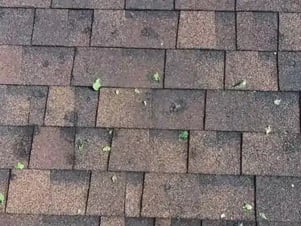
- Widespread granule loss, with cracked or bruised shingles across the field of the roof
- Damage to the decking or underlayment, not just the surface shingles
- Damage covering enough of the roof that patching it piece by piece costs more over time than replacing it
A Simple Rule of Thumb
If the damage is confined to one area and the roof has years of life left, repair it. If the damage is widespread, the roof is old, or you have already paid for repairs that did not hold, a replacement is almost always the smarter long term investment. When a storm has compromised multiple slopes, patching it piece by piece is throwing good money after bad.
Beware the Caulk Job
Here is where homeowners get burned. The running joke in the industry is the roofer who climbs up, squeezes a glob of caulking onto the problem, and hopes it holds. That is not a repair. It is a delay.
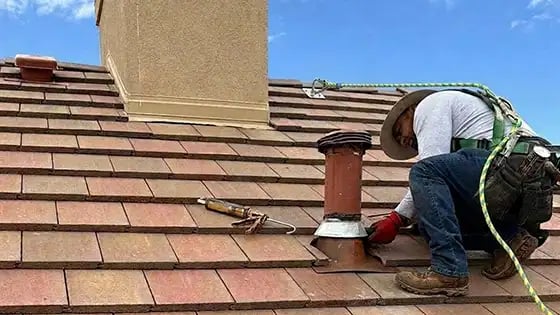
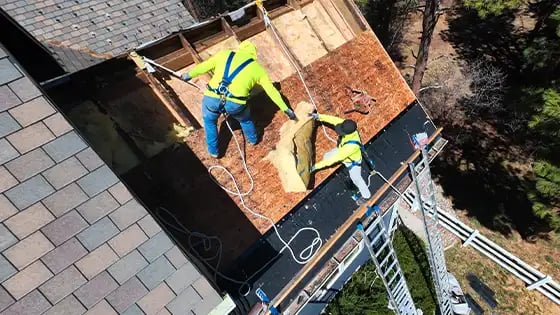
A proper repair means finding where the water is actually getting in, not just where it shows up on your ceiling. Done right, it involves:
- Diagnosing the true source of the leak, which is often not directly above the interior stain
- Removing and resetting the shingles in the affected area
- Replacing underlayment where it has failed
- Repairing flashing, valleys, and penetrations as needed
- Fixing any interior damage to drywall, insulation, or framing
That takes a crew that knows what it is doing. Good repairs are actually harder to find than good replacements, because fewer companies invest in a real repair department. It is worth seeking one out. Nothing is worse than hiring one contractor who cannot find the leak, then another who cannot either, and ending up four contractors deep before the problem is finally solved.
The Insurance Mistake That Costs Homeowners the Most
This is the point an honest roofer will make and a dishonest one will not. Across Colorado, wind and hail deductibles are commonly one to two percent of your home's dwelling coverage, which can mean a deductible of two thousand, five thousand, or more dollars. If your actual repair only costs around nine hundred dollars, filing a claim makes no sense, because you would pay more out of pocket toward your deductible than the repair itself costs.
Do not let a roofer talk you into filing a claim for something cheaper than your deductible. Get the repair priced first, then decide. If you want to understand how deductibles, depreciation, and recoverable depreciation work on a Colorado claim, our insurance claims guide walks through it.

What Repairs and Replacements Cost in Colorado
A minor repair often runs a few hundred dollars, while a larger repair involving flashing, valleys, or several areas can climb into the low thousands. A full asphalt shingle replacement in the Denver metro generally starts around fifteen thousand dollars for a smaller home and rises with roof size, pitch, and material. Because the gap between a real repair and a replacement can be large, it pays to get an honest assessment before you decide. Our Colorado roofing cost guide breaks the numbers down in detail.
Get It Fixed Right the First Time
The theme through all of this is simple. A quality repair done once, by a company with the experience to diagnose the real problem, beats a cheap fix that fails and sends you back to square one.
At Excel Roofing, we run a full repair department and have been diagnosing and fixing roofs across the Denver metro, Colorado Springs, Casper, and Sheridan since 1993. We will tell you straight whether you need a repair or a replacement, and we will not push you toward a claim that does not make sense for you. We're On Top Of It. You Don't Pay A Cent Until You're Content.
Schedule a free roof inspection
Frequently Asked Questions
Should I repair or replace my roof?
It depends on the extent of the damage. If the damage is localized, like a leak around a single penetration or a few wind torn shingles, a proper repair is often the right move. When a storm has compromised the roof across multiple slopes, or the roof is near the end of its life, a full replacement is usually the better path, and it is often covered by insurance for the cost of your deductible.
What does a proper roof repair involve?
A proper repair means diagnosing where the water is actually getting in, pulling up the shingles, redoing the underlayment, addressing flashing and valleys as needed, and fixing any interior damage. It is not a glob of caulking smeared over the problem, which only delays the failure.
Should I file an insurance claim for a small roof repair?
Not if the repair costs less than your deductible. Across Colorado, wind and hail deductibles are commonly one to two percent of your home's dwelling coverage, which can be several thousand dollars. If a repair only costs around nine hundred dollars, filing a claim makes no sense. Get the repair priced first, then decide.
How much does a roof repair cost compared to a replacement?
A minor repair often costs a few hundred dollars, while a larger repair can run into the low thousands. A full asphalt replacement in the Denver metro generally starts around fifteen thousand dollars and rises with the size, pitch, and material of the roof. The right choice depends on how much of the roof is damaged and how much life it has left.
Can you repair just part of a roof, and will the new shingles match?
Yes, a localized area can be repaired without replacing the entire roof. On older roofs the new shingles may not match the weathered ones perfectly, since shingle colors fade over time and product lines change. A good repair crew will get as close a match as possible and tell you honestly what to expect before the work begins.
Why is a good roof repair so hard to find?
Fewer companies invest in a real repair department, so many roofers simply caulk the problem and hope it holds. A quality repair done once, by a crew experienced enough to diagnose the real issue, beats a cheap fix that fails and sends you back to square one.
Sources
Insurance Information Institute (III), homeowners insurance deductibles and coverage basics: iii.org
Colorado Division of Insurance, wind and hail deductibles for Colorado homeowners: doi.colorado.gov
Insurance Institute for Business & Home Safety (IBHS), impact resistant roofing and storm resilience: ibhs.org


.webp?width=301&height=365&name=The%20Taylors%20home%20after%20an%20intense%20christmas%20windstorm%20(1).webp)