


What Homeowners Should Do Now
Quick answer: A powerful line of storms swept across Colorado late in the evening on Wednesday, June 24, 2026, dropping hail up to 3.2 inches near Dailey and baseball size hail of 2.75 inches in Fort Morgan, with quarter to pool ball size hail across the Front Range and Eastern Plains. The National Weather Service placed 13 northeastern Colorado counties under a tornado watch until 11 p.m. and confirmed several tornadoes. If hail hit your area, get an independent roof inspection before you call your insurance company.
At a glance
|
Storm date |
Wednesday, June 24, 2026 |
|
Largest hail |
3.2 inches near Dailey, Logan County, nearly softball size |
|
Fort Morgan |
2.75 inches, about baseball size |
|
Other areas |
Quarter size at 1.00 inch up to pool ball size near 2.25 inches |
|
Watches and warnings |
Tornado watch for 13 NE Colorado counties until 11 p.m. MDT, plus multiple severe thunderstorm and tornado warnings |
|
Damage reported |
Broken windows, dented and totaled vehicles, roof damage |
|
Roof damage threshold |
Hail 1 inch and larger can damage asphalt shingles |
How big was the hail in Colorado on June 24, 2026?
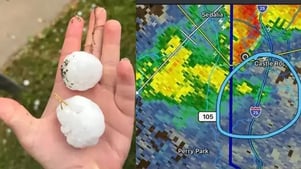
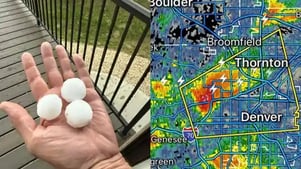
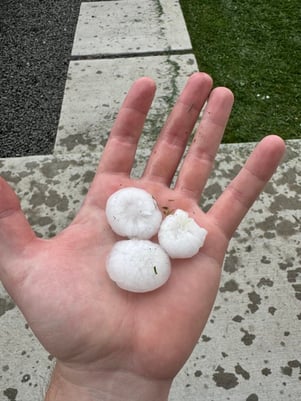
The largest report was 3.2 inches in diameter near Dailey in Logan County, nearly the size of a softball. Fort Morgan recorded 2.75 inch hail, about baseball size. Many other communities across the Front Range and Eastern Plains saw hail ranging from quarter size at one inch up to pool ball size near two and a quarter inches. The National Weather Service warned that storm cores were capable of producing softball size hail.

Which areas were hit hardest?
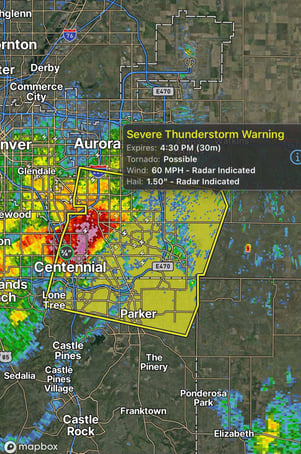
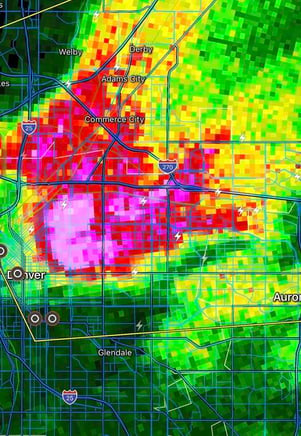
The heaviest hail and the greatest tornado risk tracked across northeastern Colorado. The National Weather Service issued a tornado watch until 11 p.m. for Weld, Morgan, Logan, Sedgwick, Phillips, Washington, Yuma, Adams, Arapahoe, Kit Carson, Lincoln, Elbert, and Cheyenne counties. Fort Morgan, Brush, and Log Lane Village were placed under a severe thunderstorm warning for baseball size hail, the Proctor and Crook area saw tennis ball size hail, and tornadoes were confirmed near Fleming and northeast of Sterling. Residents reported broken windows and totaled vehicles.
Can hail this size damage my roof?
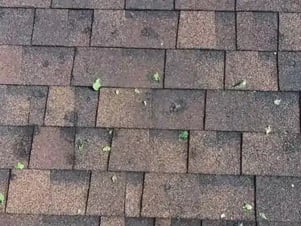
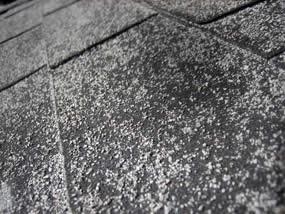
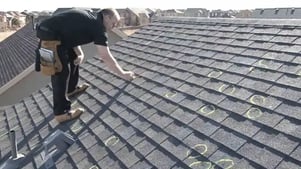
Yes. Hail one inch in diameter, about the size of a quarter, is the generally accepted threshold at which asphalt shingles begin to bruise and lose granules. Hail at golf ball size and larger, which much of this storm produced, can crack shingles, puncture roofing, dent metal panels and gutters, and split older or brittle materials. Roof damage is often not visible from the ground, so a professional inspection is the only reliable way to know whether your roof was hit.
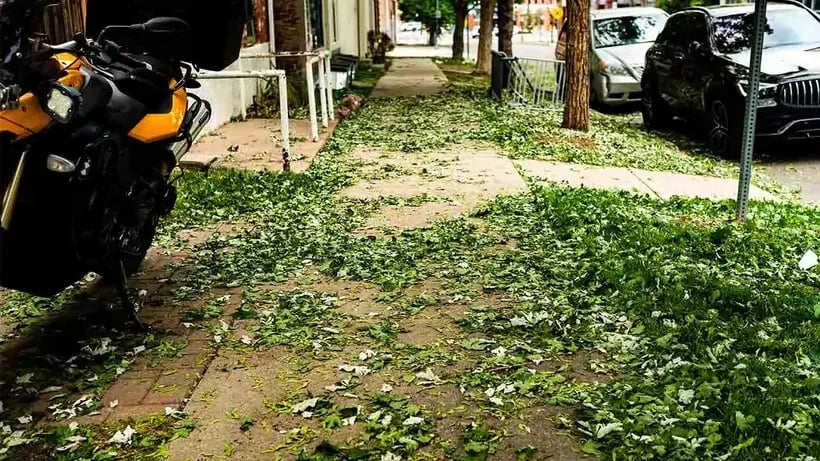
What does hail damage look like from the ground?
You will not always be able to confirm shingle damage from the ground, but these signs point to a storm that was strong enough to harm your roof:
- Dented gutters, downspouts, and metal fascia
- Dings on metal roof vents, flashing, and chimney caps
- Piles of shingle granules collecting where downspouts drain
- Dented window screens, garage doors, or grills
- Cracked skylights or bent air conditioner fins
- Dents on vehicles, mailboxes, or fencing
If you see several of these, assume your roof may be affected and have it inspected.

Should I call my insurance company first?
No. We recommend getting an independent roof inspection before you contact your insurer. Calling your insurance company first can open a claim on your record even if there is not enough damage to justify one, and a claim that closes with no payout can still affect your future premiums. An inspection first tells you whether you have real, documentable damage that is worth filing on.
If a claim is justified, your roof is typically replaced under your policy and your out of pocket cost is usually limited to your deductible. Many policies pay on a replacement cost basis, releasing the recoverable depreciation once the work is completed and documented.
How long do I have to file a hail claim in Colorado?
Many Colorado homeowner policies allow about one year from the date of loss to file a hail claim. With a storm date of June 24, 2026, that gives most homeowners until roughly June 2027, but you should confirm the exact deadline in your own policy. Do not wait, because new leaks can worsen over time and it becomes harder to tie damage back to a specific storm.
How do I avoid roofing scams after a Colorado hail storm?
After a major storm, out of town storm chasers move into affected neighborhoods looking for fast contracts. Protect yourself with a few simple rules:
- Never pay a roofer in full up front
- Never sign a contract that has cancellation fees
- Be wary of anyone who pressures you to sign on the spot
- Avoid any contractor who offers to waive or pay your deductible, which is illegal in Colorado
- Choose an established local company that will still be here for warranty service years from now
What will a new roof cost if mine is damaged?
Cost depends on material, roof size, slope, and complexity. The ranges below reflect Excel Roofing's 2026 installed pricing in Colorado, shown per square, which is 100 square feet of roof. Remember that on an approved hail claim, your out of pocket cost is often limited to your deductible rather than the full price below.
|
Roofing material |
Installed cost per 100 square feet (one square) |
|
Asphalt shingle |
$400 to $1,000 |
|
Synthetic tile |
$800 to $1,500 |
|
Stone coated steel |
$1,000 to $1,800 |
|
Concrete tile |
$1,000 to $2,700 |
|
Standing seam metal |
$1,200 to $3,000 |
For homeowners replacing asphalt, here are common Owens Corning shingle tiers, also priced per square at 100 square feet of roof:
|
Owens Corning shingle |
Installed cost per 100 square feet (one square) |
|
Oakridge, Class 3 impact rated |
$585 to $600 |
|
Duration, Class 3 impact rated |
$650 to $730 |
|
Duration Storm, Class 4 impact rated |
$700 to $800 |
Why homeowners call Excel Roofing
Excel Roofing has served Colorado homeowners since 1993 and is an Owens Corning Platinum Preferred Contractor, a status held by a small percentage of roofers nationwide. We provide free, no obligation roof inspections, we document hail damage thoroughly, and we walk through the insurance process with you from the first inspection to the final shingle. You don't pay a cent until you're content, and when the next storm rolls through, we're on top of it.
Schedule your free hail inspection: Call Excel Roofing at 303-761-6400 or request an inspection online. No cost, no obligation, no pressure.
Data sources
- National Weather Service, Boulder, Colorado: severe thunderstorm warnings, tornado warnings, and tornado watch issued June 24, 2026
- National Weather Service preliminary local storm reports, retrieved via the Iowa Environmental Mesonet, Iowa State University
- NOAA Storm Prediction Center storm reports










.webp?width=301&height=425&name=navigating-the-insurance-claims-process-for-hail-damaged-roofs%20(1).webp)