

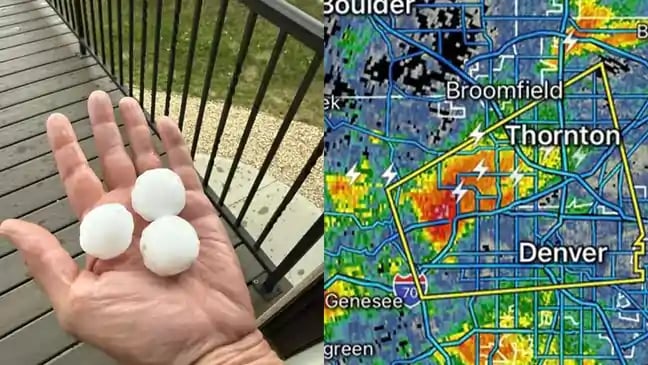
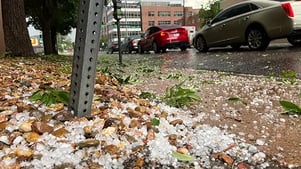
Quick answer: A severe storm dropped one inch hail, about the size of a quarter, on Wheat Ridge, Colorado on the afternoon of June 8, 2026, between roughly 3:16 and 3:32 PM. The hail was confirmed by NWS Boulder and NOAA Storm Prediction Center reports. One inch hail is large enough to damage asphalt shingle roofs. If your home was in the path, get a free independent roof inspection before you call your insurance company, and write down your date of loss: June 8, 2026.
At a glance:
- Location: Wheat Ridge, west toward Golden, and north Lakewood
- Date and time: June 8, 2026, about 3:16 to 3:32 PM MDT
- Confirmed hail size: 1 inch, quarter-sized (NOAA SPC, NWS Boulder)
- Roof damage threshold: 1 inch
- First step: free independent inspection before filing a claim
- Colorado claim deadline: about 1 year from June 8, 2026
What to do right now:
- Check soft metal from the ground. Look for dents on gutters, downspouts, fascia, and air conditioner fins.
- Write down your date of loss: June 8, 2026.
- Get a free professional roof inspection before you call your insurer.
- Hire a licensed, insured, local roofer. Never pay a money up front.
How big was the hail in Wheat Ridge on June 8, 2026?
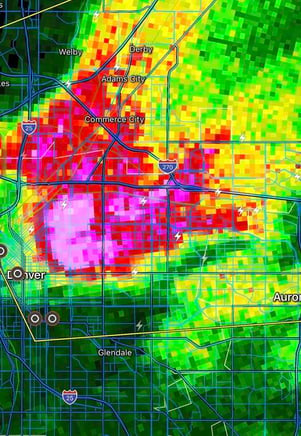
Trained spotters and NWS Boulder measured one inch hail, about the size of a quarter, in and around Wheat Ridge between 3:16 and 3:32 PM on June 8, 2026. The first report came in at 3:16 PM on the west edge of town toward Golden, a second at 3:24 PM just northwest of Wheat Ridge, and a third at 3:32 PM just north of Lakewood. Source: NOAA Storm Prediction Center storm reports, June 8, 2026. The forecast had warned of stones as big as golf balls, and hail size varies block to block, so the hail on your street may have been larger or smaller than the nearest official report.
Why does one inch hail matter for my roof?
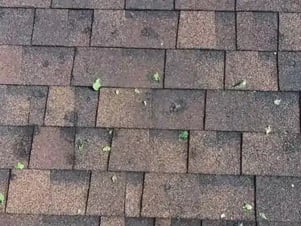
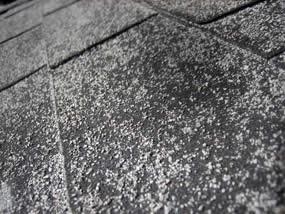
One inch hail is widely considered the point where asphalt shingles start to take real damage, so the Wheat Ridge storm is large enough to be a genuine roofing concern. A hard strike fractures the fiberglass mat under the surface and creates a soft spot that fails early. It knocks off granules, which are the shingle's sunscreen, and once they are gone the sun cooks the exposed asphalt and the shingle ages fast. Hail also cracks ridge caps, roof vents, and skylights. The tricky part is that a bruised shingle can look almost normal from the street while its real lifespan has been cut by years.

How do I check my roof for hail damage?
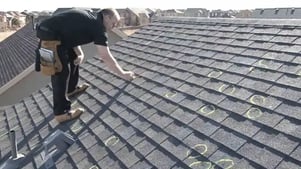
Start at ground level and never climb on the roof yourself. From the ground, look for dents or dimples on your gutters, downspouts, and metal fascia, and check your air conditioner fins and window screens. Look for stripped leaves, broken branches, and granule buildup at the bottom of your downspouts. If you see hits on the soft metal around your house, your roof almost certainly took them too, and it is worth having a professional inspect the roof itself.
Should I call my insurance company or a roofer first?
Call a roofer for a free inspection first. The moment you call your insurer to ask about possible hail, many companies log it as a claim. If an adjuster then decides there is not enough damage to clear your deductible, the claim closes with no payout, but it can still land on your claims history and follow you to your next renewal or even your next home. A free independent inspection tells you whether you actually have enough damage to justify a claim before anything goes on your record.

What is the difference between RCV and ACV roof coverage?
Replacement cost value (RCV) means your insurer pays what it costs to replace the roof with a new one of like kind and quality after you meet your deductible. Actual cash value (ACV) pays the depreciated value of the existing roof, factoring in its age and remaining life. On an older roof, ACV can mean a noticeably smaller payout, so it is worth confirming which type you carry before you file.
Should I repair or replace my roof after hail?
It depends on the age of the roof and how widespread the damage is. A few bruised shingles on an otherwise healthy roof can sometimes be repaired, but hail damage is usually spread across the whole slope, and matching old shingles to new ones on an aging roof is difficult. That is why insurers often approve a full replacement when damage is widespread. A professional inspection tells you which situation you are in.
How much does a new roof cost in 2026?
Most homeowners spend between $10,000 and $30,000 to replace a roof in 2026, and premium systems can exceed $50,000. The single biggest factor is the material you choose. Here is how the most common systems compare, priced by the square foot installed. Lifespans shown are typical ranges.
| Roofing Material | Installed Cost (per sq ft) | Typical Total | Typical Lifespan |
|---|---|---|---|
| Asphalt shingles | $4 to $10 | $8,000 to $18,000 | 15 to 30 years |
| Synthetic tile | $8 to $15 | $16,000 to $30,000 | 40 to 50 years |
| Stone-coated steel | $10 to $18 | $20,000 to $36,000 | 40 to 50 years |
| Concrete tile | $10 to $27 | $21,000 to $55,000 | 50+ years |
| Standing seam metal | $12 to $30 | $24,000 to $60,000 | 50 to 70 years |
Your final price depends on roof size, pitch, and complexity. Steep pitches, multiple stories, and complex roof lines with many valleys and dormers all add labor. Tear-off and disposal are included in our quotes, and if we find rotted decking underneath, we tell you the added cost before we proceed.
What are Class 4 impact-resistant shingles, and can they lower my insurance?
Class 4 shingles carry the highest impact rating available and are built to stand up to hail, and many Colorado carriers offer an ongoing premium discount for installing them. Most Wheat Ridge homeowners replacing a hail-damaged roof choose asphalt, so this is where the impact rating matters most. As an Owens Corning Platinum Preferred Contractor, here is how our common asphalt options price out. One square equals 100 square feet of roof.
| Shingle | Impact Rating | Installed per Square | Average Total |
|---|---|---|---|
| Owens Corning Oakridge | Class 3 | $585 to $600 | ~$18,000 |
| Owens Corning Duration | Class 3 | $650 to $730 | ~$21,900 |
| Owens Corning Duration Storm IR | Class 4 | $700 to $800 | ~$24,000 |
The exact discount varies by insurer and policy, so ask your agent whether your policy rewards a Class 4 roof.
How do I avoid roofing scams after a hailstorm?
Work with a licensed, insured, local company and watch for the crews that follow every storm into town. Red flags include a knock on the door within hours of the storm, pressure to sign on the spot, an offer to cover or waive your deductible, which is against the law in Colorado, a demand for a large deposit up front, and a company with no local address you can find. Get everything in writing, including the scope, timeline, and warranty, and choose a roofer who will still be here next year, the next time you need them.
Has Wheat Ridge had major hail before?
Yes. In the historic May 8, 2017 storm, the worst of the hail landed west of Denver, right over Wheat Ridge, Golden, and Lakewood. City officials later reported that about half of all homeowners in Wheat Ridge had roof damage, and of roughly 14,000 homes in the city, more than 7,000 roof repair permits were filed. Source: KUSA 9News, reported via AccuWeather. The June 8, 2026 storm was smaller, but the lesson is the same: hail does not have to be record breaking to cost you a roof.
Why hire a local roofer in Wheat Ridge?
A local roofer knows the Colorado insurance landscape, will be here for warranty work, and is accountable to the community. Excel Roofing has been on top of Colorado roofs since 1993. We are an Owens Corning Platinum Preferred Contractor, which means manufacturer-certified installation and access to some of the strongest warranties in the industry. If your Wheat Ridge home was in the path on June 8, we will come take an honest look and tell you straight whether you have damage worth filing on. You don't pay a cent until you're content. We're on top of it.
Schedule your free inspection at excelroofing.com. We serve Wheat Ridge, Golden, Lakewood, and the greater Denver metro.










.webp?width=301&height=425&name=navigating-the-insurance-claims-process-for-hail-damaged-roofs%20(1).webp)